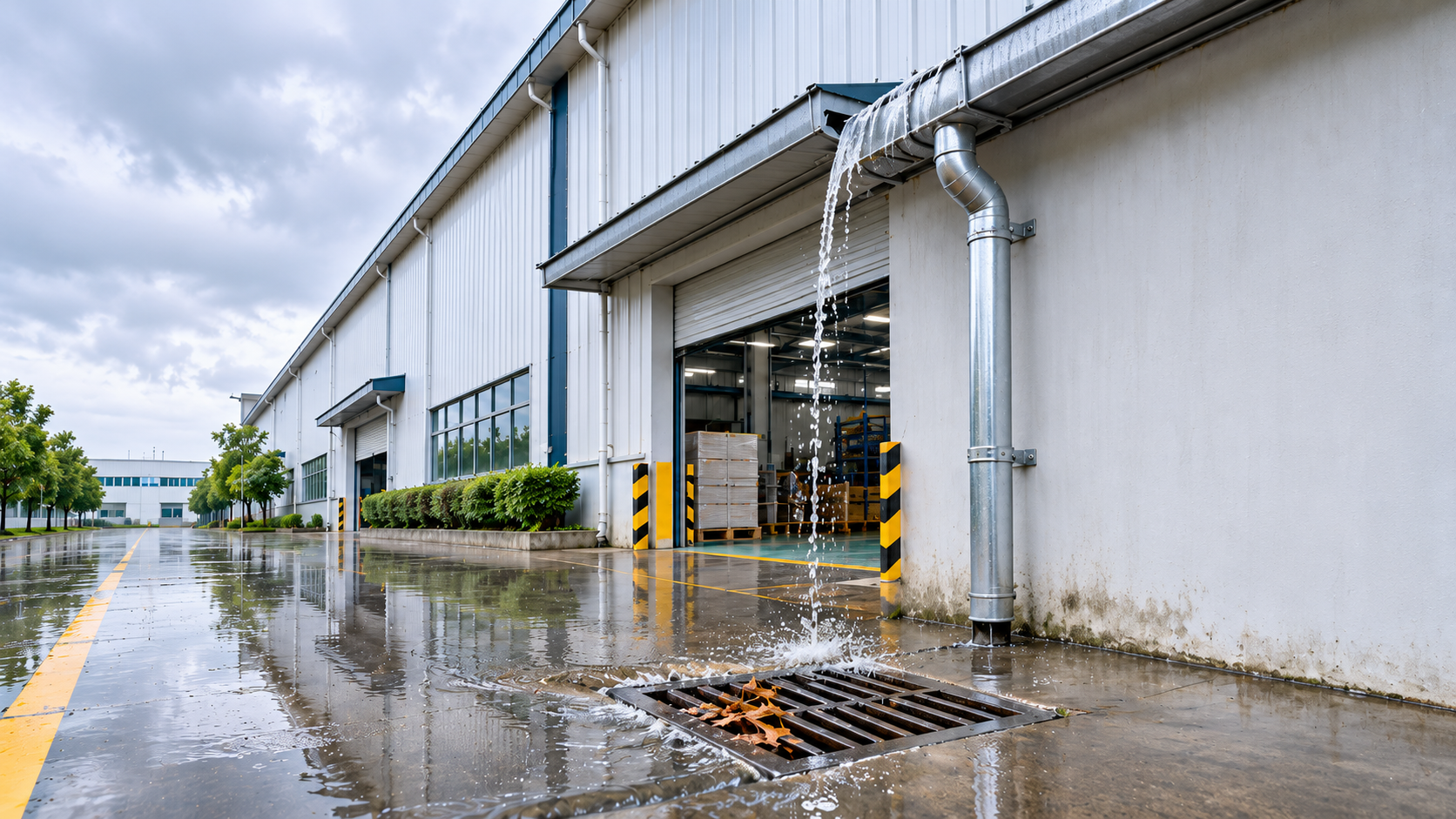
Poor factory drainage can cause standing water in outdoor areas, overflowing roof gutters, rising water levels in inspection chambers, and damp production floors. Prolonged drainage problems can disrupt forklift operations, loading and unloading activities, and increase the risk of slips and damage to stored materials. To resolve these problems effectively, businesses should identify the actual causes rather than simply cleaning a single drain or installing additional pumps without proper assessment.
Water remaining in front of warehouses, loading bays, or internal roads for a long time after rainfall is one of the most noticeable warning signs. Some facilities may experience overflowing roof gutters, slow-draining inspection chambers, water backing up through drainage inlets, or damp marks along the bottoms of walls. If unpleasant odors appear in restrooms or production areas, the relevant wastewater drainage system should also be checked. Not every drainage problem is caused by the stormwater system.
Stormwater drainage systems typically collect rainwater from roofs, gutters, yards, and internal roads. The water is then directed through drainage outlets, pipes, channels, and inspection chambers to an appropriate discharge point. Domestic wastewater and industrial wastewater must be collected, managed, and treated according to the applicable requirements before being connected to another system or discharged.
Do not connect wastewater directly to stormwater drains as a quick solution to standing water. Depending on the characteristics of the wastewater and the regulations of the industrial park, any new connection must be assessed for technical and environmental compliance. For more information, see water supply and drainage components in factory M&E systems.
Leaves, packaging materials, soil, sand, and sediment can accumulate in drainage grates, inspection chambers, and underground pipes, reducing their effective flow capacity. Common signs include slow drainage or water backing up at specific locations, even when the system previously operated normally.
Local ground settlement, sagging gutters, or low points in drainage pipelines can cause water to accumulate. If standing water repeatedly appears in the same location after rainfall, the actual ground elevations and drainage directions should be inspected.
Adding new roofing, concrete yards, or warehouse buildings increases the area collecting rainwater. Existing drainage channels and pipes may no longer be capable of handling the additional flow, particularly during heavy rainfall. Increasing pipe size is only effective if the downstream discharge system can also accommodate the higher flow rate.
Broken or displaced pipes, sediment blockages, and high water levels in shared drainage networks can cause water to flow backward. In these situations, clearing the drainage inlet near the factory entrance alone will not provide a lasting solution.
In low-lying areas where water must be pumped away, power failures, blocked inlet screens, or pump malfunctions can cause water levels to rise rapidly. The power supply, water-level sensors, valves, and operating procedures for heavy rainfall should all be checked.
Inspections should follow the path of water through the drainage system: roofs and gutters → downpipes → collection channels → inspection chambers → drainage pipelines → connection points. Where safe, observations should be carried out before, during, and after rainfall. For suspected underground blockages or damaged pipes, qualified technicians may use suitable pipe inspection equipment.
Personnel should never enter inspection chambers or confined spaces without appropriate procedures, equipment, and authorization. Flooded areas near electrical panels, cables, or machinery must be isolated and handled by qualified personnel.
When debris or sediment is the main cause, priority should be given to cleaning gutters, drainage channels, collection outlets, inspection chambers, and pipes. After cleaning, water flow should be checked, recurring sediment accumulation points should be identified, and a suitable maintenance schedule should be established.
Where yards have settled, gutters have sagged, or pipes are damaged, a site inspection is necessary to identify the affected locations. Raising ground levels or breaking up concrete without proper planning may redirect water into other areas. Any repairs should also consider forklift routes, load requirements, and loading operations.
When an existing drainage system becomes inadequate after factory expansion, possible solutions include adding drainage inlets, modifying collection channels, increasing pipe dimensions, or installing suitable water detention facilities. The selected approach should be designed according to the drainage catchment area, design rainfall, and actual discharge conditions.
For low-lying areas, engineers may evaluate the need for collection pits, pumping systems, or suitable backflow prevention measures. Valves and pumps should not be installed based on assumptions alone, as they may change drainage behavior and create additional maintenance requirements.
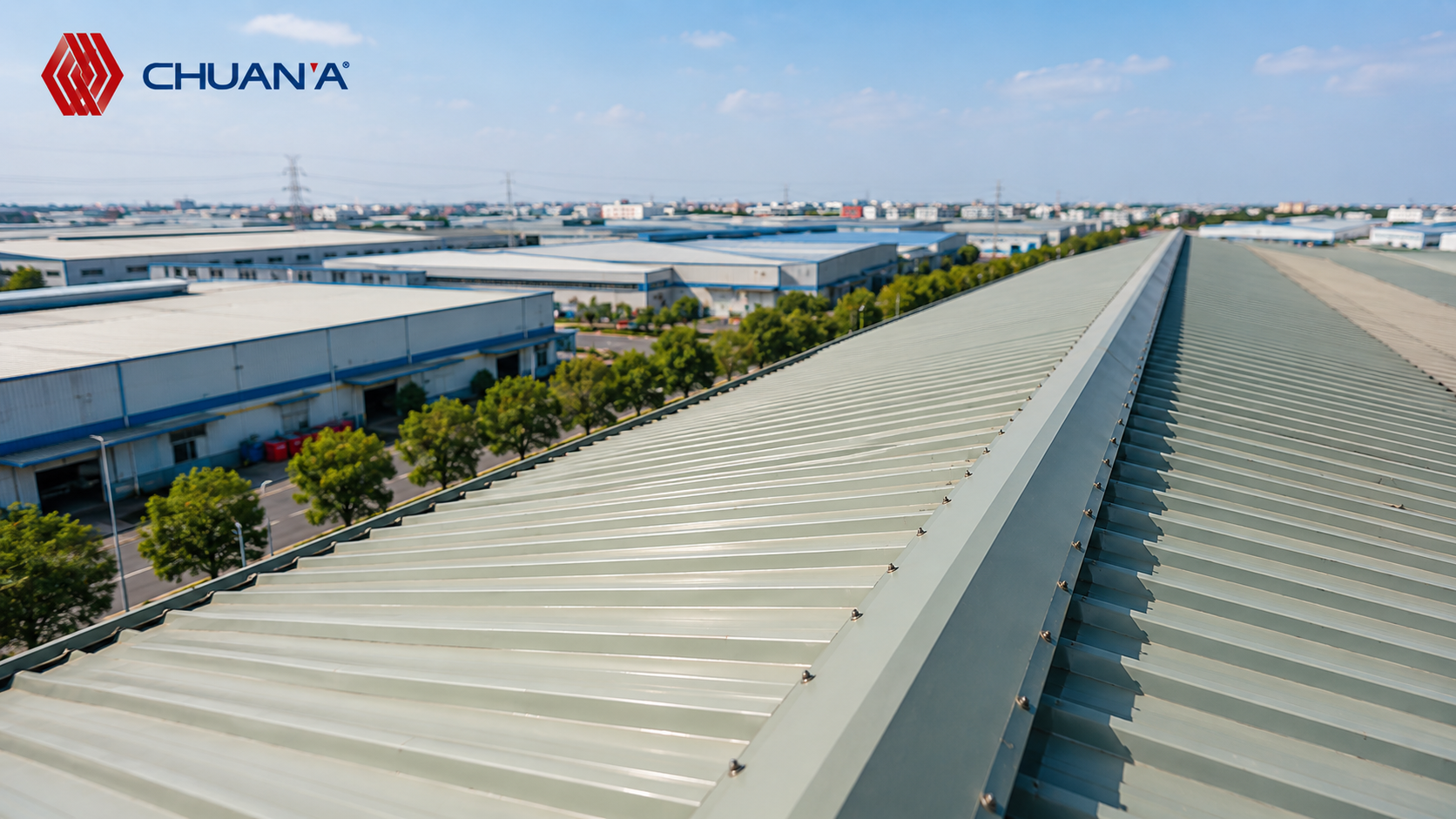
Routine cleaning is often appropriate when the drainage system previously functioned properly and the problems are caused by debris, sediment, or isolated damage. However, if flooding continues after repeated cleaning, low spots appear, roof or paved areas have expanded, or water rises from a shared drainage network, the entire system should be assessed.
Businesses should compare the cost of localized repairs with long-term system upgrades. The evaluation should also account for temporary interruptions to loading operations, the protection of machinery, and possible production losses. The area affected by flooding alone is not enough to determine the best solution.
Priority should be given to warning personnel about slippery surfaces, redirecting vehicle traffic, and moving water-sensitive goods away from flooded areas. If water approaches electrical equipment, the safety and electrical maintenance teams should be contacted to isolate the affected area according to established procedures.
Never walk through water that may be electrically energized, open inspection chamber covers while water levels are rising, or attempt to clear blockages in strong flowing water.
Businesses may also refer to common causes of industrial roof gutter overflow and the factory maintenance checklist when developing a suitable drainage maintenance plan.
Chuan A provides design and construction services related to water supply, drainage systems, and industrial infrastructure. Businesses can discuss existing drainage problems, site drawings, roof and yard areas, drainage pipeline routes, and connection points to explore suitable inspection, repair, or renovation solutions.
The specific scope of work should be agreed upon after an on-site assessment.
Learn more about industrial park infrastructure construction solutions from Chuan A.
CÔNG TY CP ĐẦU TƯ XÂY DỰNG CÔNG TRÌNH CHUẨN A
Address: Trung tâm dịch vụ KCN Amata, phường Long Bình, tỉnh Đồng Nai, Việt Nam.
Hotline: 0907 494 549
Email: info@chuana.com.vn
Website:https://chuana.com.vn/
Contact Chuan A to discuss inspection, repair, maintenance, or renovation needs for factory drainage systems in Dong Nai, Vietnam.