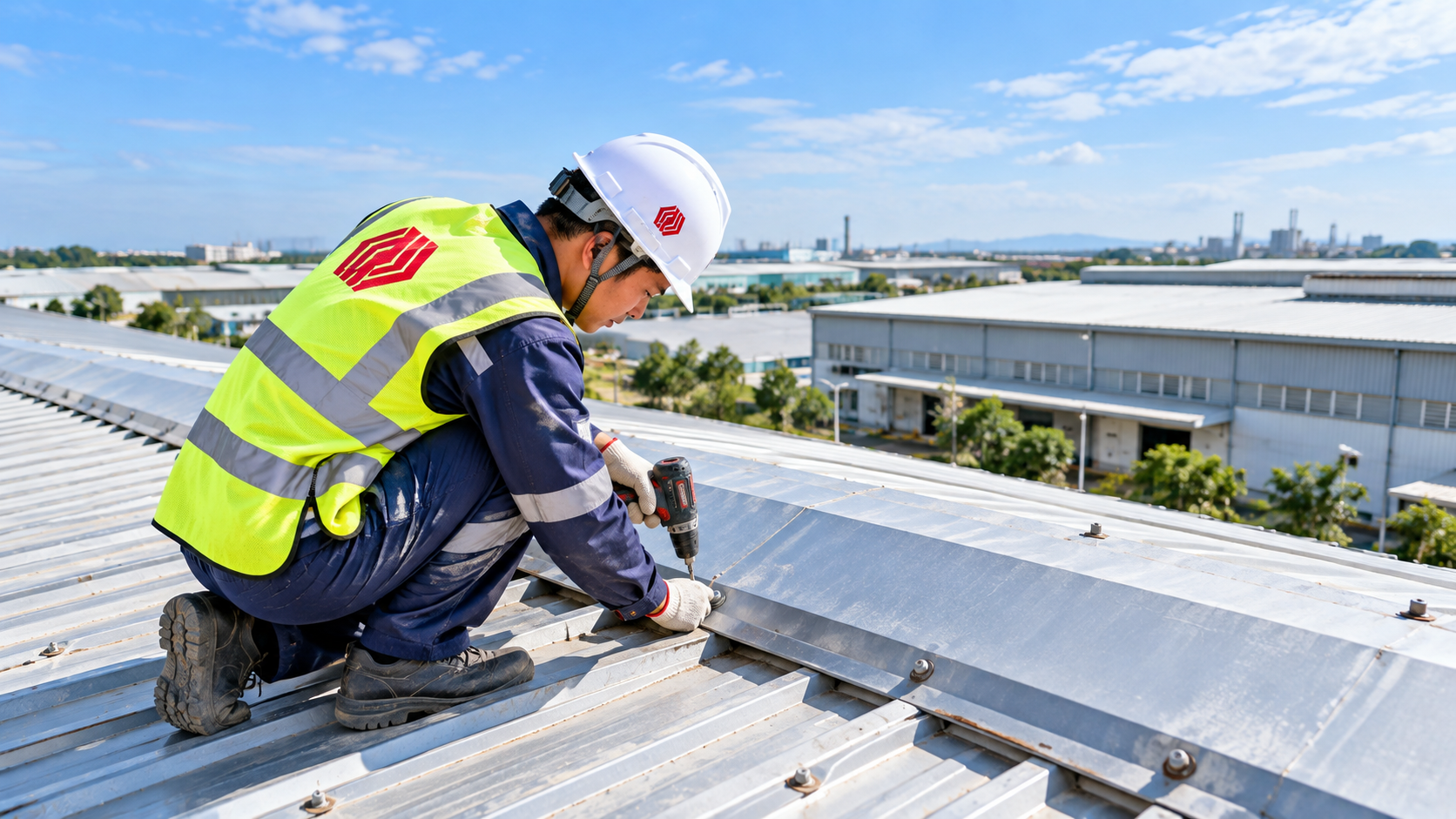
A leaking factory roof is a common problem for many industrial facilities, especially after heavy rain or when the roofing system has been in service for many years. However, finding water inside a factory does not automatically mean that the entire metal roof needs to be replaced. In some cases, the problem may come from a few damaged fasteners, loose overlaps, or a drainage issue. In other cases, the roofing system may have deteriorated to the point where repeated repairs are no longer practical.
Identifying the actual source of the leak before starting work helps businesses avoid repairing the same area over and over again. It also makes it easier to control maintenance costs and plan construction work around the factory's operating schedule.
(1).png)
Water can enter a factory through several different points. The location where water appears inside the building is not necessarily the exact location where it enters the roof. Water can travel along the roofing sheet, structural members, or other connected surfaces before reaching the visible leak point below.
For this reason, a leaking roof should not be inspected only at the point where water is dripping. The surrounding area should also be checked to identify the actual path of water entry. Common inspection points include roofing screws and washers, sheet overlaps, ridge caps, roof edges, flashings, gutters, downpipes, and roof penetrations.
These components are all part of a factory metal roofing system. Chuan A also provides an overview of factory metal roof construction, including roofing sheets, purlins, fasteners, ridge caps, gutters, and drainage components.
Roofing screws are small components, but they can become a source of leaks over time. After years of exposure to sunlight, rain, and temperature changes, rubber washers may deteriorate, screws may loosen, and the area around the screw hole may become damaged.
If the metal roofing sheets are still in good condition and the main problem is limited to fasteners, replacing damaged screws or repairing the affected points may be more appropriate than replacing the entire roof. The actual source of the leak should still be confirmed before work begins.
Overlapping metal sheets that are no longer properly sealed can allow water to enter during heavy rain. The problem may not be obvious during light rain but can become much more noticeable when rainfall continues for an extended period or strong winds push water against the roof.
If the roofing sheets are still serviceable, contractors may be able to adjust the overlaps, replace relevant accessories, or repair the affected joints. If the sheets are badly corroded, torn, or deformed across a large area, replacement may need to be considered.
The roof ridge is another area that should be inspected when a factory experiences leaks. A damaged, displaced, or poorly sealed ridge cap can allow rainwater to enter the building.
Roof-to-wall junctions should also be checked. Old sealants can shrink, crack, or peel over time, creating gaps through which water can enter even when the main roofing sheets still appear to be in acceptable condition.
Not every factory roof leak is caused by damaged metal sheets. Blocked, corroded, undersized, or damaged gutters can cause water to overflow back toward the roof edge.
This is why the drainage system should be inspected together with the roofing system. Chuan A also provides information about factory metal roof gutters, including issues such as corrosion, sagging, leaks, and repeated overflow.
Exhaust fans, ventilation ducts, utility pipes, equipment bases, skylights, and other roof penetrations require particular attention. These locations are more complicated than ordinary roof surfaces because water can collect around the penetration and enter through gaps at the junction.
If a factory roof contains a large number of installed systems or equipment, all roof penetrations should be checked before deciding on a repair or replacement strategy.
Repair is often appropriate when most of the roofing system remains serviceable and the damage is limited to specific areas. Examples include damaged fasteners, localized leaks at sheet overlaps, small gutter leaks, or deteriorated waterproofing at a few roof junctions.
In these situations, full roof replacement may not be necessary. The affected areas can be inspected, the source of the problem can be identified, and a repair scope can be developed based on the actual condition of the roof.
However, repair should not be limited to the exact spot where water happens to appear inside the building. If the actual source is somewhere else, sealing the visible drip point may only address the symptom rather than the cause.
Replacement may be considered when the roof has deteriorated across a large area or when the existing material is no longer suitable for long-term use. Common signs include extensive corrosion, numerous holes, major deformation, significant surface deterioration, or repeated leaks despite previous repairs.
The supporting structure should also be inspected. Replacing the metal sheets does not automatically solve problems caused by weakened or deteriorated purlins and structural members. A replacement strategy should therefore be based on an overall assessment rather than simply the age of the roofing sheets.
Yes. Partial replacement may be considered when deterioration is concentrated in a particular area. This can be useful for factories that are still operating and want to avoid carrying out a large-scale roofing project all at once.
However, the replacement area should be assessed together with the surrounding existing roof. Differences between old and new roofing sheets, transition points, overlaps, and connection details can all affect the performance of the repaired section.
.png)
Repairing an industrial roof is different from repairing a residential roof. When production is still running, the project also needs to consider operating schedules, machinery, stored materials, pedestrian routes, and the safety of people working below.
Before work begins, the contractor and factory should identify the work zones, areas that require protection, and suitable working periods. If the damaged roof is directly above an active production area, construction activities should be coordinated with the factory to reduce disruption.
Chuan A provides factory metal roof maintenance and repair services in Dong Nai. The actual repair scope depends on the condition of the roofing system and the findings of the site inspection.
Factory operators can prepare some basic information before a roof inspection, including when the leaks first appeared, which areas are affected most often, whether previous repairs have been carried out, the approximate age of the roofing system, and whether machinery or sensitive materials are located directly below the affected areas.
Photos or videos recorded during rainfall can also help provide initial information. However, these materials should only be treated as supporting evidence. The decision to repair, replace a section, or replace the entire roof should be based on an actual inspection of the roofing system.
Maintenance cannot turn an old roof into a new one, but regular inspections can help identify early signs of deterioration before they become major problems. Roofing screws, sheet overlaps, gutters, ridge caps, flashings, and roof penetrations should all be included in routine inspections.
For older factories, scheduling roof inspections before and during the rainy season can help businesses plan maintenance budgets and minimize unexpected disruption. Chuan A also provides factory metal roof maintenance services in Dong Nai based on the actual condition of each facility.
When a roof begins to leak, the first step should not automatically be to quote a complete roof replacement. The condition of the roofing sheets, the supporting structure, connection points, drainage system, and potential sources of water entry should be examined first.
After the inspection, the appropriate approach may involve localized repair, partial replacement, or full replacement depending on the actual condition. This allows factory owners to make a more informed decision rather than replacing an entire roofing system because of a few isolated leaks.
For factories, manufacturing facilities, and warehouses in Dong Nai, Bien Hoa, Binh Duong, and nearby areas, Chuan A can inspect the existing roof and discuss maintenance, repair, or renovation options based on the actual requirements of the facility.
CHUAN A CONSTRUCTION INVESTMENT PROJECT JOINT STOCK COMPANY
Address: Amata Industrial Park Service Center, Long Binh Ward, Dong Nai Province, Vietnam.
Hotline: 0907 494 549
Email: info@chuana.com.vn
Website:https://chuana.com.vn/
Contact Chuan A to discuss factory roof inspection, repair, maintenance, or renovation services in Dong Nai.


