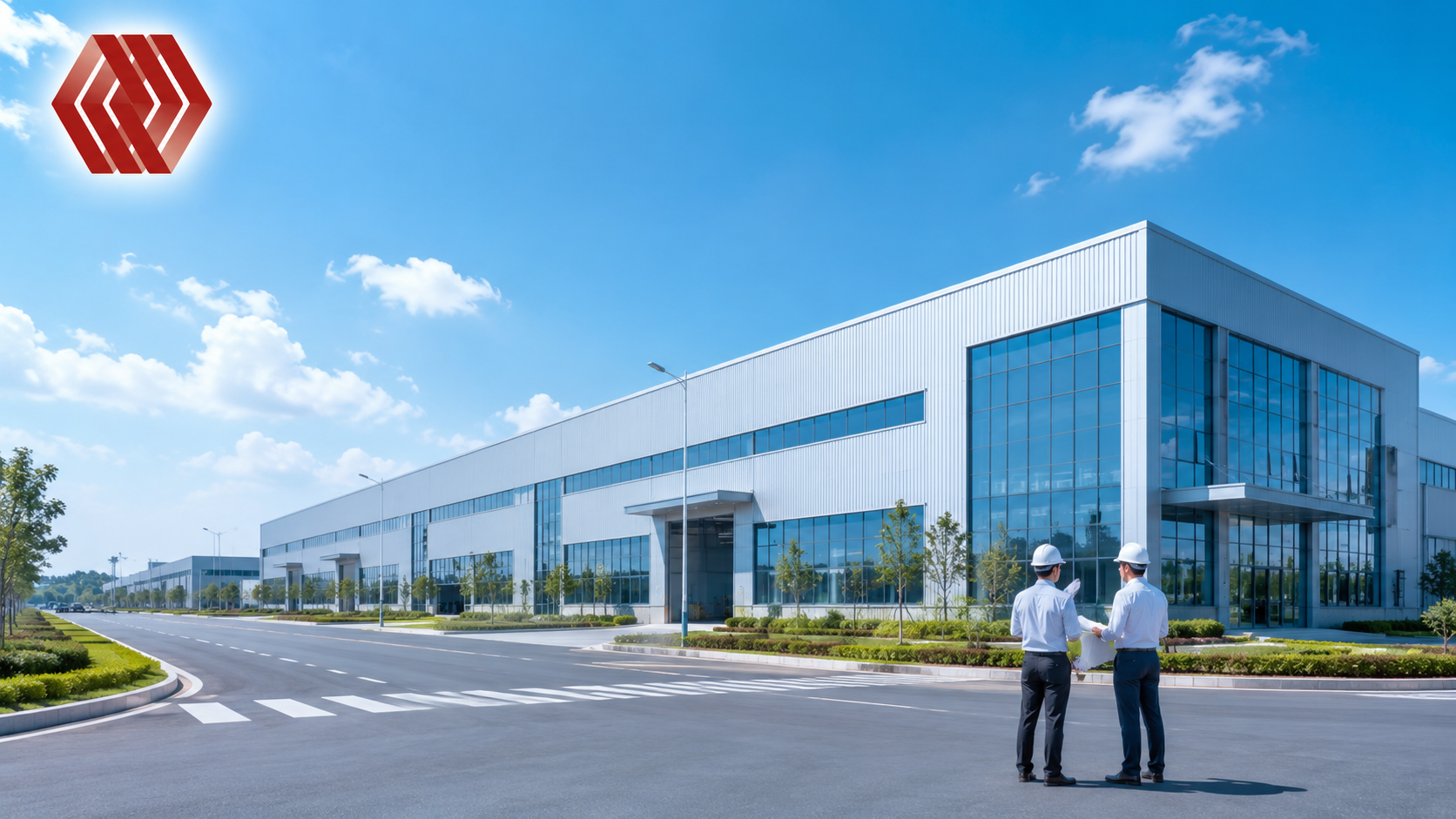
Turnkey factory construction is becoming a preferred option for many businesses in 2026. The reason is clear: the manufacturing market needs speed, but speed should not come at the cost of quality. An efficient factory must be integrated from design, structure, foundation, roofing, walls, infrastructure, electricity, water, ventilation, fire protection, office space, and supporting areas.
If each work item is handled by a different contractor without strong coordination, the project can easily become fragmented. The investor then has to stand between design, construction, M&E, fire protection, materials, and schedule control. A turnkey factory construction model brings many stages into one unified process, from initial needs assessment to final handover.
.png)
Turnkey factory construction is a model in which the investor assigns one company or one main contractor to handle several key stages of the project. The scope may include investment consulting, architectural design, structural design, M&E design, fire protection design, civil works, steel structure installation, floor finishing, roofing, wall systems, technical systems, and acceptance support.
The key value of this model is not only the word turnkey. It lies in integration. When one contractor understands the production goal, budget, schedule, and operating characteristics, the proposed solution becomes more practical. For example, if the factory requires heavy machinery, the floor load must be calculated from the beginning. If the warehouse uses high racks, fire protection and lighting must match the rack height. If the business plans to expand after two years, the structure and infrastructure should allow future development.
Construction cost is not only the price of materials and labor. The real cost also includes waiting time, coordination errors, design changes, repairs, additional materials, construction stoppages, delayed acceptance, and opportunity cost when the factory cannot start operations on schedule. The turnkey model helps reduce these hidden costs.
First, the investor has one responsible contact point. When a problem occurs, there is no longer a situation where the designer blames the contractor, the M&E team blames the structure, and the fire protection team blames the changed layout. A clear contact point helps decisions move faster.
Second, design and construction are connected from the beginning. What appears on drawings must be buildable, cost-appropriate, and schedule-friendly. A design that looks impressive but is difficult to build can increase costs. On the other hand, construction that only follows the cheapest option may create long-term operational problems.
An industrial factory project usually includes many work items. The foundation determines load capacity and stability. The steel or concrete structure determines the form and durability of the building. Roofing, wall systems, doors, ventilation, and heat reduction affect the working environment.
M&E systems determine the operation of machinery, lighting, plumbing, and utilities. Fire protection is a mandatory safety layer. Other items may include internal roads, yards, offices, guard houses, restrooms, technical rooms, and landscaping. If these items are not coordinated, conflicts will appear during construction.
A good process usually begins with a needs survey: what the business produces, the required capacity, warehouse needs, number of employees, vehicle movement, production line positions, temperature requirements, and ventilation needs. After that comes concept consulting, preliminary costing, and basic design.
Once the concept is approved, the design team develops technical drawings. This stage requires coordination among architecture, structure, M&E, and fire protection. Then comes construction planning, material preparation, manpower arrangement, equipment preparation, and site organization. During construction, progress must be updated regularly, quality must be inspected by work item, and labor safety must be maintained continuously.
.png)
There are many reasons why costs exceed expectations. The first reason is insufficient site investigation. If soil conditions, ground elevation, drainage, or existing infrastructure are not assessed correctly, the project may need adjustments during construction.
The second reason is changing functions midway. Investors should finalize key information as early as possible, such as machine types, load requirements, warehouse areas, office areas, technical rooms, loading doors, and expansion needs. The third reason is choosing unsuitable materials. What a business needs is not always the cheapest or the most expensive material, but the right material for the right purpose, standard, and maintenance plan.
Chuẩn A focuses on turnkey industrial construction solutions, including consulting, design, factory construction, office construction, M&E systems, and fire protection. For projects that require high integration, choosing a company that understands both construction and technical systems helps investors reduce management pressure.
Chuẩn A also has advantages in supporting businesses in Dong Nai, Binh Duong, and nearby areas, where many industrial parks and manufacturing facilities are located. A project implemented by a team that understands local conditions, industrial requirements, and real operation can be controlled better from start to finish.
Is turnkey factory construction more expensive than hiring separate contractors?
Not necessarily. When management costs, delays, changes, and coordination risks are considered, the turnkey model often helps optimize total cost.
Can a factory be built in phases?
Yes. However, the initial design should consider future expansion to avoid major demolition or renovation later.
When should M&E and fire protection be planned?
They should be integrated during the design stage, not added at the end of construction.
Turnkey factory construction is suitable for businesses that want to control schedule, optimize cost, and reduce coordination risks. A good factory is not only a shelter for machinery, but a carefully calculated production system. With experience in industrial construction, M&E, and fire protection, Chuẩn A can accompany businesses from concept to operation.
CHUAN'A CONSTRUCTION INVESTMENT JOINT STOCK COMPANY


