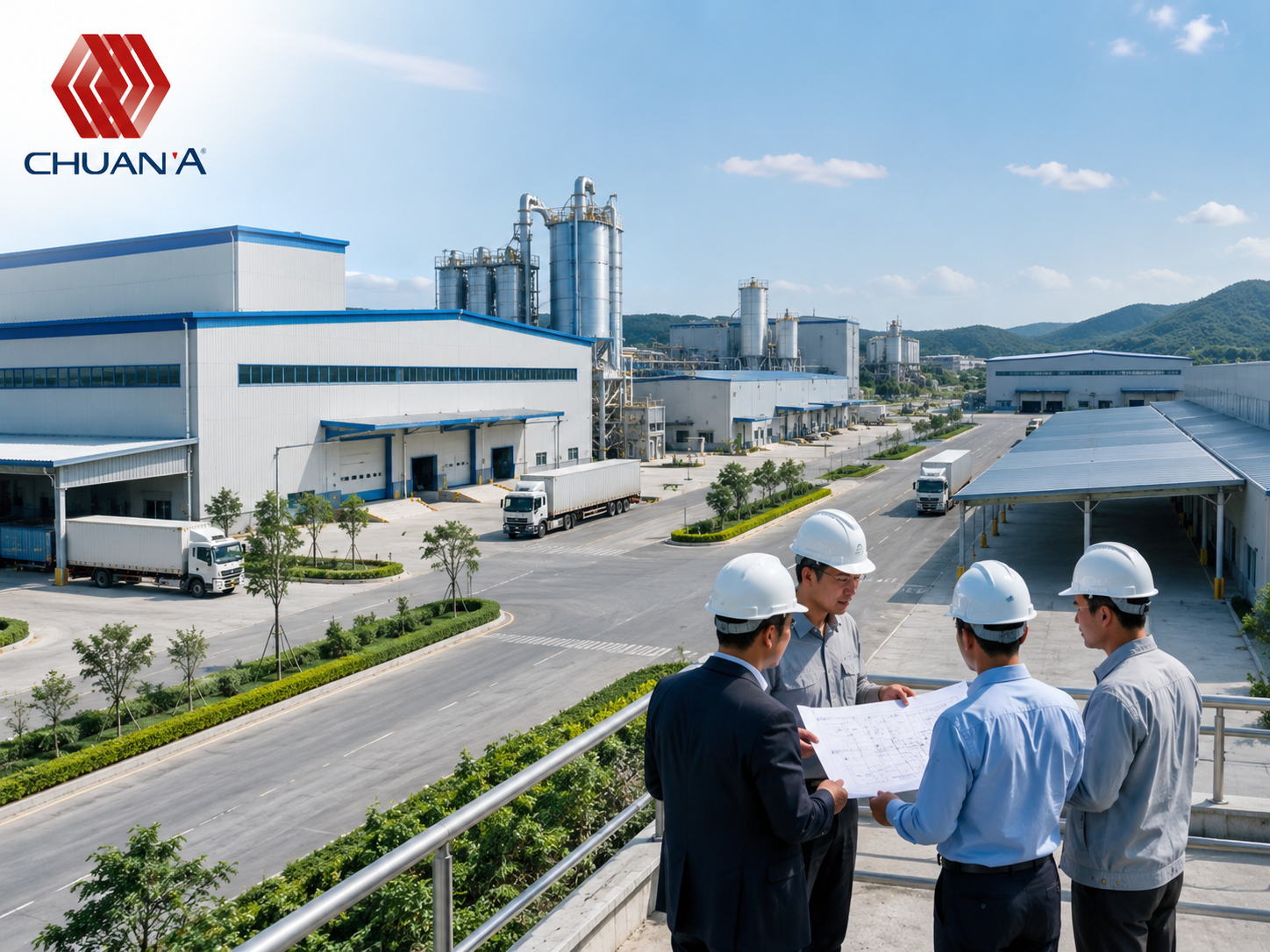
Industrial construction refers to the design and construction of facilities that support manufacturing, storage, technical operation, and industrial infrastructure. Unlike residential construction, industrial construction is not only about building appearance. It focuses on function, load capacity, production flow, technical systems, fire protection, expansion capability, and long-term operational efficiency.
As industrial zones in Dong Nai, Binh Duong, Ho Chi Minh City, and other regions continue to grow, the demand for factories, manufacturing plants, logistics warehouses, factory offices, and technical infrastructure is increasing. Investors do not only need a project completed on schedule. They need an operating system that can run safely, efficiently, and cost-effectively for many years.
(1).png)
Industrial construction is the process of designing, building, and completing facilities used for production, processing, assembly, storage, distribution, or technical operation. These facilities often include factories, manufacturing plants, warehouses, logistics centers, pre-engineered steel buildings, industrial offices, technical stations, M&E systems, fire protection systems, yards, internal roads, and supporting infrastructure.
The biggest difference in industrial construction is operational function. An industrial building must not only be durable and visually complete. It must also support production lines, material flow, machinery loads, ventilation, lighting, electrical supply, water supply, drainage, labor safety, and fire protection.
Many investors begin a project by focusing mainly on construction cost per square meter. This is important information, but it is not enough. If cost is considered without evaluating function, structure, technical systems, and expansion potential, the business may face many problems after the building starts operation.
A factory with a low initial construction cost but insufficient floor load, weak electrical capacity, poor ventilation, or difficult fire protection approval can create additional costs later. On the other hand, a facility that is properly planned from the beginning will operate more stably, reduce risks, and support future business expansion.
(1).png)
The most common type of industrial project is a production factory. This is where machinery, production lines, work areas, technical zones, and supporting spaces are located. A factory must be designed according to its specific industry because each production field has different requirements for load, height, ventilation, lighting, hygiene, and safety.
A manufacturing plant is usually larger and includes multiple functional areas such as production workshops, raw material warehouses, finished goods warehouses, management offices, technical rooms, guard houses, yards, internal roads, and supporting systems. For manufacturing plants, integration between construction, M&E, and fire protection is especially important.
Industrial warehouses and logistics warehouses serve storage, distribution, and goods movement. For these facilities, investors should pay attention to floor load, warehouse height, rack layout, forklift flow, loading doors, container areas, lighting, and fire protection systems suitable for high-density storage.
Industrial construction also includes pre-engineered steel buildings, factory offices, industrial zone infrastructure, pumping stations, electrical stations, water treatment systems, internal roads, and technical facilities that support operation.
The first important work item is survey and design. This stage determines the direction of the entire project. The consulting team must understand production needs, investment scale, operating capacity, machinery type, number of employees, material flow, and future expansion plans. If the survey is not detailed, the drawings may lack practicality and create additional costs during construction.
The second work item is foundation and structure. The foundation must match soil conditions, building loads, machinery loads, and operating requirements. The structure may use reinforced concrete, steel structure, or a combination of solutions. For modern factories, pre-engineered steel buildings are popular because they offer fast construction, wide space, and flexible expansion.
The third work item is the building envelope, including roof, wall cladding, doors, partitions, heat reduction, leak prevention, and daylighting solutions. A good envelope system helps stabilize the production environment, reduce heat, reduce noise, and protect goods and machinery inside.
The fourth work item is the M&E system. This includes power distribution, lighting, water supply and drainage, ventilation, air conditioning, compressed air, cameras, network systems, control systems, and other utilities that support production. M&E systems must be designed according to actual function to avoid insufficient capacity or difficult maintenance.
The fifth work item is fire protection. In industrial facilities, fire protection is not only a legal requirement but also a critical layer of protection for people and assets. Fire protection should be considered from the design stage, including alarm systems, firefighting systems, sprinklers, pumps, extinguishers, escape routes, safety signs, and acceptance documents.
The industrial construction process usually begins with receiving requirements and surveying the site. Investors should provide information about production type, desired area, operating capacity, warehouse demand, workforce, machinery, and technical requirements. From this information, the contractor can recommend a suitable solution.
After the survey comes concept design and preliminary costing. At this stage, the investor can understand the overall facility, estimated cost, schedule, and major work items. Once the concept is approved, the design team develops detailed technical drawings for architecture, structure, M&E, fire protection, and infrastructure.
The next stage is construction preparation. The contractor must plan manpower, materials, equipment, construction methods, safety measures, and detailed schedule. During construction, each work item must be inspected regularly to ensure that the project follows drawings, quality requirements, and schedule.
After completion, the project enters acceptance, handover, and operation guidance. For industrial facilities, as-built drawings, material certificates, M&E documents, fire protection documents, and maintenance manuals should be stored properly for long-term operation.
The turnkey industrial construction model helps investors reduce the burden of coordinating many separate contractors. Instead of connecting design companies, civil contractors, M&E teams, fire protection contractors, and material suppliers separately, the investor can work with one main contact point responsible for the overall project.
The first benefit is technical integration. When architecture, structure, M&E, and fire protection are coordinated from the beginning, the project can reduce conflicts on site. The second benefit is better schedule control because work items are planned in a clear sequence. The third benefit is cost optimization because the contractor can propose solutions that match both budget and actual function.
For projects in industrial zones, time is critical. Each month of delay can affect production plans, land lease schedules, orders, and cash flow. Therefore, turnkey construction is often suitable for businesses that want to bring their facilities into operation on time.
The first criterion is practical experience. The contractor should understand industrial projects, not only residential construction. Industrial facilities have specific requirements for load, technical systems, safety, and operation, so experience is essential.
The second criterion is design and technical coordination capability. A good contractor must understand how to coordinate architecture, structure, M&E, fire protection, and infrastructure. If disciplines are not coordinated well, the project may face construction errors or operational difficulties after handover.
The third criterion is quality management. The contractor should have clear processes for material inspection, construction inspection, work item acceptance, and issue handling. The fourth criterion is labor safety capability because industrial sites often involve heavy equipment, working at height, and multiple teams working at the same time.
The fifth criterion is long-term support after handover. An industrial facility needs maintenance, inspection, and future upgrades. Therefore, investors should choose a contractor with responsibility, long-term support, and understanding of the facility.
Chuẩn A focuses on integrated industrial construction solutions, from consulting and design to factory construction, office construction, M&E systems, and fire protection. Located in the Amata Industrial Park area of Dong Nai, Chuẩn A has advantages in serving businesses in a fast-growing industrial region.
The important point in Chuẩn A’s approach is viewing an industrial facility as an operating system, not just a building. When construction, M&E, fire protection, and infrastructure are planned together, investors can reduce risks, control schedules more easily, and create a strong foundation for long-term production.
The first mistake is starting a project without clearly defining functions. If the investor does not know where production lines will be placed, how heavy machines are, what storage capacity is needed, and how vehicles will move, the design can easily become inaccurate.
The second mistake is choosing a contractor only based on the lowest price. A low price may look attractive at first, but if materials are poor, construction methods are weak, or industrial experience is lacking, the investor may pay more later through repairs and delays.
The third mistake is handling M&E and fire protection too late. These systems must be considered from the overall design stage. If they are added only near the end of construction, conflicts with structure, ceilings, walls, pipes, and production layout are highly likely.
In 2026, industrial construction continues to move toward faster, more integrated, and more operation-focused solutions. Pre-engineered steel buildings remain popular because of fast construction and expansion capability. Investors also care more about energy saving, natural ventilation, efficient lighting, maintainable technical systems, and safe fire protection.
In addition, turnkey and design-build models are becoming more common. Businesses want fewer contact points, lower coordination risk, and one company responsible for the entire project. This trend is suitable for projects that need fast operation and strict quality control.
How is industrial construction different from residential construction?
Residential construction usually serves living, daily use, or commercial purposes. Industrial construction serves production, storage, technical operation, and machinery use, so it has higher requirements for load, M&E, fire protection, infrastructure, and function.
What should investors prepare before building a factory?
Investors should prepare information about area, production type, machinery, capacity, storage needs, number of employees, technical requirements, estimated budget, and future expansion plans.
Should investors choose turnkey industrial construction?
Yes, especially if the project includes many coordinated work items such as structure, M&E, fire protection, office areas, and infrastructure. Turnkey construction helps reduce management pressure and technical conflicts.
Industrial construction requires deep understanding of function, technical systems, safety, and operation. A good industrial facility is not only completed on time but also supports stable production for many years. With an integrated industrial construction approach, Chuẩn A can support investors in factory, manufacturing plant, warehouse, M&E, and fire protection projects in Dong Nai, Binh Duong, and nearby areas.
CHUAN'A CONSTRUCTION INVESTMENT JOINT STOCK COMPANY


