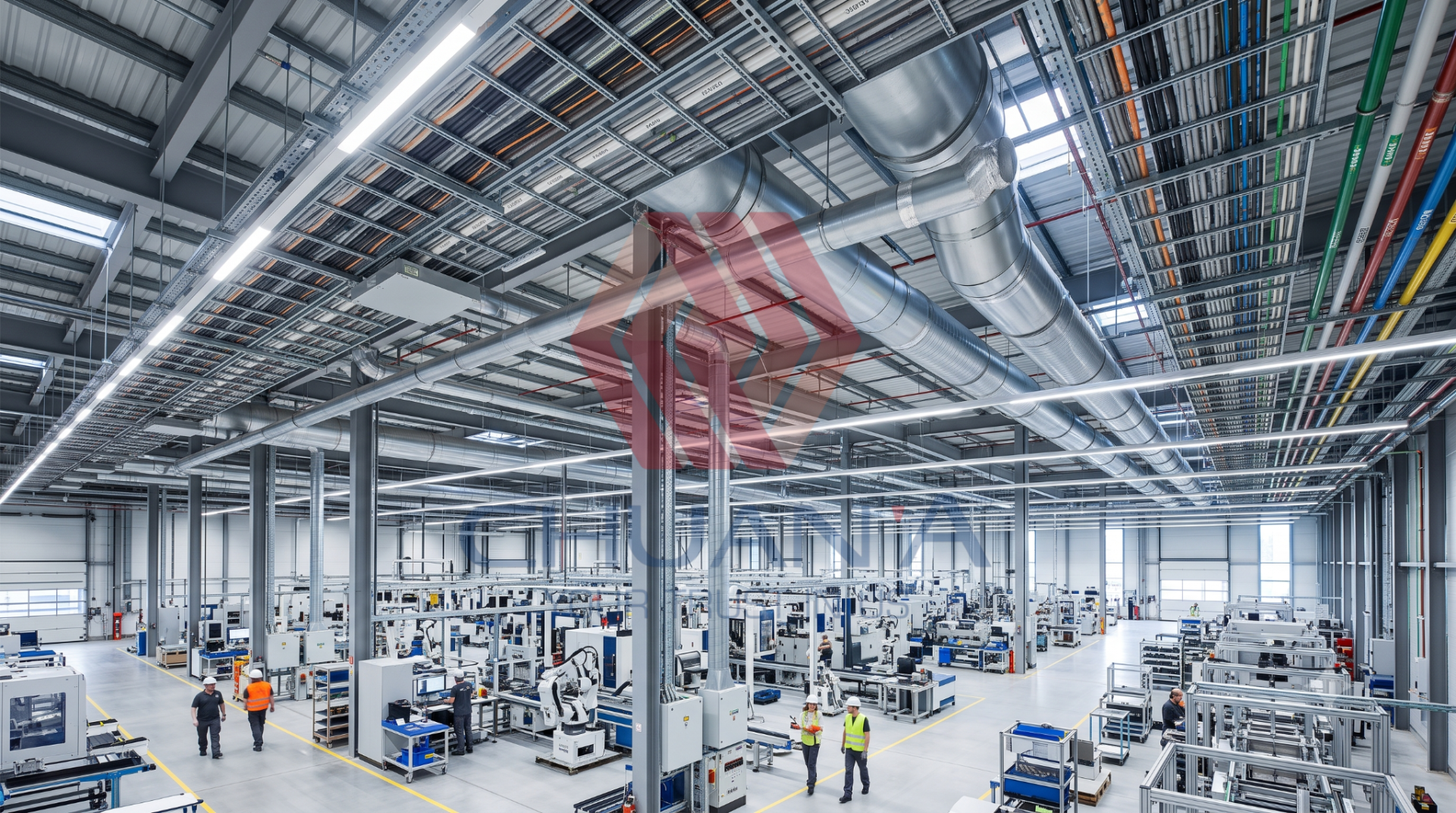
A comprehensive A-to-Z guide on the mechanical and electrical (M&E) system components for industrial factories by Chuand A. Discover power, HVAC, fire fighting, and plumbing structures for sustainable operations.
In the infrastructure of an industrial factory or plant, if the civil construction is considered the solid skeleton, the Mechanical and Electrical (M&E) system acts as the blood vessels and nervous system that sustain all operational activities. The M&E system not only ensures standard working conditions for employees but also directly impacts the performance of machinery lines, fire safety, and the enterprise's energy efficiency.
A small miscalculation in electrical load or ventilation flow can lead to production downtime, causing billions of VND in losses. Therefore, a clear understanding of the components making up the M&E system is an absolute prerequisite for engineers, investors, and factory managers. With years of experience in the industry, Chuand A proudly delivers comprehensive M&E design and construction solutions that optimize functionality and cost for every project.
The electrical system is the largest and most complex category in factory M&E, divided into two main parts: Heavy Current (Power System) and Light Current (Extra Low Voltage - ELV).
The power distribution system is responsible for transmitting high-capacity electrical energy from the national grid or step-down transformers to production machinery in the factory. Core components include:
Substation: Steps down voltage from the high/medium voltage grid to a suitable operating voltage (typically 380V/3-phase).
Main Switchboard (MSB) and Distribution Boards (DB): Enclosures integrating switching and protective devices such as ACBs, MCCBs, and MCBs to control and protect against overloads and short circuits in each workshop.
Cable Tray / Cable Trunking System: Structural support systems made of galvanized or powder-coated steel to safely route power cable bundles throughout the factory.
Factory lighting requires specific standard illuminance (Lux) depending on the production sector (e.g., a garment workshop requires higher illuminance than a mechanical fabrication plant). The system includes high-power LED Highbay lights, emergency lights, and exit signs operating independently on backup batteries during sudden power outages.
This system ensures absolute safety for humans and equipment against direct lightning strikes or surges. The system consists of lightning rods (usually Early Streamer Emission - ESE rods), bare copper down-conductors, and an earthing grounding grid driven deep into the ground to dissipate lightning currents rapidly, ensuring earth resistance remains below 10 Ohms for electrical safety and below 4 Ohms for sensitive electronic equipment.
The HVAC system controls the temperature, humidity, and air quality inside the factory, preventing the accumulation of dust and toxic gases generated during production.
Air Conditioning System: For electronics, pharmaceutical, or food processing factories requiring strict temperature control, high-capacity VRV/VRF systems or Water Chiller Systems are deployed in combination with Air Handling Units (AHU) or Primary Air Units (PAU) to establish cleanroom environments.
Factory Ventilation System: Utilizes heavy-duty industrial exhaust fans mounted on the roof or walls, combined with cooling pads or ducting systems to continuously supply fresh outdoor air and expel hazardous hot air, creating natural ventilation.
Although not directly involved in machinery lines, the P&D system plays a fundamental role in supplying domestic water, process water for production, and treating wastewater to protect the environment.
Water Supply System: Includes underground water storage tanks, booster pump systems, and pressure-resistant pipes (PPR or HDPE) routing water to necessary areas such as restrooms, machinery cooling zones, and canteens.
Wastewater and Stormwater Drainage System: Completely separates the stormwater drainage along the factory roof (via high-capacity downspouts) from the domestic/industrial wastewater system directed to a centralized wastewater treatment plant before environmental discharge in compliance with regulatory laws.
Factory fire protection systems must be strictly designed and installed in compliance with current core standards such as QCVN 06:2022/BXD and TCVN 3890 to ensure legal operational compliance. Chuand A, with its deep expertise in fire safety engineering and legal procedures, guarantees absolute peace of mind for investors.
Automatic Fire Alarm System: Utilizes smoke detectors, heat detectors, or beam detectors installed on high factory ceilings. Upon detecting signs of fire, the main fire alarm control panel activates sirens and strobe lights while sending interlock signals to isolate the factory's main power supply.
Fire Suppression System:
Fire Hydrant System: Fire cabinets equipped with hose reels and nozzles arranged along the workshop walls.
Automatic Sprinkler System:* A network of glass-bulb sprinkler heads designed to burst at a preset temperature (typically 68°C) to discharge water and suppress localized fires at inception.
Fire Pump Station: A pump assembly comprising a main electric pump, a backup diesel pump, and a vertical jockey pump to keep pipeline pressure constantly maintained between 4 to 10 bar.
Although operating at low voltages (typically under 50V DC), the ELV system serves as the ultimate management and monitoring tool for factory supervisors.
CCTV Surveillance System: Employs high-resolution IP cameras integrated with AI behavior analytics to monitor the entire production line, warehouses, and perimeter fencing 24/7.
Access Control System: Utilizes facial recognition (FaceID), fingerprint, or RFID card readers at turnstiles to manage worker flows and restrict unauthorized access to secure technical zones.
Data & Telecom System: Fiber optic infrastructure, network switches, and high-density industrial Wi-Fi access points ensure uninterrupted production data flows (ERP, MES).
Public Address (PA) System: Used to broadcast background motivational music or deploy emergency announcements during natural disasters or factory fire evacuations.
In conclusion, a complete and stably operating factory M&E system requires seamless coordination among all five major categories. Selecting a reputable turnkey design and construction contractor like Chuand A, with deep expertise in national technical codes, will help businesses optimize initial capital expenditures, mitigate operational risks, and maximize long-term production efficiency.
CHUAN'A CONSTRUCTION INVESTMENT JOINT STOCK COMPANY


