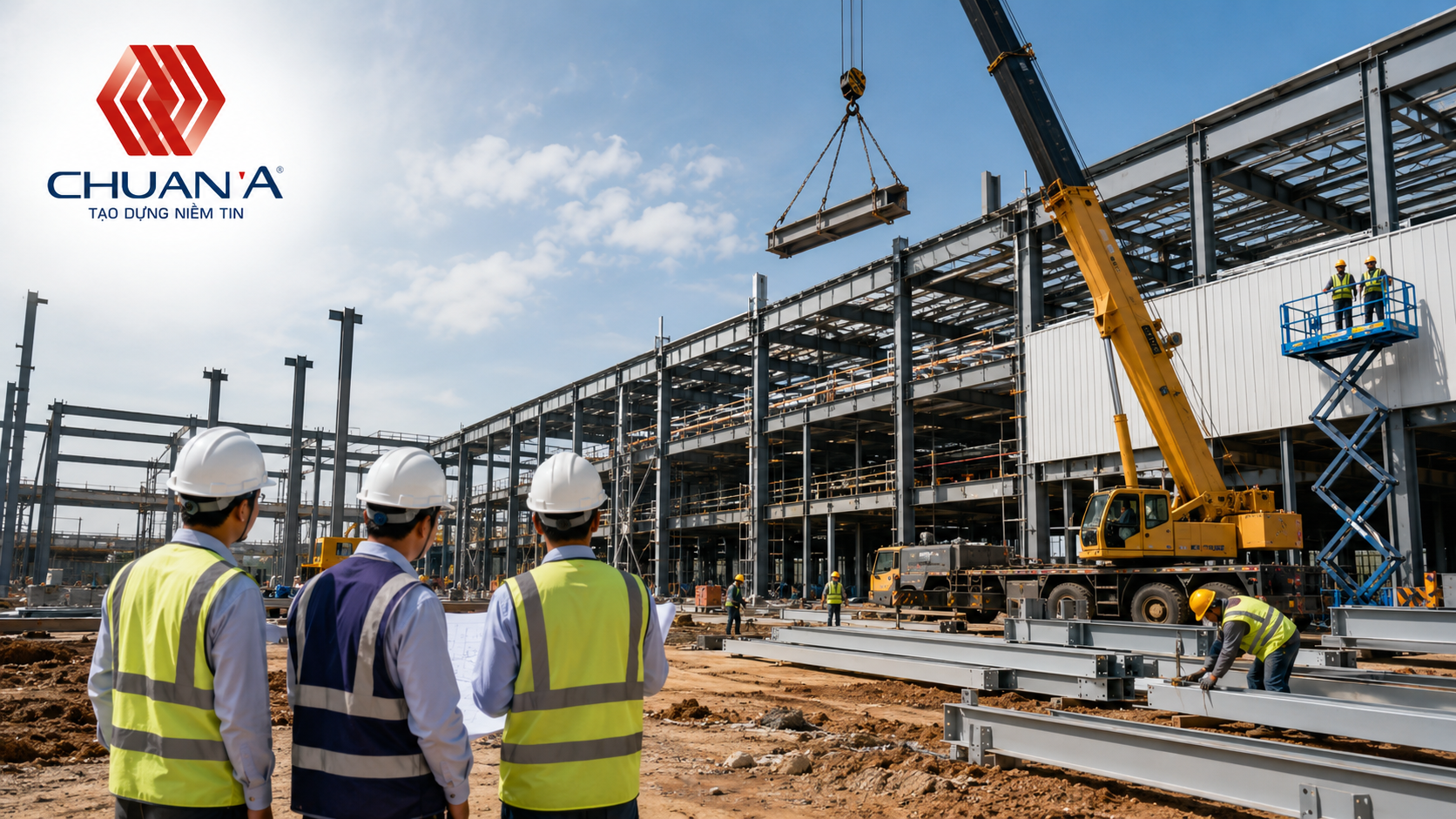
An EPC contractor is a model that is increasingly important in industrial construction projects. Investors do not only need a contractor that can build. They need a company that can understand production goals, design solutions, select materials, organize the construction site, control schedules, manage quality, and hand over a facility that can operate stably.
EPC stands for Engineering, Procurement, and Construction. It means technical design, material and equipment procurement, and construction execution. Under this model, one main contractor takes primary responsibility across multiple stages of the project. Instead of coordinating many separate companies, the investor works with one main EPC contractor, reducing fragmentation risks.
.png)
EPC includes three main parts. Engineering is technical design, including needs analysis, concept development, drawings, and technical solutions. Procurement is the purchase of materials and equipment, supplier selection, and input quality control. Construction is site execution, construction management, schedule control, safety control, and acceptance.
The strength of EPC is that these three parts are not separated. Design must consider available materials, budget, and buildability. Procurement must match the design and project schedule. Construction must follow the design while responding quickly to real site conditions.
In the traditional model, an investor may hire a design company, a construction contractor, an M&E contractor, a fire protection contractor, and many suppliers separately. This approach can work for small projects or investors with strong internal management teams. However, for complex industrial projects, it can easily create conflicts.
EPC brings responsibility to one main contact point. When there is a problem with drawings, materials, or construction, the EPC contractor is responsible for solving it. The investor does not need to stand between multiple parties. This is especially important for projects that require clear schedules and consistent quality.
.png)
The first benefit is schedule control. Because design, procurement, and construction are planned together, the EPC contractor can prepare materials according to each phase and reduce waiting time. The second benefit is cost optimization. EPC allows technical solutions to be considered early, avoiding situations where the design is completed before discovering that materials are too expensive or difficult to install.
The third benefit is stronger accountability. One main contact point helps the investor control and evaluate quality more easily. The fourth benefit is reduced coordination risk among architecture, structure, M&E, fire protection, and infrastructure. When all disciplines are coordinated within one system, site conflicts are greatly reduced.
EPC is especially suitable for industrial factories, manufacturing plants, logistics warehouses, distribution centers, industrial infrastructure, technical stations, factory offices, and projects that require many integrated systems. These projects do not only need a building shell, but also efficient operation after handover.
If the project has many disciplines, tight schedule requirements, clear quality expectations, and the investor wants to reduce management burden, EPC is worth considering. This model allows the investor to focus on production strategy while the contractor handles technical execution.
EPC only works well when the contractor has enough capability. If the selected company lacks experience, the project may face design errors, unsuitable material procurement, slow construction, or weak site management. Since the EPC contractor handles many roles, its mistakes can affect the entire project.
Investors should evaluate EPC contractor capability through project experience, technical team quality, management processes, M&E and fire protection coordination ability, financial capacity, legal documentation, and the way the contractor provides consulting. A good EPC contractor does not only provide a quotation, but also helps the investor identify risks before they appear.
Chuẩn A focuses on industrial construction solutions, including consulting, design, factory construction, office construction, M&E, and fire protection. These are work items that often require close coordination in industrial projects. When one company understands both construction and technical systems, investors can reduce drawing conflicts, site changes, and acceptance delays.
For factories, logistics warehouses, or technical infrastructure projects in Dong Nai, Binh Duong, and nearby areas, an integrated approach creates a clearer project management foundation. This is important so that the project is not only completed on schedule but also operates effectively after handover.
The EPC contractor model helps industrial projects move more smoothly from design to construction. For facilities that require high integration, EPC can save time, optimize cost, and increase single-point responsibility. If a business is preparing to invest in a factory, logistics warehouse, or technical infrastructure project, choosing the right contractor is an important step to ensure the project is completed and operates effectively for many years.
CHUAN'A CONSTRUCTION INVESTMENT JOINT STOCK COMPANY


