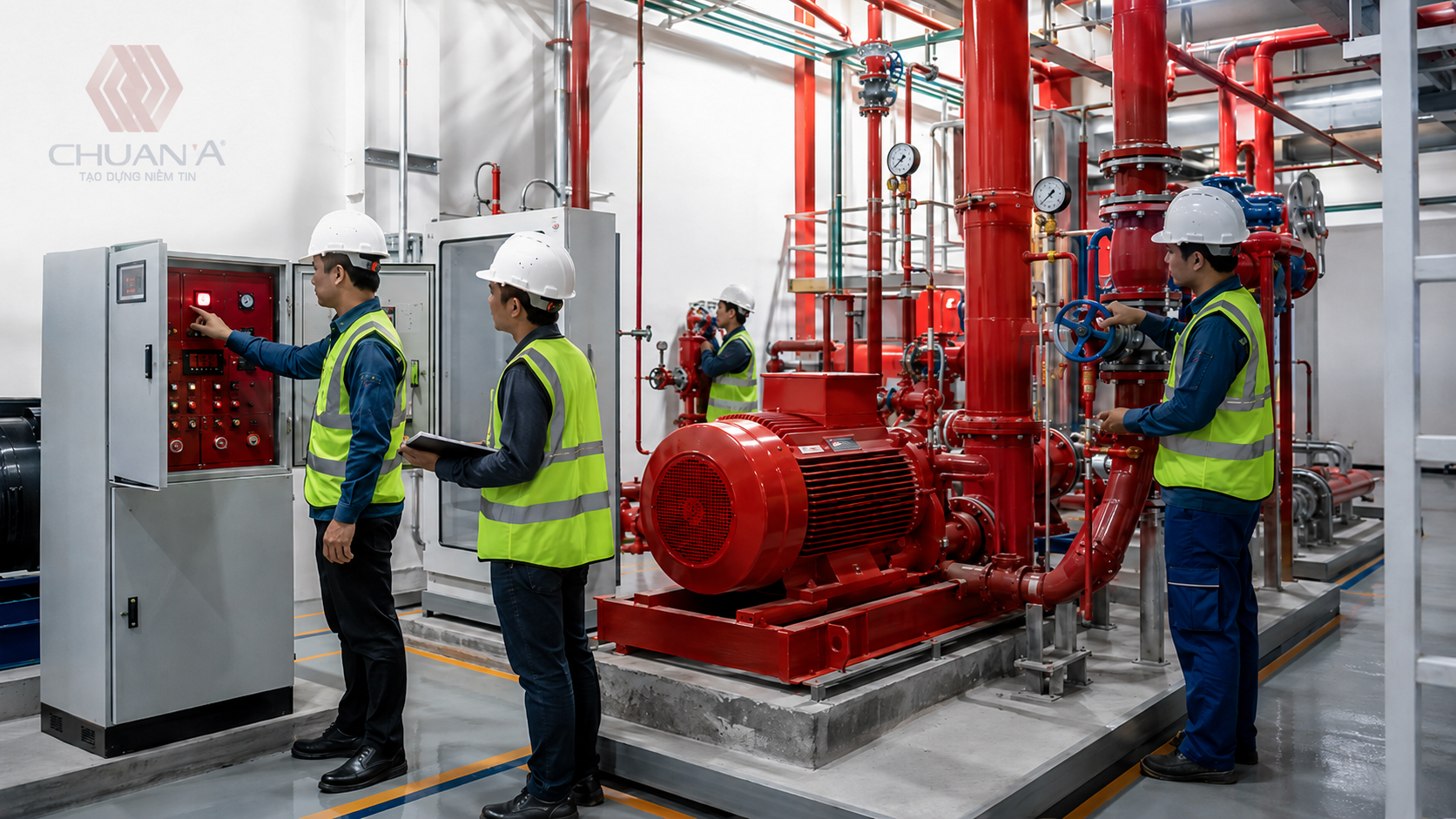
Factory fire protection construction is no longer a minor work item handled at the end of a project. As factories use more high-power machinery, complex electrical systems, diverse production materials, and continuous production lines, fire protection becomes a core safety foundation for the entire facility. A fire protection system that is designed and installed correctly from the beginning helps businesses protect people, assets, production schedules, and credibility with partners.
In 2026, factory construction trends in Dong Nai, Binh Duong, and nearby industrial areas continue to move toward integrated solutions. Structure, M&E, technical infrastructure, fire protection, and operation must be calculated together. If fire protection is treated as an add-on after the factory has already been completed, businesses may face drawing revisions, pipe route changes, ceiling demolition, signal cable rework, or fire pump room adjustments.
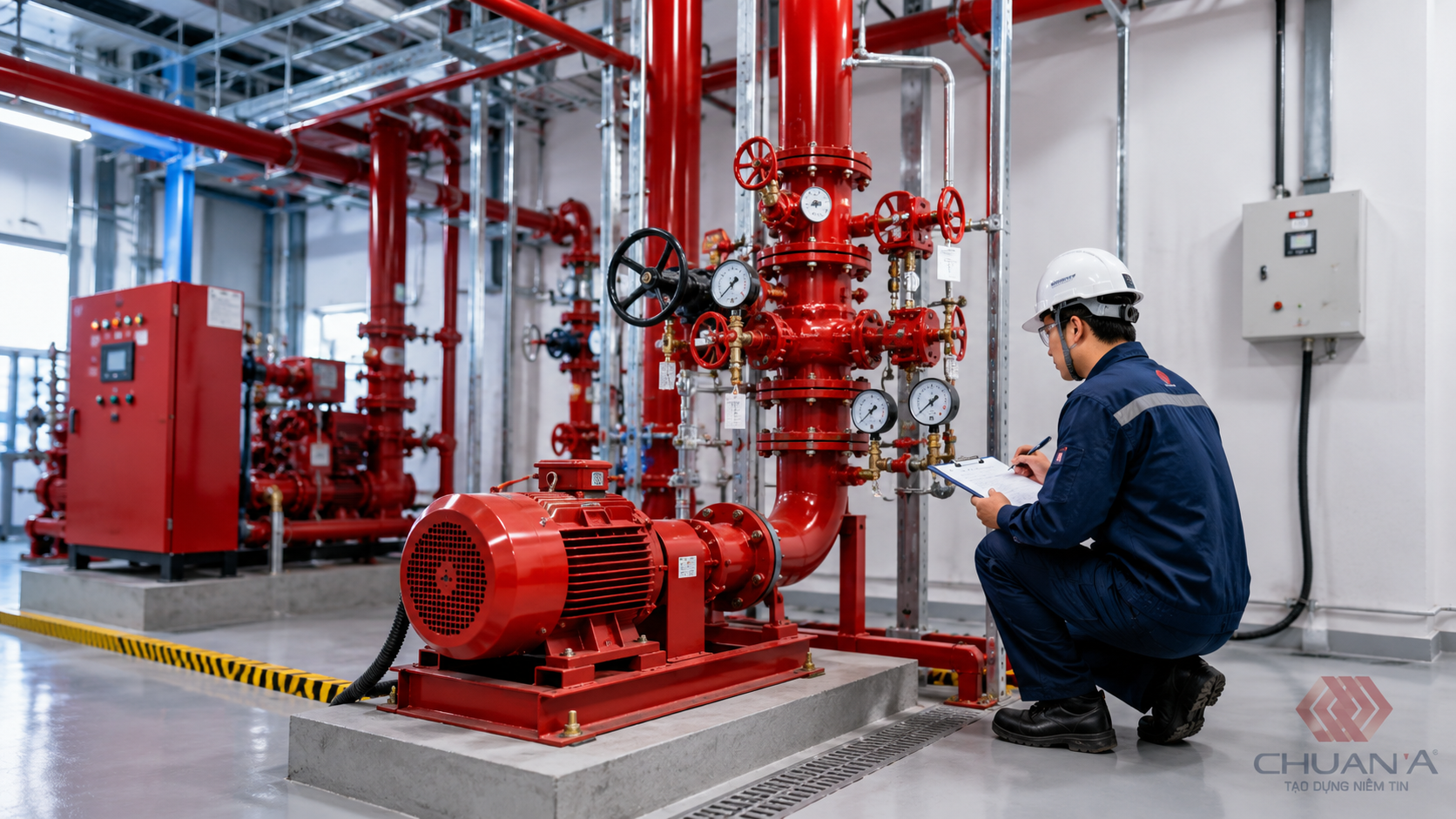
The first standard in factory fire protection construction is risk assessment. No two factories are exactly the same. A mechanical factory has different risks from a wood workshop, plastic warehouse, garment factory, cold storage facility, packaging factory, or chemical production area. Therefore, the contractor must inspect the site layout, functions, number of workers, machinery, stored materials, high-temperature zones, electrical areas, spark-risk zones, and goods movement routes.
A good survey does not only record the size of the site. It must identify dangerous areas, priority protection zones, evacuation points, positions for the fire alarm control panel, fire pumps, water tanks, detectors, sprinklers, fire extinguishers, and safety signs. From this survey, the business has a proper basis for designing a suitable system instead of applying a generic drawing from another project.
A common mistake is separating fire protection from other disciplines. In reality, fire pipes may conflict with cable trays, air ducts, water pipes, steel beams, or ceiling suspension systems. If drawings are not coordinated early, the site team must solve issues directly during construction. The more problems are handled on site, the higher the risk of schedule delays and additional costs.
Factory fire protection drawings should clearly show the fire alarm system, firefighting system, sprinkler locations, smoke detectors, heat detectors, manual call points, alarm bells and lights, control panels, pump cabinets, valves, pressure gauges, hydrants, and emergency exits. The drawings should also calculate flow rate, pressure, protection zones, and operation methods during an emergency. For industrial projects, clearer drawings mean fewer site conflicts.
A fire protection system cannot be safe if the input equipment is poor quality. Businesses should prioritize equipment with complete documentation, clear origin, and technical suitability for the project. Items such as sprinklers, valves, pumps, control cabinets, detectors, fire extinguishers, signal cables, and steel pipes should all be checked before installation.
A low initial price can sometimes increase long-term costs. Incompatible equipment may cause false alarms, reduced water pressure, leakage, difficult maintenance, or failure to meet inspection requirements. For an operating factory, one system shutdown for repairs can affect multiple production lines. Therefore, selecting the right equipment from the start is a sustainable way to save costs.
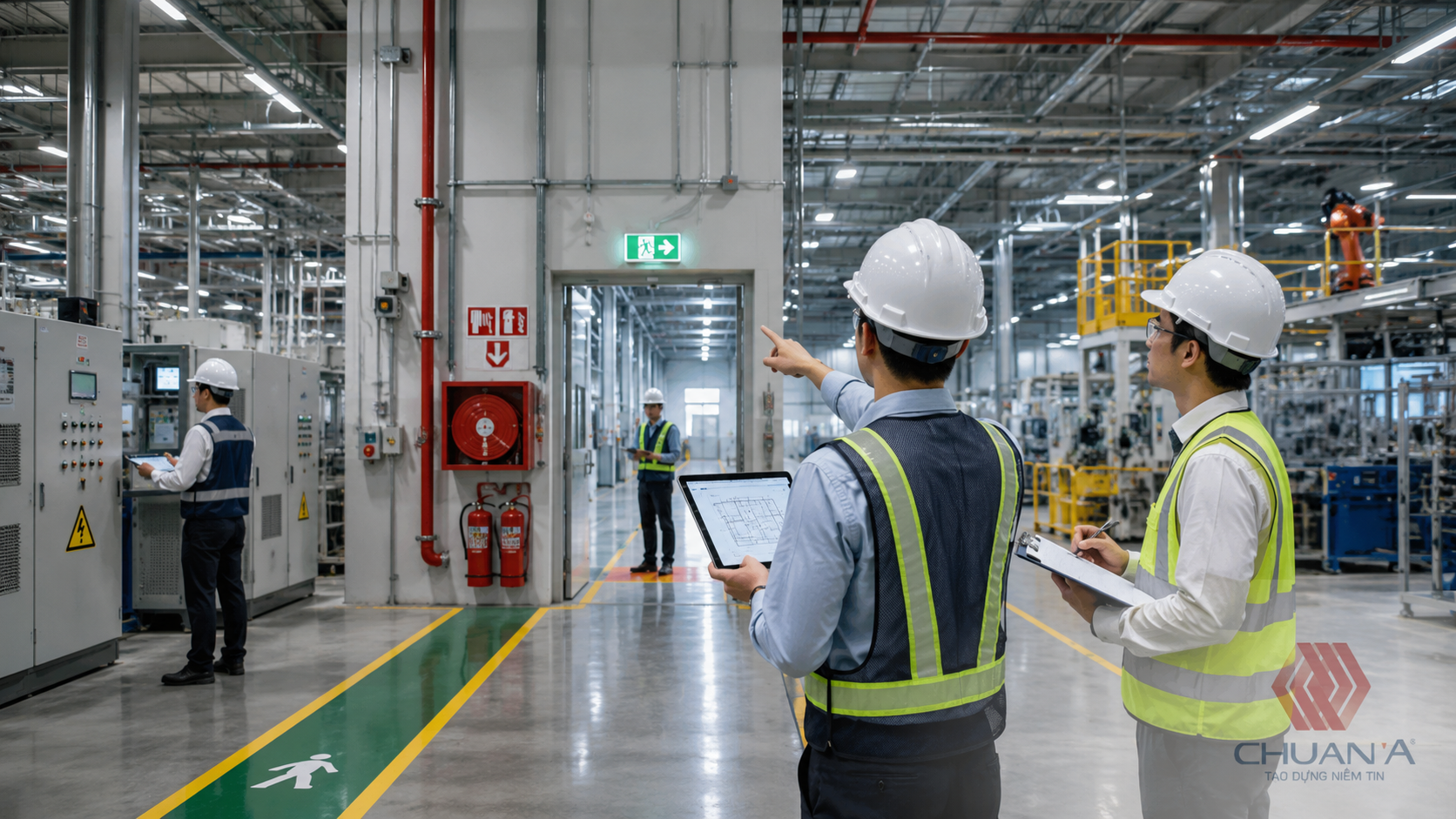
In fire protection construction, small details determine major reliability. Pipes must be installed at the correct elevation, correct support positions, and must be checked for leakage. Sprinklers must be arranged so that the spray area is not blocked by racks, machinery, suspended ceilings, or other pipes. Fire alarm signal cables must follow proper routes, be protected, and be clearly marked.
A system may look good on drawings, but poor installation will turn it into a hidden risk. When an incident occurs, insufficient water pressure, signal failure, or valve malfunction can waste critical response time. Therefore, the construction team should maintain site logs, inspect each area, and conduct internal acceptance before moving to the next stage.
Completing installation does not mean the system is ready. The factory must test the fire alarm system, firefighting system, pumps, valves, pipe pressure, sprinklers, alarm bells, alarm lights, and backup power. Any issues found during testing must be corrected before handover.
Acceptance documents are also important. Businesses should keep as-built drawings, equipment certificates, inspection records, construction logs, pressure test results, operation manuals, and related documents. The more complete the documentation, the smoother the inspection and handover process will be.
A fire protection system may remain inactive for a long time, but when needed, it must respond immediately. If the system is not checked for months, businesses may not know whether detectors are still sensitive, extinguishers still have pressure, pumps operate properly, valves are stuck, or pipes are leaking.
Depending on the scale and operating conditions, businesses should create a periodic inspection plan. For factories with dust, oil vapor, high temperature, or continuous operation, inspection frequency should be emphasized. Maintenance not only supports safety compliance but also extends equipment life.
Factory fire protection does not stand alone. It is connected to structure, plumbing, electricity, ventilation, cooling systems, production layout, and technical infrastructure. Therefore, a contractor with overall industrial experience can help investors reduce conflicts between different work items.
Chuẩn A focuses on integrated industrial construction solutions, from consulting and design to factory construction, office construction, M&E, and fire protection. When one project partner understands the whole facility, businesses can control schedule, cost, and quality more easily. This is an important advantage for projects that need to be ready for operation on time.
What does factory fire protection construction include?
It usually includes automatic fire alarm systems, firefighting systems, sprinklers, fire pumps, fire extinguishers, piping, valves, control panels, safety signs, and evacuation solutions.
Should fire protection be installed after factory construction is finished?
No. Fire protection should be considered during the overall design stage to avoid conflicts with structure, M&E, and production layout.
How often should a fire protection system be maintained?
Businesses should inspect the system periodically according to actual operating conditions. Factories with higher fire risks should be checked more frequently.
Factory fire protection construction is an investment in business continuity and safety. A properly designed and installed system helps the factory operate more safely, more stably, and with greater confidence when expanding production. If a business is preparing to build, renovate, or upgrade a factory in Dong Nai, Binh Duong, or nearby areas, Chuẩn A can support consulting, design, construction, and completion of a fire protection system that fits real operational needs.
CHUAN'A CONSTRUCTION INVESTMENT JOINT STOCK COMPANY


