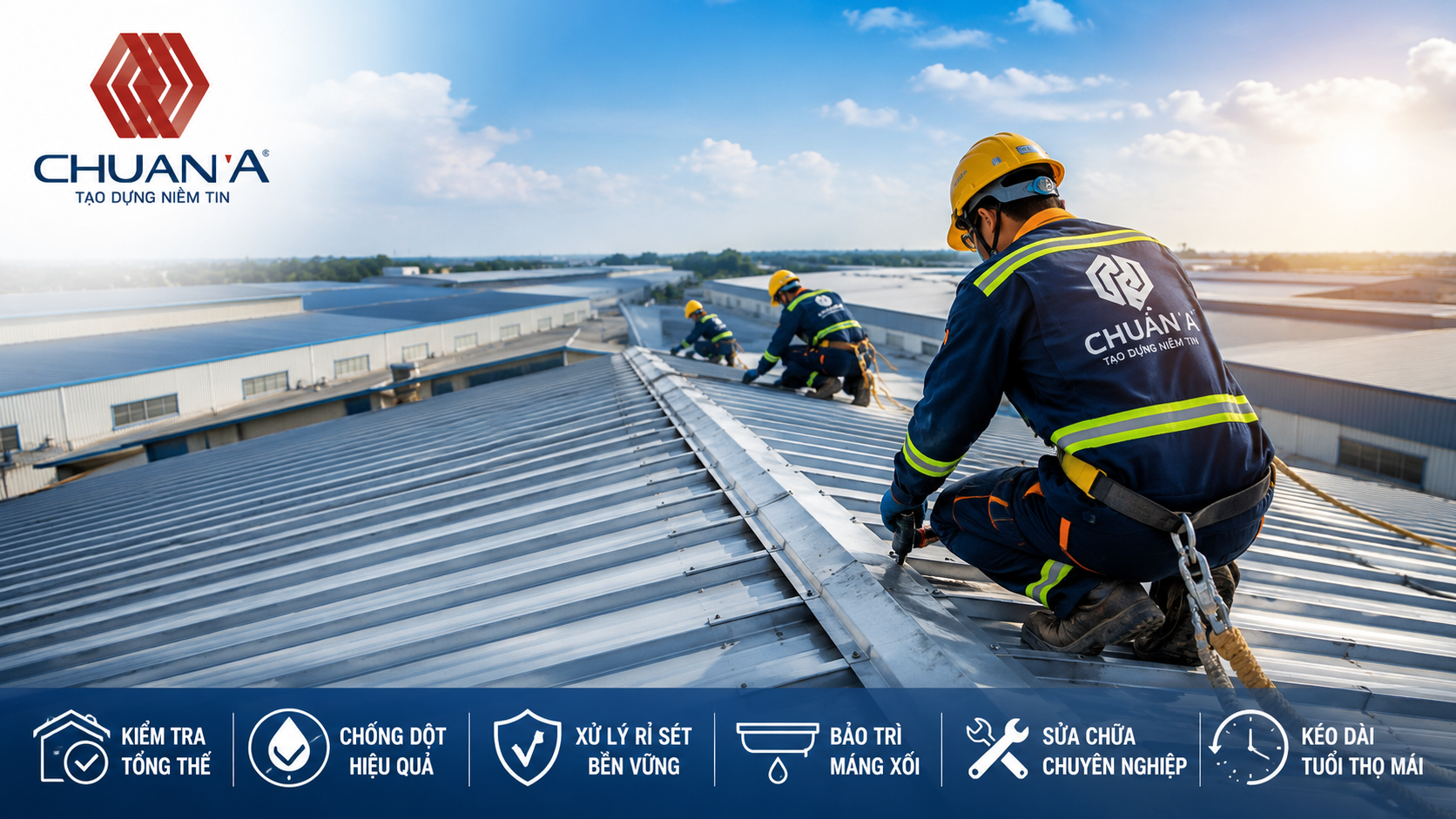
A metal roof is continuously exposed to sunlight, heavy rain, strong winds, humidity, industrial dust and temperature changes. After years of operation, factory roofs may develop leaks, corrosion, loose fasteners, deteriorated rubber washers, blocked gutters or open joints.
Timely factory metal roof maintenance in Dong Nai helps businesses identify damaged areas before they become serious problems. Early maintenance can reduce the risk of water affecting machinery, raw materials, finished products, electrical systems and daily production activities.
Chuan A provides inspection, maintenance, repair and roofing sheet replacement solutions based on the actual condition of each factory. The proposed method considers the level of deterioration, operational requirements and the working environment of the facility.
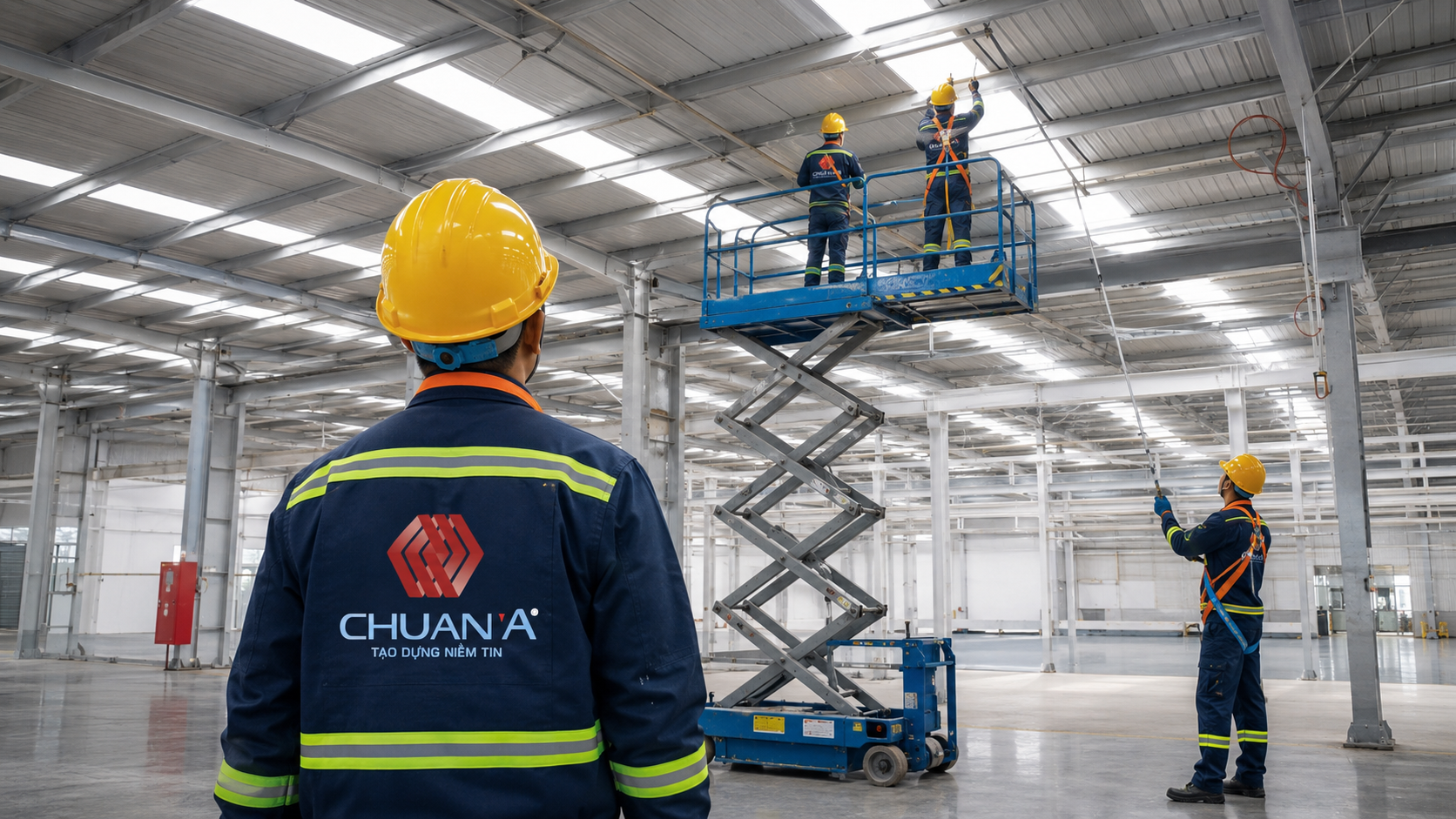
Many roofing problems begin with small defects, such as a loose screw, damaged sealant, a minor rust spot or a partially blocked gutter. Without timely treatment, these defects may develop into major leaks and affect the structures and production areas below.
Regular factory roof maintenance provides several practical benefits:
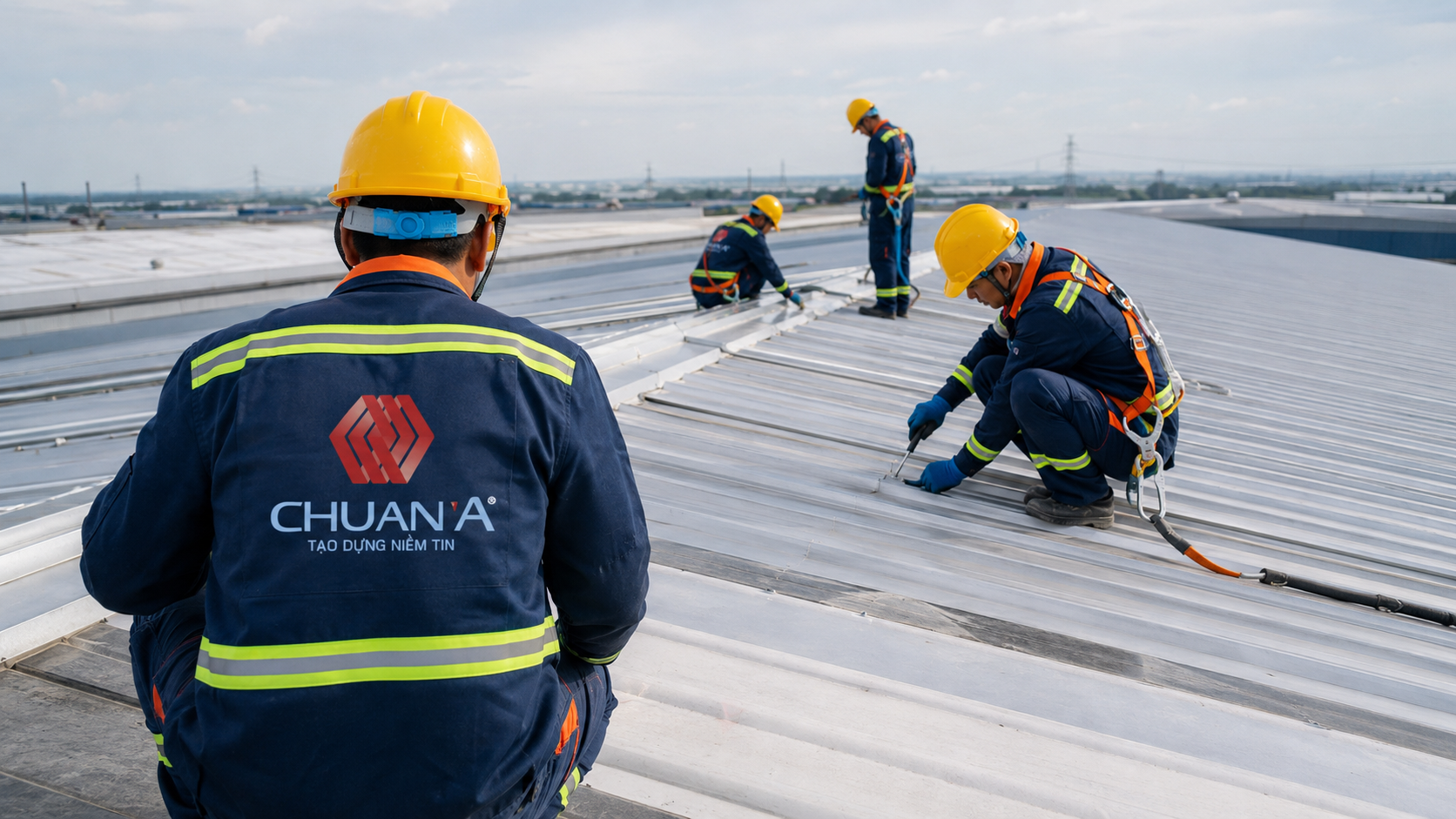
A factory roof should be inspected when one or more of the following signs appear:
Businesses should not wait until a roof develops severe leaks before arranging repairs. Early inspections usually provide more treatment options and may prevent the need to replace a large roof area.
| Service item | Scope of work |
|---|---|
| Overall roof inspection | Inspection of roofing sheets, overlaps, ridge caps, flashing, penetrations and areas with a high risk of leakage. |
| Fastener and washer inspection | Identification of loose or corroded screws and deteriorated washers or rubber seals for tightening or replacement. |
| Roof leak repair | Identification of leaks caused by overlaps, screw holes, penetrations, ridge caps, gutters or damaged roofing sheets. |
| Rust treatment | Cleaning corroded areas, evaluating material loss and applying protective treatment or replacing sheets when necessary. |
| Gutter maintenance | Cleaning, unclogging, reinforcing and repairing gutters with leaks, deformation or poor drainage. |
| Joint and flashing repair | Inspection and treatment of gaps at sheet overlaps, ridge caps, edge flashing and roof-to-wall connections. |
| Damaged sheet replacement | Local or sectional replacement of roofing sheets that are perforated, severely corroded, deformed or beyond practical repair. |
Chuan A collects basic information about the factory location, roof area, service period, leak condition, damaged areas and the operational requirements of the business.
The technical team inspects the roofing surface, screws, sheet overlaps, ridge caps, gutters, downpipes, roof penetrations and visible areas of deterioration.
Roof leakage may result from several different causes. The actual water entry point and damaged components must be identified before an appropriate repair method is selected.
Depending on the roof condition, the proposed work may include roof cleaning, screw and washer replacement, joint sealing, rust treatment, gutter repair, reinforcement or replacement of deteriorated roofing sheets.
Roof work should be organised with suitable access methods, personal protective equipment and appropriate controls for working at height. The work area should also be managed to minimise its effect on operations below.
After completion, the repaired areas are inspected again. The business receives information about the completed work, the remaining roof condition and items that should be monitored during future maintenance.
An effective maintenance solution should not focus only on covering the visible leak. It is important to identify the source of the problem and inspect the surrounding roof area.
Water may travel along the roof slope or steel structure before dripping at a different location. Sealing only the visible drip point may therefore fail to address the actual water entry point.
When the roof is still in usable condition, businesses may repair selected areas by replacing screws and washers, treating joints, removing corrosion or replacing individual damaged sheets. This approach can optimise costs and reduce disruption to production.
If roofing sheets are severely corroded, perforated in multiple locations, heavily deformed or no longer able to provide structural and weather protection, repeated patching may not provide a durable solution. Sectional or complete replacement should then be considered.
Blocked gutters and downpipes may cause rainwater to overflow back into the roof, especially during heavy rainfall. The drainage system should therefore be inspected together with the roofing surface.
The maintenance frequency depends on the age of the roof, the production environment, local exposure, corrosion levels and the actual condition of the building. Businesses may consider arranging inspections approximately every six months, before the rainy season or after unusual weather events.
Factories located in humid, dusty, chemical, coastal or highly corrosive environments may require more frequent roof inspections.
Chuan A Construction Investment Corporation operates in industrial construction and facility maintenance, with its office located at the Amata Industrial Park Service Center in Dong Nai.
Businesses may also review Chuan A's factory metal roof maintenance process and industrial maintenance services for additional information about facility inspection and maintenance.
Chuan A receives factory roof inspection and maintenance requests in Dong Nai, Bien Hoa and nearby areas. Businesses in Long Thanh, Trang Bom, Nhon Trach, Binh Duong and Ho Chi Minh City may contact the company to discuss their project location, size and scope of work.
This depends on the work location, level of damage and the factory's safety requirements. For many localised repairs, the work area can be organised to reduce disruption to production activities.
No. If the roofing sheets remain serviceable, leaks may be treated by repairing screws, washers, overlaps, gutters or selected damaged sheets. The appropriate method should be determined through an on-site inspection.
The cost depends on the roof area, working height, damage level, access conditions, material type and required scope of work. A suitable method and quotation can be prepared after inspection.
Replacement should be considered when the roof is severely corroded, perforated in multiple areas, significantly deformed, repeatedly repaired or no longer able to provide reliable weather protection and safe use.
Timely maintenance helps businesses manage the condition of their facilities, reduce the risk of leakage and extend the service life of the roofing system. When signs of deterioration appear, an early inspection can help determine the most appropriate repair solution.
CHUAN A CONSTRUCTION INVESTMENT CORPORATION
Contact Chuan A to discuss factory metal roof inspection, maintenance, repair or replacement services in Dong Nai.