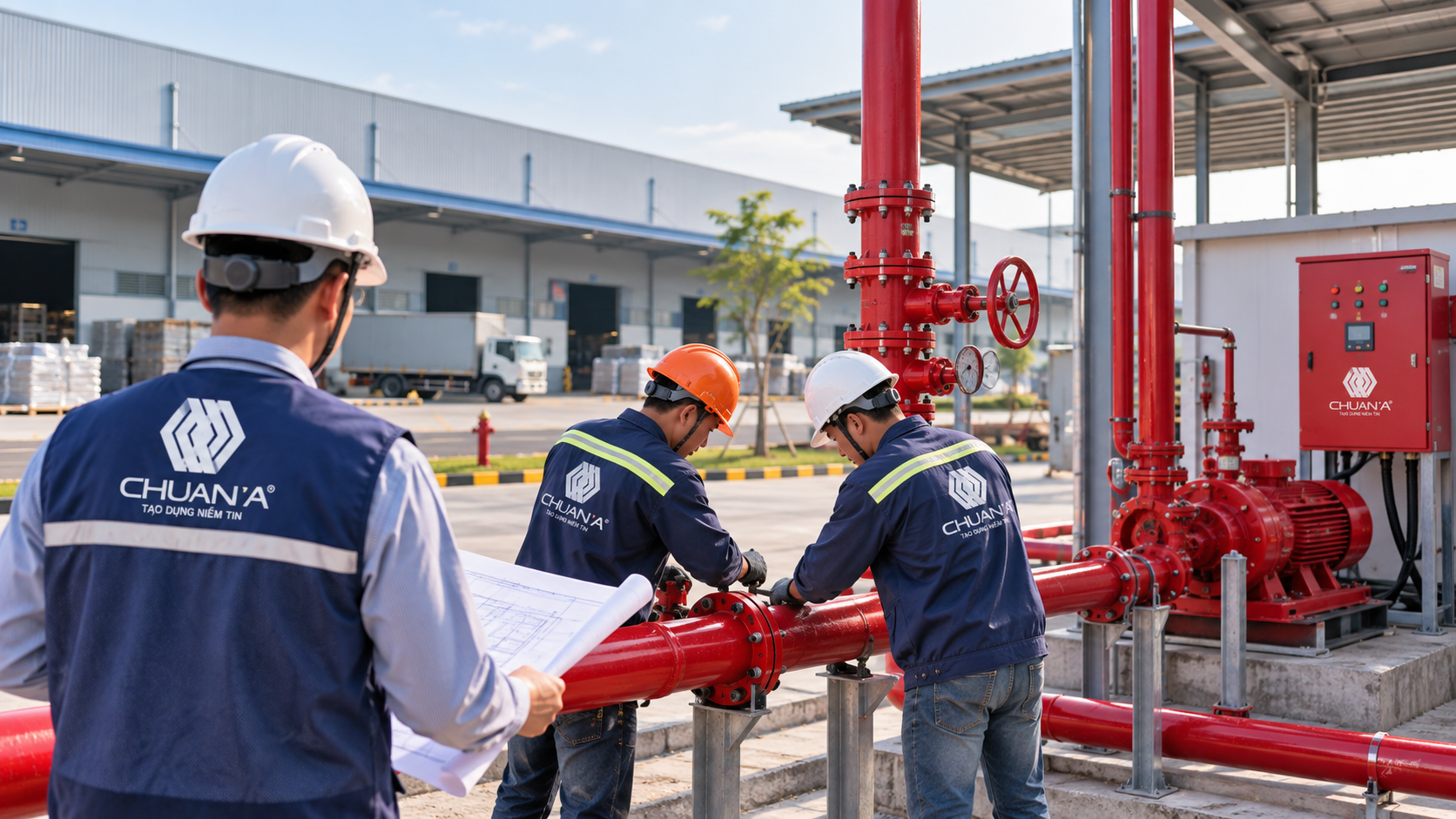
Learn the safe process for installing and maintaining factory fire protection systems, from design and installation to testing, commissioning and periodic maintenance.
A fire protection system is one of the most important safety systems in factories, manufacturing plants, warehouses and industrial facilities. It is designed not only to detect and respond to fire incidents, but also to protect employees, assets, production equipment and business operations.
A well-designed fire protection system may still fail if it is improperly installed or poorly maintained. Common problems can include unstable water pressure, pump failure, leaking pipes, faulty fire detectors, stuck valves or warning devices that do not activate properly during an emergency.
For this reason, the installation and maintenance of a factory fire protection system should be managed as a complete process, including site inspection, engineering design, equipment selection, installation, testing, commissioning, handover and periodic maintenance.
Depending on the size, function, fire risk classification and technical requirements of each facility, a factory fire protection system may consist of multiple interconnected systems. A complete solution commonly combines fire detection, fire suppression, firefighting water supply and life safety components.
The fire alarm system is responsible for detecting early signs of fire and providing warning signals so that appropriate action can be taken as quickly as possible. Typical equipment includes smoke detectors, heat detectors, manual call points, fire alarm control panels, sounders, horns and visual warning devices.
Depending on the project requirements, conventional or addressable fire alarm systems may be selected. Detector locations should be designed according to factory height, operating conditions, production activities and potential sources of heat or smoke.
Water-based fire suppression is widely used in factories and industrial facilities. Depending on the project, the system may include automatic sprinkler systems, indoor fire hydrants, outdoor fire hydrants, firefighting water pipes, valves, hose cabinets and related equipment.
For sprinkler systems, sprinkler heads are distributed according to the characteristics of each protected area and the applicable design requirements, allowing the system to control or suppress a fire close to its point of origin.
The fire pump system provides the required water flow and pressure for firefighting systems. Depending on the design, a fire pump set may include a main pump, standby pump, jockey pump, control panels, valves, pressure gauges and supporting equipment.
The fire pump system should be inspected regularly to verify the condition of the power supply, motors, control equipment, pressure and related components.
Specialized fire suppression solutions may be required for areas such as server rooms, electrical rooms, equipment rooms or locations containing specific fire hazards. The selected system should be appropriate for the characteristics and operational conditions of the protected area.
Depending on the building configuration and project requirements, smoke extraction, pressurization and control systems may be installed to support evacuation and improve conditions during a fire emergency.
A reliable fire protection system should be installed according to a structured technical process. Although each project requires a customized solution, the main installation stages generally include the following steps.
The engineering team begins by surveying the actual facility and collecting information about the building layout, floor area, ceiling height, production processes, stored materials and potential fire hazards.
For operating factories, special attention should be paid to areas with high temperatures, electrical equipment, raw material storage, finished product storage and locations where sparks or ignition sources may occur.
After the site survey, an appropriate fire protection strategy is developed based on the actual characteristics of the facility. The planning process should consider occupancy, building scale, fire hazard levels, protected zones, available water sources and operational requirements.
The objective is to develop an integrated system that provides reliable protection while remaining practical for installation, operation and future maintenance.
The engineering drawings should clearly define equipment locations, piping routes, sprinkler heads, fire hydrants, fire pump systems, valves, alarm devices and other related components.
For water-based systems, hydraulic calculations and pressure requirements should be evaluated to ensure that the system can deliver the required flow and pressure under the design conditions.
Before installation begins, materials and equipment should be checked for specifications, quantity, origin, technical requirements and physical condition.
Proper preparation helps reduce installation delays and prevents unnecessary changes or material shortages during construction.
Installation work may include fire piping, supports and hangers, valves, sprinkler heads, fire hose cabinets, fire alarm panels, detectors, notification devices, fire pumps and associated equipment.
Pipes and equipment should be installed at the specified locations and elevations while maintaining suitable access for inspection, troubleshooting and future maintenance.
Installation quality should be checked at defined inspection points throughout construction. This helps identify issues such as incorrect equipment locations, missing supports, defective connections, incorrect pipe routing or improper device wiring.
Once installation is completed, the fire protection system should be inspected and tested before being placed into normal operation. This stage is essential to confirm that individual components and interconnected systems operate correctly.
Fire protection piping should be inspected for leakage, pressure performance and connection quality. Valves, pressure gauges, sprinkler heads and related equipment should also be checked before the system is commissioned.
Fire detectors, manual call points, sounders, horns, visual indicators and the fire alarm control panel should be tested to verify signal transmission and response.
Where integrated control functions are provided, the relevant interfaces should also be tested according to the facility's emergency operation sequence.
The fire pump system should be tested for starting performance, automatic operation and operating parameters. The main pump, standby pump and jockey pump should be checked according to the approved design requirements.
After successful testing, the project documentation, as-built drawings, equipment information, operating instructions and maintenance plan should be completed and handed over.
A proper handover process allows facility operators to understand the system and manage it effectively throughout its service life.
Fire protection maintenance should not be treated only as emergency repair work. It is a planned activity designed to identify early signs of deterioration and keep the system ready for operation when needed.
Maintenance should begin with a general inspection of the entire fire protection system, including equipment condition, piping, control panels, valves, electrical supply and related components.
The fire alarm control panel should be checked for power status, fault signals, backup batteries and communication with field devices.
Detectors, manual call points, sounders, horns and visual indicators should be inspected periodically to ensure that they remain functional.
Sprinkler heads should be inspected for obstruction, corrosion, physical damage or other conditions that could affect their performance.
Fire pipes, valves and connections should also be checked for leakage, corrosion and other signs of deterioration.
The fire pump system should be inspected for power supply, motor condition, control panel operation, valves, pressure gauges and pump starting capability.
Abnormal conditions such as continuous pump operation, unstable pressure or pump starting failures should be investigated promptly.
Any defective or abnormal equipment identified during inspection should be documented. Depending on its condition, the equipment may require cleaning, adjustment, repair, replacement or further technical assessment.
Businesses should not wait until a scheduled maintenance visit to investigate abnormal system conditions. Certain warning signs should be addressed as soon as they are identified.
Every factory has different operating conditions and fire hazards. Using a standard solution without properly assessing the actual facility may result in equipment locations or system configurations that are not suitable for the project.
A completed installation does not automatically mean that the system is ready for operation. Skipping testing, commissioning and integrated system checks may leave critical problems undiscovered until an emergency occurs.
Fire protection equipment is exposed to dust, humidity, temperature changes, corrosion and long-term operation. Without regular inspection, equipment performance may gradually deteriorate without being noticed.
Reactive maintenance can increase repair costs and cause unnecessary production downtime. Preventive maintenance allows small problems to be identified before they develop into major failures.
Regular maintenance enables businesses to manage fire protection systems proactively. Problems involving power supplies, pumps, valves, piping, detectors and notification devices can be identified before they affect the performance of the overall system.
Maintenance records also help facility operators understand equipment conditions, plan replacement work and prepare appropriate maintenance budgets.
For operating factories, a well-planned maintenance schedule can also reduce unnecessary downtime and minimize disruption to production activities.
Chuan A provides consulting, engineering design, installation, testing, commissioning and maintenance solutions for fire protection systems in factories, manufacturing plants and industrial facilities.
The implementation process is developed as an integrated workflow covering site assessment, technical planning, system design, installation, testing, commissioning and handover. After commissioning, businesses can continue with periodic maintenance programs to help maintain system reliability throughout the operating life of the facility.
For operating factories, installation and maintenance activities can be organized by area or work zone to minimize disruption to production lines and daily operations.
Chuan A supports factory site surveys, requirement analysis and fire protection recommendations based on actual building conditions and operational requirements.
Services may include fire alarm systems, sprinkler systems, fire hydrants, fire pump stations, firefighting water piping and other specialized fire protection solutions depending on the project.
Fire protection systems are tested and commissioned before handover. Technical documentation, equipment information and operating instructions are prepared to support long-term facility management.
Chuan A supports inspection, maintenance, repair and system improvement services to help businesses maintain stable fire protection performance and readiness for emergency situations.
The installation and maintenance of a factory fire protection system should be managed as a complete technical process, from site survey and engineering design to installation, testing, commissioning and periodic maintenance.
An effective fire protection system depends not only on the quality of the equipment, but also on engineering design, installation workmanship, testing procedures and regular maintenance. These factors play an important role in protecting people, assets and production operations.
Chuan A works with businesses on fire protection consulting, engineering, installation and maintenance solutions for factories, manufacturing plants and industrial facilities in Dong Nai and surrounding areas.