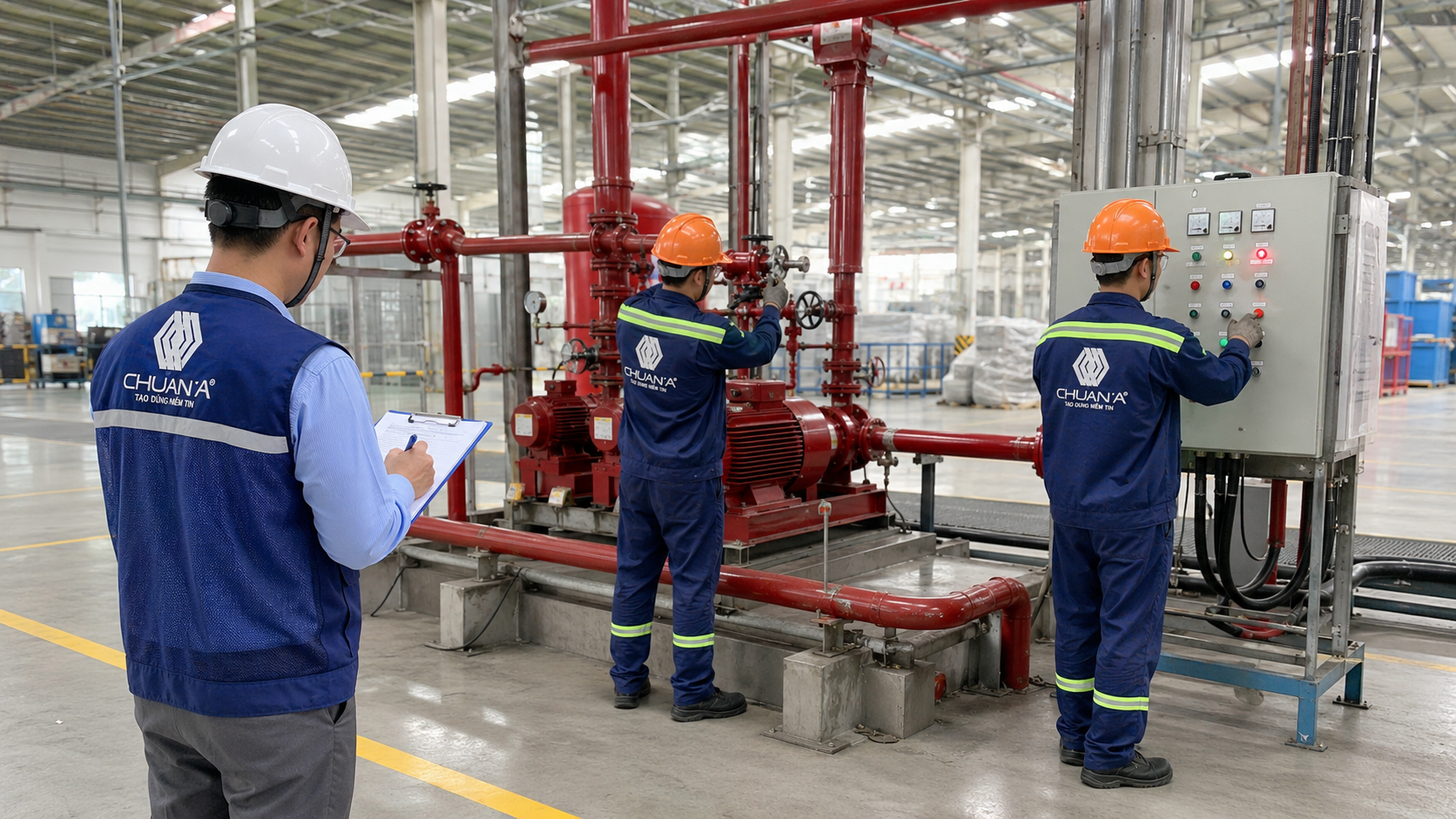
Two contractors can perform the same volume of work and deliver very different outcomes. The difference usually lies not in construction technique but in organisation: whether the survey collected enough data, whether the scope was agreed in advance, how thoroughly safety was prepared, and whether the handover records can be reused next time.
This article describes the factory maintenance process in practical sequence, from receiving the request through to final acceptance and document handover.
.png)
The first step is to clarify whether the business needs a specific defect resolved or wants to establish a scheduled maintenance programme.
These two objectives lead to different survey scopes: one focuses on problem areas, the other requires assessment of the entire facility.
The survey determines the quality of everything that follows. It covers visual inspection, photographic records, and identification of the location and severity of defects in each item.
For roofs, elevated structures or areas with restricted access, safe access arrangements must be established before detailed inspection can begin.
A single leak point may result from a loose fastener, an open seam, a blocked gutter or a sheet corroded through. Each cause leads to a different remedy.
Skipping this step often means the same repair is repeated at the same location within a few months.
.png)
Survey findings are converted into a work list, with each entry stating location, current condition and proposed remedy.
Items are typically classified into three levels: immediate action, action within the planning period, and continued monitoring. The basis for listing all relevant items is set out in our article on what factory maintenance includes.
For each item, the proposal should state the construction method, materials and extent of treatment.
Where repair and replacement are both viable, the proposal should present both so the owner can decide based on material condition and the intended remaining service life of the facility.
The quotation should follow the agreed work list, separating labour, materials and access or construction methods.
This format allows businesses to adjust scope against budget without restarting the process. Pricing factors are analysed in our article on factory maintenance costs in Dong Nai.
An operating factory imposes constraints on working hours, accessible areas and permitted noise levels.
Tasks requiring power isolation, or generating dust, welding or cutting, are usually scheduled during night shifts, non-working days or planned shutdown periods.
Before mobilisation, the works team must complete personnel records, working-at-height certification, insurance and site entry registration in line with industrial park requirements.
For welding and cutting activities, a hot work permit and on-site fire prevention measures are mandatory.
This covers lifelines, safety harnesses, working platforms, barriers to the area below and warning signage.
For work on metal roofing, fall protection at skylight panels must be specified before anyone accesses the roof.
Work proceeds in the approved sequence, prioritising items that affect safety and production.
Any additional defects found during execution should be recorded and agreed before treatment.
Each item should have before and after photographs, with notes on the materials and methods used.
This forms the evidence base for acceptance and the comparison reference for future inspection rounds.
For waterproofing work, water testing at treated areas confirms effectiveness before handover.
For electrical systems and equipment, trial operation and re-measurement of relevant parameters are required.
Surplus materials, waste and tools must be cleared from the roof and work areas.
Fasteners, metal offcuts or nails left on the roof can cause localised corrosion and block gutters during the rainy season.
The acceptance record should include the completed work list, before and after photographs and details of materials used.
These documents support warranty tracking and serve as input data for the following year's plan.
After acceptance, treated areas should be re-checked following the first rainy season or after one operating cycle.
Monitoring results indicate how effective the applied methods were and allow the scope to be adjusted for the annual maintenance plan.
An effective factory maintenance process does not end when a defect has been repaired.
A thorough survey, root cause analysis, an agreed work scope, complete safety preparation and proper document handover are what separate a one-off repair from a systematic facility management programme. The overall scope of such a programme is described in our article on factory maintenance services in Dong Nai.
A site condition survey is the first step in defining work scope, setting priorities and selecting construction methods suited to each factory's operating conditions.
CHUAN A CONSTRUCTION INVESTMENT CORPORATION
Address: Amata Industrial Park Service Centre, Long Binh Ward, Dong Nai Province, Vietnam.
Hotline: 0907 494 549
Email: info@chuana.com.vn
Website:https://chuana.com.vn/
Contact Chuan A to discuss surveys, method proposals and factory maintenance execution in Dong Nai.


