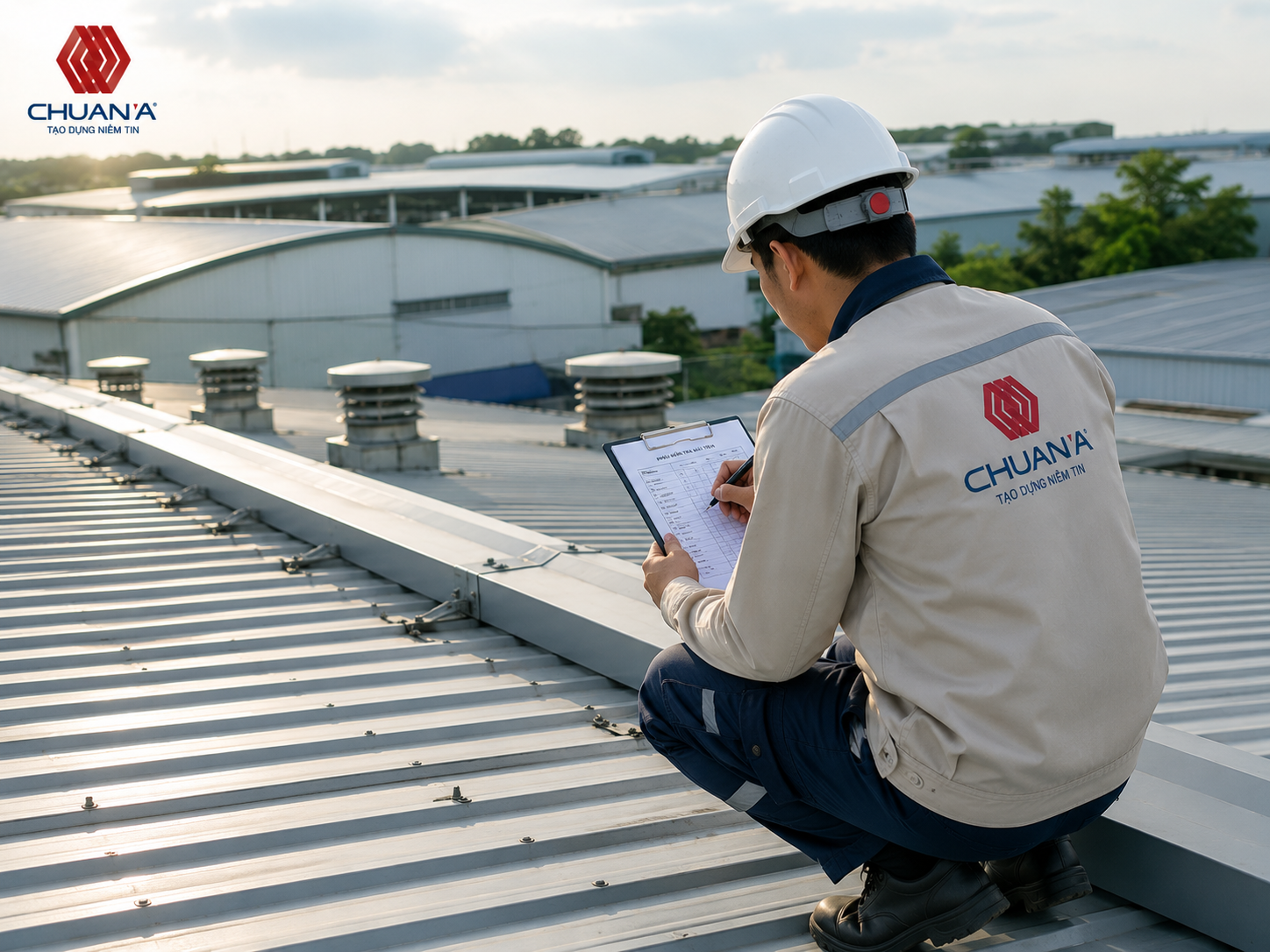
Many industrial roofs receive attention only after water appears inside the building. This is a reactive maintenance approach: the failure occurs first and corrective work follows.
Preventive factory metal roof maintenance uses a different approach. Roofing components are inspected before serious defects develop, allowing businesses to identify warning signs and plan corrective work.
Preventive maintenance involves scheduled inspection and servicing before major failures occur.
The objective is to identify conditions such as corrosion, loose fasteners, aging sealants and restricted drainage.
Roof areas with previous leakage history should be checked before periods of frequent rainfall.
This allows leak prevention work to be planned before water affects production areas.
Small corrosion areas should be documented.
Repeated photographs can help maintenance teams determine whether deterioration is stable or progressing.(40).png)
Loose fasteners or deteriorated washers may not cause immediate leakage but can represent potential future water-entry points.
Sheet overlaps and roof transitions should be checked for deteriorated sealing materials or unusual gaps.
Routine gutter cleaning is a simple preventive measure.
Effective drainage reduces standing water and overflow.(41).png)
Fans, pipes, skylights and rooftop equipment introduce additional sealing details.
These areas should receive regular inspection.
Preventive maintenance requires clear criteria for deciding when corrective action is appropriate.
Higher-risk defects should receive priority.
Localized metal roof repair may remain appropriate when surrounding materials are serviceable.
Severely deteriorated sheets may need replacement to prevent larger failures.
Replacement materials should address the conditions that contributed to previous deterioration.
Thickness, protective coatings, corrosion resistance and operating environment should all be considered.(41).png)
Inspection records create useful information about roof condition.
Over time, this information can identify areas deteriorating faster than expected.
Short-term activities may include cleaning, fastener inspection and localized repairs.
Long-term planning may include phased roof replacement or drainage improvements.
Preventive maintenance should respond to unusual events as well as scheduled dates.
Heavy rainfall or strong winds may justify additional inspection.
Businesses should periodically review the number of leaks, repairs and corrosion areas.
Increasing defects may indicate that the maintenance strategy requires adjustment.
The objective of preventive maintenance is to make roof condition part of normal facility management.
When roofing is monitored consistently, businesses have more time to evaluate solutions, prepare budgets and coordinate work with production schedules.
Preventive factory metal roof maintenance shifts roof management from reactive repair to planned inspection and intervention.
Regular inspections, corrosion monitoring, fastener checks, drainage maintenance and timely corrective work can provide a clearer understanding of roof condition and reduce the likelihood of unexpected leakage.
Timely maintenance helps businesses monitor building conditions, reduce leakage risks and extend the service life of metal roofing. When signs of deterioration appear, early inspection can help determine an appropriate repair or replacement strategy.
CHUAN A CONSTRUCTION INVESTMENT CORPORATION
Address: Amata Industrial Park Service Center, Long Binh Ward, Dong Nai Province, Vietnam.
Hotline: 0907 494 549
Email: info@chuana.com.vn
Website:https://chuana.com.vn/
Contact Chuan A to discuss factory metal roof inspection, maintenance, repair or replacement requirements in Dong Nai.


