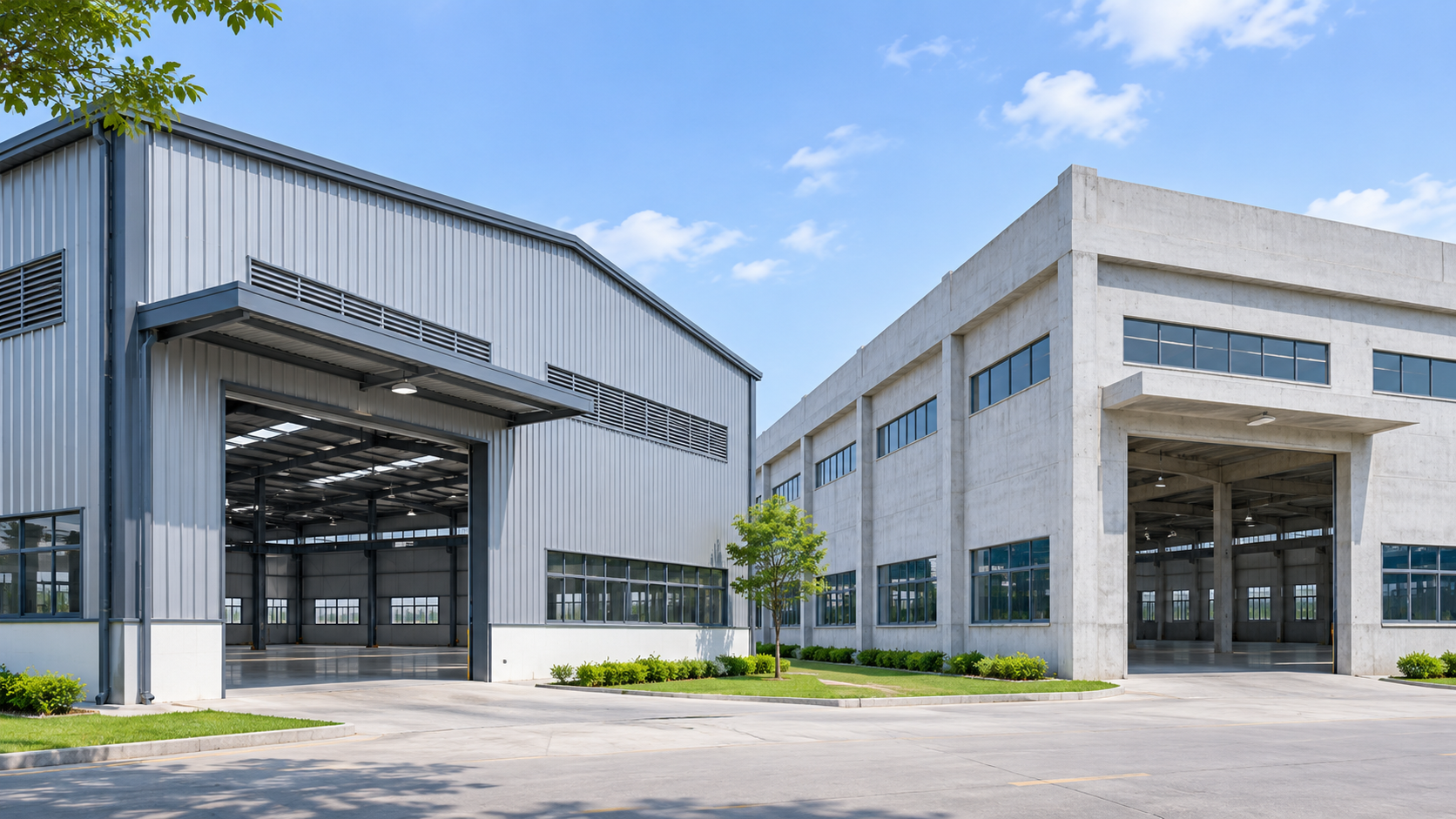
When planning a factory, owners often wonder whether a pre-engineered steel frame or reinforced concrete is the better choice. Each system has different advantages in construction time, usable space, maintenance and cost. There is no universal winner: the decision should reflect production needs, site conditions and future operations.
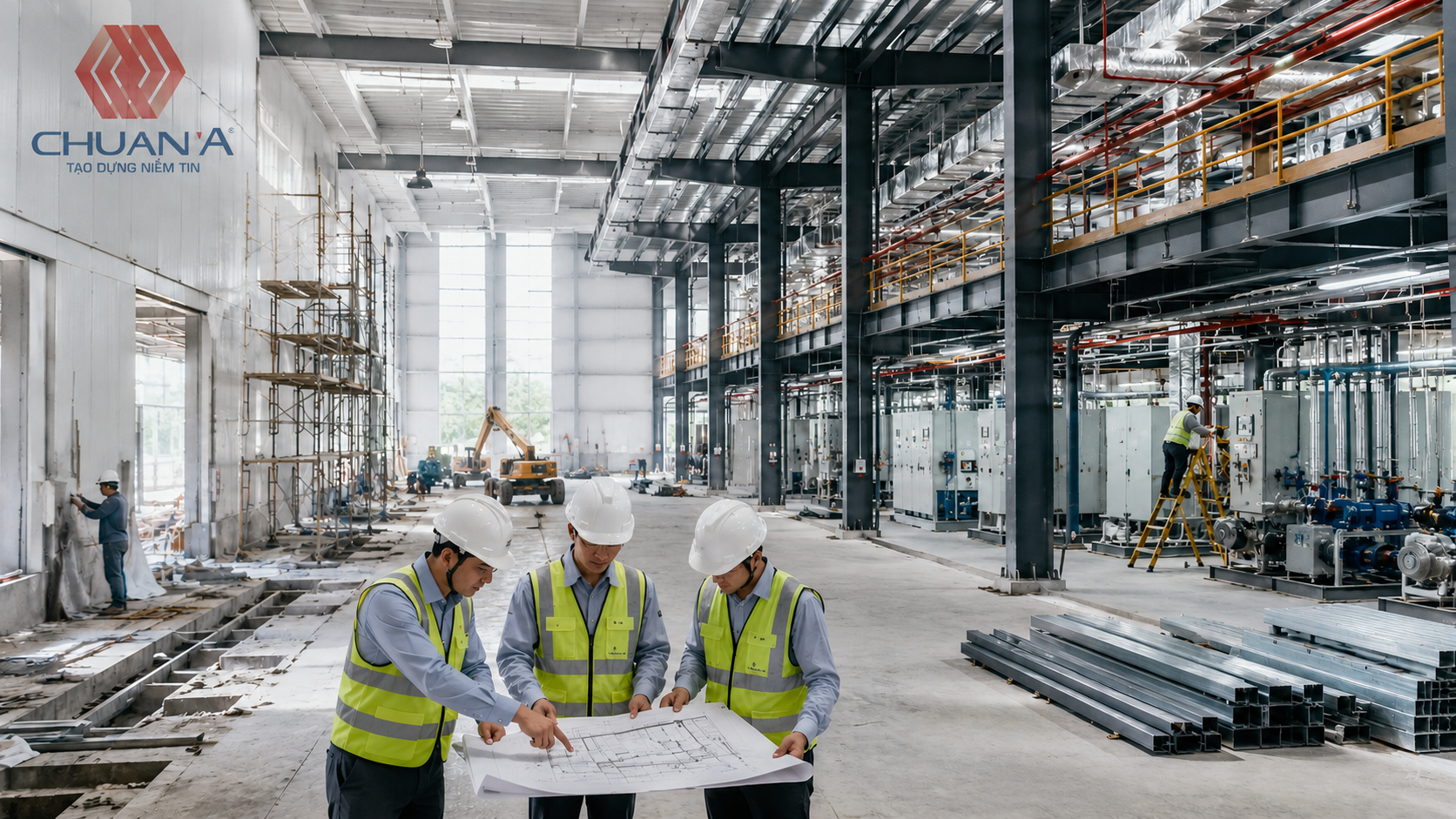
A pre-engineered steel factory uses a load-bearing steel frame. Members are generally fabricated before delivery and assembled on site. A reinforced concrete factory uses concrete and reinforcing steel in columns, beams or other structural components. These may be cast on site or precast.
Importantly, steel-framed factories often still use concrete foundations and floor slabs. The main comparison is between structural framing systems, not whether a factory contains any concrete.
Steel fabrication before delivery can make frame erection faster once foundations are ready. Cast-in-place concrete construction typically involves formwork, pouring and curing. Precast concrete can shorten parts of that process, however.
The total schedule also depends on design, permits where required, material supply, weather, mechanical systems and inspections. A steel frame does not automatically guarantee an earlier opening date for every project.
Steel frames are often well suited to wide spans with fewer interior columns, helping warehouses and production lines arrange equipment and move goods. Extensions can be easier to plan when connections and extra space are considered early.
Reinforced concrete can also provide functional industrial space and may suit multi-storey or specially configured buildings. Before making a choice, map equipment, forklifts, loading areas, maintenance access and potential expansion.
Steel is not automatically cheaper than concrete. Total cost depends on spans, height, loads, ground conditions, material prices, roof and wall systems, fire protection and utilities.
Compare quotations using the same scope: foundations, frame, roof, walls, floors, electrical work, drainage, fire protection and outside works. A lower quote may omit essential items. Long-term maintenance and possible production downtime should also influence the decision.
Steel frames need protection against corrosion, particularly in humid or chemically aggressive environments. Protective coatings, drainage details and inspection plans matter. Concrete structures also require checks for cracking, water ingress and reinforcement corrosion.
Steel may lose load-bearing capacity under high temperatures. Concrete has certain inherent advantages but also has fire-resistance limits. Both systems must meet applicable structural and fire safety requirements; the material name alone does not prove one design is safer.
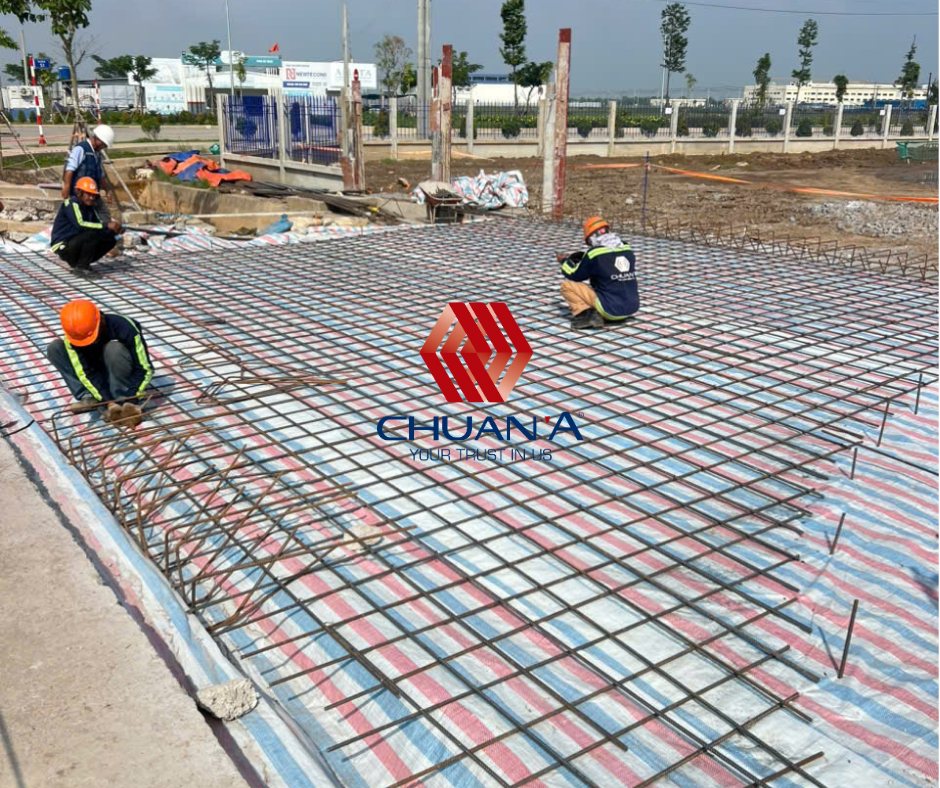
Cranes, heavy machines, forklifts and vibrating equipment should be specified at the design stage. Engineers must assess loads, stability and movements. Industrial floors need a separate assessment for capacity and flatness, regardless of the frame.
Ground investigation supports foundation design. Steel frames often weigh less, but lighter framing does not guarantee cheaper foundations on every site.
A hybrid design, such as concrete foundations and floors with a steel roof frame, can also be appropriate. Comparing only two pure systems may unnecessarily limit the options.
Prepare the required floor area, clear height, equipment weights, crane needs, soil information, utilities, fire requirements, target opening date and expansion plans. Ask designers to compare feasible options using consistent engineering and pricing assumptions.
CHUAN A CONSTRUCTION INVESTMENT PROJECT JOINT STOCK COMPANY
Address: Amata Industrial Park Service Center, Long Binh Ward, Dong Nai Province, Vietnam.
Hotline: 0907 494 549
Email: info@chuana.com.vn
Website:https://chuana.com.vn/
Contact Chuan A to discuss factory roof inspection, repair, maintenance, or renovation services in Dong Nai.