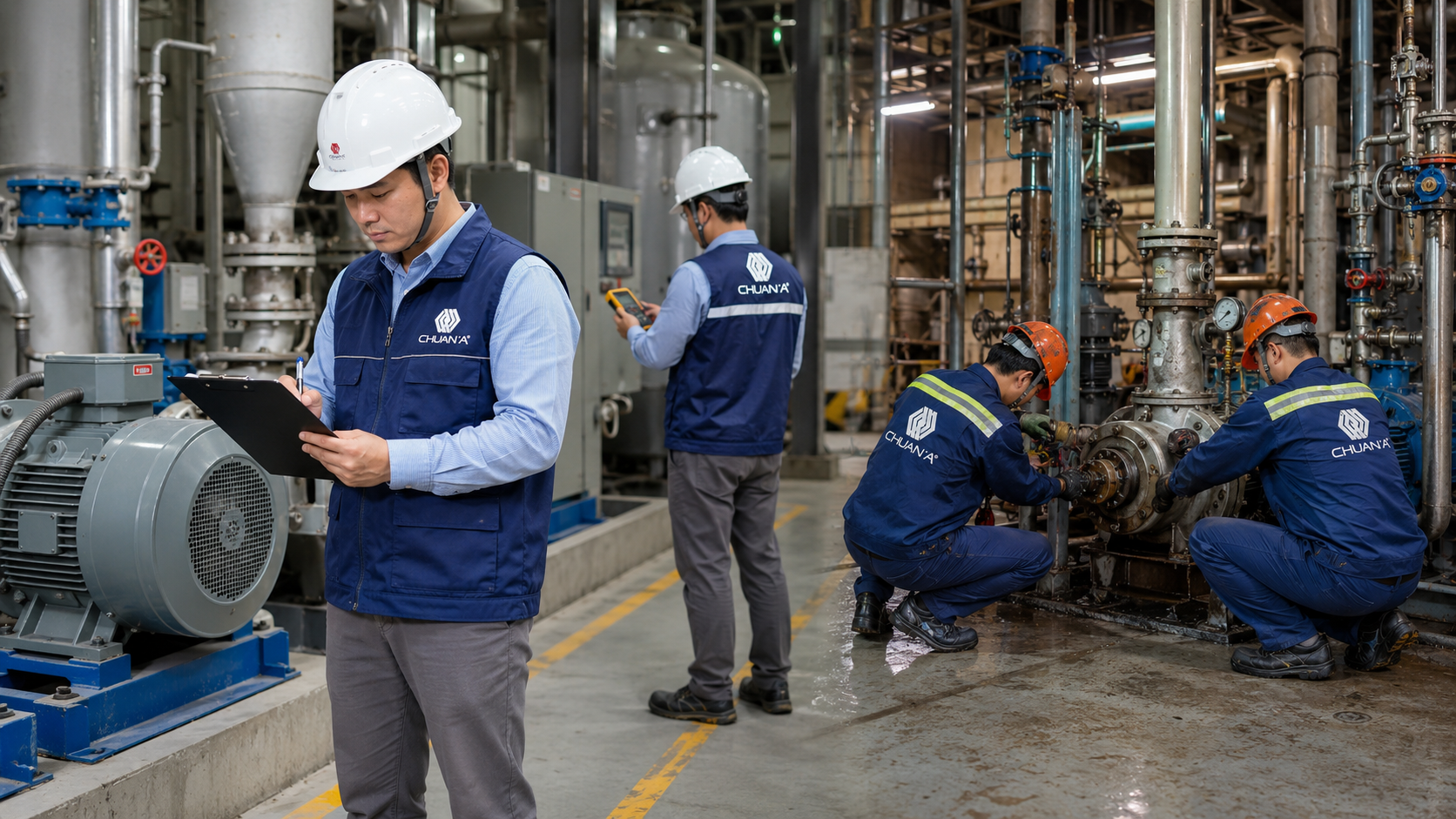
In modern industrial manufacturing, the adage "time is money" has never been more literal. Every single hour of unplanned machine downtime doesn't just lose production output; it incurs idle labor costs, disrupts logistics, and leads to delayed shipments, potentially damaging long-term client relationships. According to the Society for Maintenance & Reliability Professionals (SMRP), manufacturing facilities that implement effective long-term maintenance strategies can reduce their total maintenance costs by 20% to 40% annually compared to those relying solely on reactive repairs.
Annual factory maintenance planning is a critical strategic exercise. It requires a forward-thinking approach that goes beyond just fixing broken parts—it involves predicting future maintenance needs, allocating budgets wisely, and preparing the human resources required to execute the plan flawlessly. Below is a comprehensive 5-step process to build a robust annual maintenance plan, giving your business tight control over operational costs and minimizing downtime to the absolute minimum.
(2).png)
Planning an entire fiscal year of maintenance provides leadership with a complete visual map of the health status of all machinery, factory structural elements, and M&E (Mechanical & Electrical) systems. Without a plan, maintenance teams fall into the endless "firefighting" loop: fixing machine A, only for machine B to break down a few days later. Scrambling for spare parts, overworking technicians, and blowing the budget on emergency purchases are unavoidable consequences.
A strong annual maintenance plan delivers the following critical advantages:
The first and most crucial step is to create a comprehensive asset register (machines, piping, electrical systems, fire protection systems...). Following this, businesses must categorize these assets into three levels based on the severity of failure impact:
This classification directly dictates the maintenance frequency and budget priorities allocated to each asset group.
Based on equipment logbooks and Original Equipment Manufacturer (OEM) recommendations, factories must define specific service cycles (e.g., lubricant check every 500 running hours, condenser cleaning every 3 months, pneumatic leak testing every 6 months). For older equipment, these frequencies should be adjusted based on actual breakdown trends. This phase also needs to incorporate routine "walk-around" visual checks by technicians to ensure any unrecorded anomalies are added to the official plan.
Once cycles are established, you must populate them into a fixed schedule. A complete plan spans 12 months seamlessly:
This detailed calendar must be shared with the production department. It allows production planners to adjust their manufacturing schedules proactively, preventing conflicts between maintenance windows and urgent production runs.
Based on the final calendar, calculate the cost of consumables (grease, filters, drive belts, roof screws), strategic spare parts (bearings, controllers), and labor (in-house vs. outsourced contractors). A smart financial strategy includes not just known costs but also setting aside a contingency fund (approx. 15-20%) for unexpected emergency cases.
Modern machinery is increasingly integrated with electronics, PLCs, and IoT systems. An effective annual plan must be paired with a structured training and upskilling program for technicians. Companies should hold specialized workshops or enroll staff in courses covering Predictive Maintenance technologies or CMMS (Computerized Maintenance Management System) usage.
The ultimate goal of an annual maintenance plan is not to create as many schedule entries as possible, but to optimize true cost-efficiency. Identifying the exact "golden window" for servicing allows companies to avoid wasteful over-maintenance. As discussed in our previous guide, combining Preventive Maintenance for critical machinery with Condition-Based Monitoring (using IoT vibration/heat sensors) will push the Overall Equipment Effectiveness (OEE) score to 85% or higher—a benchmark achieved only by world-class manufacturing facilities.
.png)
In the digital transformation era, relying on traditional Excel spreadsheets for annual planning is proving outdated and prone to human error. Implementing a CMMS software solution allows managers to monitor real-time maintenance status, automatically trigger alerts when tasks are due, and store entire repair histories. Crucially, data extracted from CMMS will provide precise insights into maintenance costs per machine over the past year. This enables data-driven decisions on whether to retain assets or to invest in new equipment or factory renovation projects for the coming year.
Annual factory maintenance planning is not an administrative burden; it is a strategic investment in the long-term sustainability of your enterprise. It empowers you to be proactive rather than reactive, allowing you to "hold the reins" of your operation. A well-crafted plan simultaneously reduces operating costs, boosts system reliability, and provides a safer working environment for all employees.
A site survey identifies which items require servicing, where the installation has diverged from the original design and which areas should be prioritised.
CHUAN A CONSTRUCTION INVESTMENT CORPORATION
Address: Amata Industrial Park Service Centre, Long Binh Ward, Dong Nai Province, Vietnam.
Hotline: 0907 494 549
Email: info@chuana.com.vn
Website:https://chuana.com.vn/
Contact Chuan A to discuss fire protection system surveys and maintenance for factories in Dong Nai.


