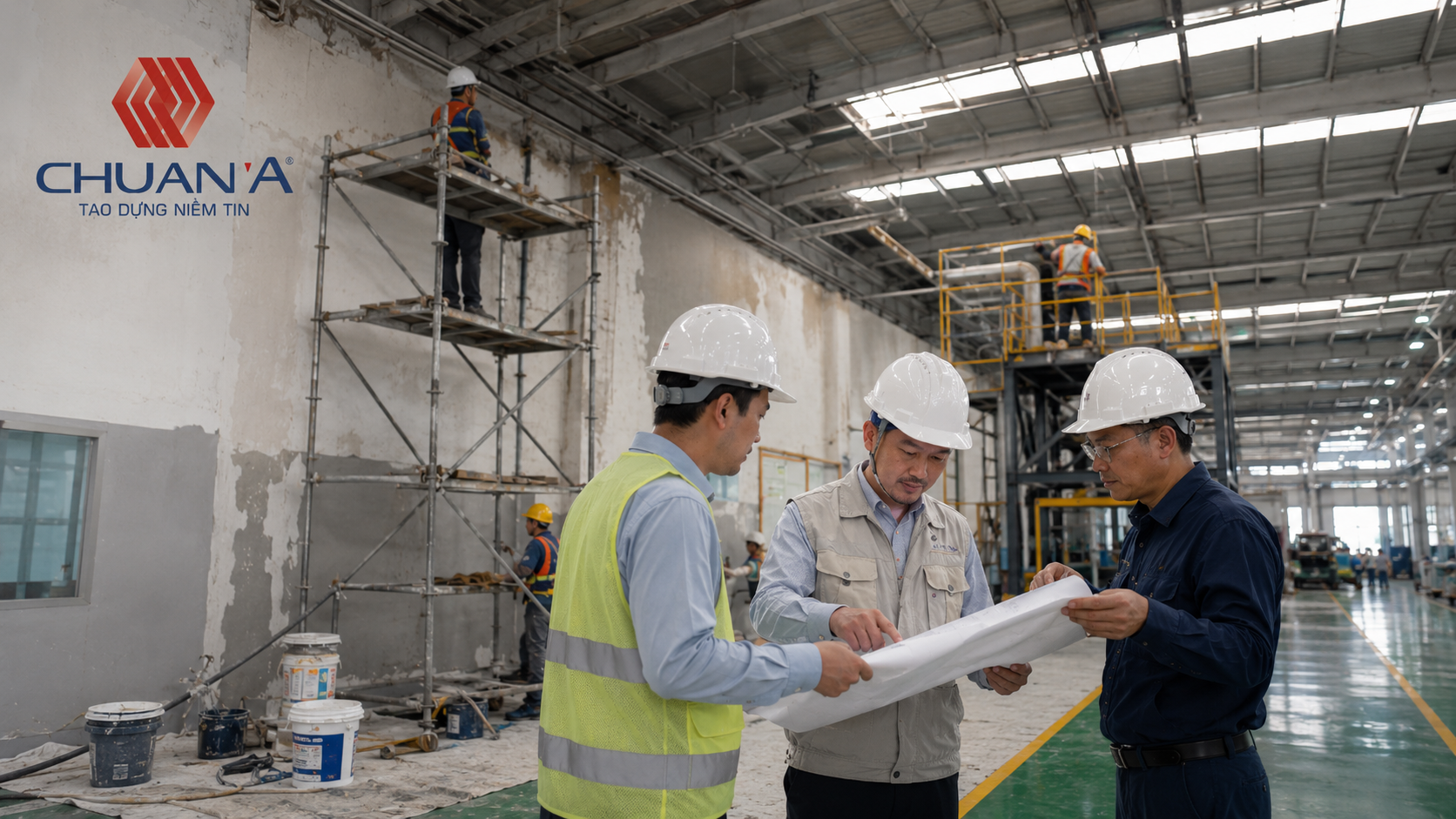
Factory renovation and upgrading should be considered when the facility no longer meets production, safety, or branding requirements. After years of operation, a factory may deteriorate, technical systems may no longer support increased capacity, the production layout may become inefficient, or the fire protection system may no longer match actual usage.
Many businesses only think about renovation when damage is already obvious. However, at that point, costs are usually higher, scheduling becomes more difficult, and the risk of production interruption is greater. Renovating at the right time helps businesses avoid emergency repairs and create a safer, more cost-effective upgrade plan.
.png)
The first sign is structural deterioration. If the roof leaks, the floor cracks, walls are damp, doors are difficult to operate, steel frames show signs of rust, or production areas are often dusty and worn, the business should inspect the facility early. Small structural issues can spread if they are not addressed in time.
The second sign is that the function no longer fits actual needs. A factory may have been designed for a small production line at the beginning, but after several years, the business may add more machines, expand storage, increase staff, or change products. When the old layout makes transportation difficult, goods flow becomes congested, technical areas lack space, or offices become too small, renovation becomes necessary.
A common reason for factory upgrading is that technical systems no longer match operating needs. Electrical systems may be overloaded, lighting may be insufficient, ventilation may be weak, plumbing may deteriorate, fire pipes may not match the new layout, or the fire alarm system may be outdated. These issues affect not only productivity but also safety.
When a business changes production lines, adds machinery, or expands storage, M&E and fire protection must be reassessed. If only the building area is expanded without upgrading the technical systems, the factory may look better externally but become weaker internally.
Proactive renovation is always better than reactive repair. When businesses plan ahead, they can choose a time that has minimal impact on production, divide construction into phases, and prepare the budget properly. When renovation becomes urgent, everything turns into a race: repairing, producing, managing safety, and meeting delivery schedules at the same time.
A deteriorated factory also affects corporate image. When partners visit a factory, they often observe cleanliness, safety, and organization. An old facility with poor lighting and messy technical systems can reduce confidence, even if production capability is still strong.
.png)
Factory renovation may include roof repair, leak prevention, floor upgrading, crack treatment, wall repainting, cladding replacement, loading door improvement, production area expansion, warehouse rearrangement, office upgrading, restroom renovation, and supporting area improvement.
On the technical side, businesses may need to upgrade electrical systems, lighting, ventilation, plumbing, wastewater treatment, compressed air, fire protection, cameras, network systems, and access control. In some factories, renovation may also involve increasing floor load or strengthening structures to support additional machinery.
One of the biggest challenges is renovating while the factory is still operating. This requires a smart construction plan. The contractor needs to divide work zones, define material movement routes, determine construction time, apply shielding measures, control labor safety, and reduce dust and noise.
A good plan may divide renovation into phases: start with less disruptive areas, temporarily move production lines, work after hours or on weekends, accept each completed section, and then move to the next zone. Without a plan, renovation work can directly affect operation.
The first mistake is not surveying the existing condition carefully. Old buildings may contain hidden factors such as underground pipes, old electrical cables, weak floors, or modified structures. Without proper inspection, construction can face unexpected problems.
The second mistake is choosing the cheapest solution without considering service life. Superficial renovation may force the business to repair again after a short time. The third mistake is lacking a safety plan while construction and production happen at the same time. The fourth mistake is not keeping as-built documents after renovation, which creates difficulties for future maintenance or expansion.
Chuẩn A can support businesses in surveying, consulting, planning, and implementing factory renovation in an integrated way. When renovation is considered together with construction, M&E, fire protection, and operation, businesses can avoid repairing one item while creating problems in another.
For factories in Dong Nai, Binh Duong, and nearby areas, choosing a contractor with industrial project experience helps the renovation process become more practical, better controlled, and more suitable for production needs.
Factory renovation and upgrading are necessary when the facility deteriorates, functions change, or technical systems no longer fit actual operation. Renovating at the right time helps businesses save costs, reduce risks, and improve operational efficiency. With experience in industrial construction, M&E, and fire protection, Chuẩn A can support businesses in surveying, consulting, and implementing factory renovation safely, practically, and consistently.
CHUAN'A CONSTRUCTION INVESTMENT JOINT STOCK COMPANY


