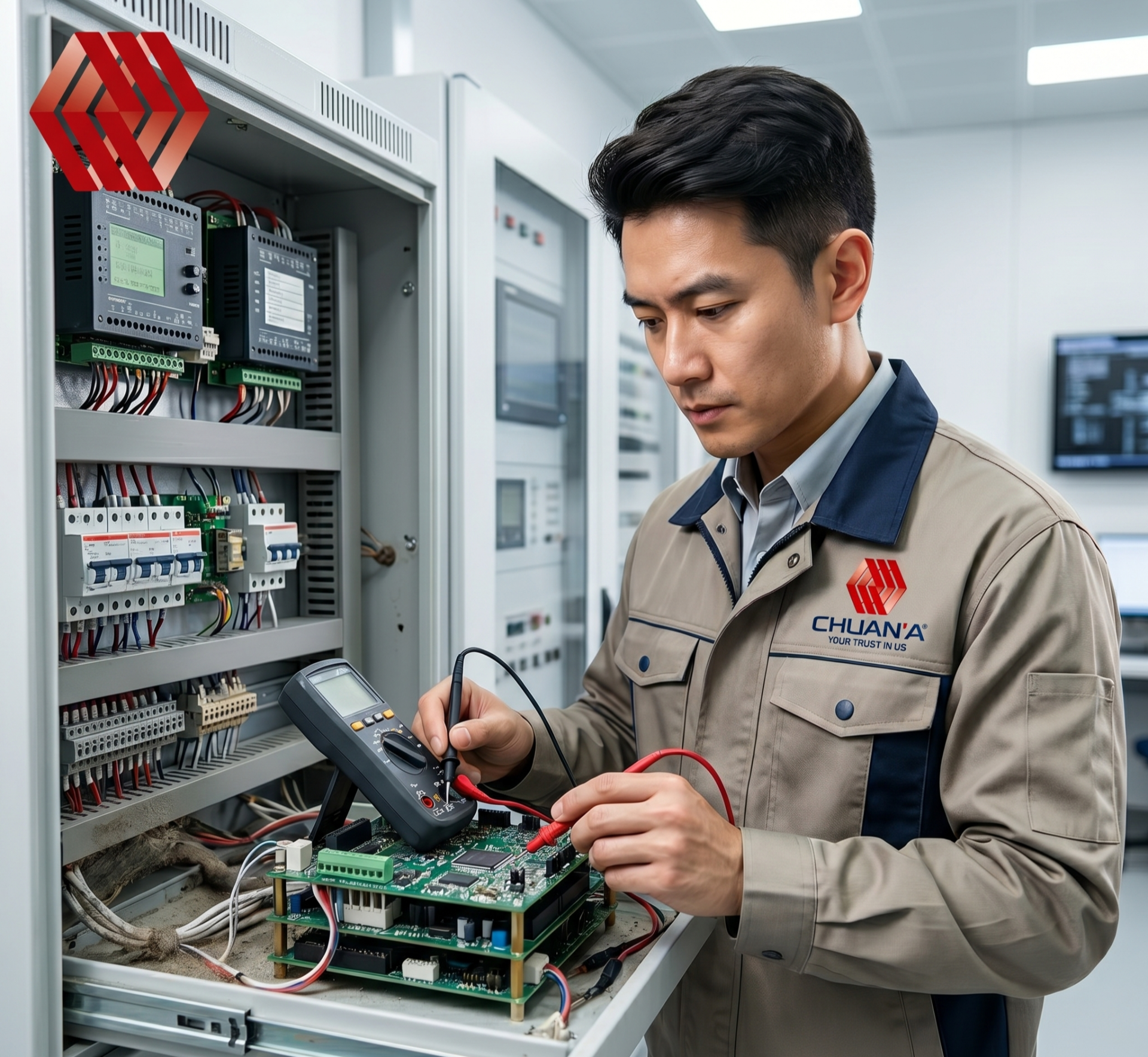
Detailed guide on maintaining automatic fire alarm systems in high humidity. Prevent false alarms and equipment failure according to PCCC standards.
Vietnam is located in a tropical monsoon climate zone with an average annual air humidity often exceeding 80%, especially during the rainy season or the humid spring weather in the North. For Automatic Fire Alarm Systems, high humidity is a "silent enemy".
Moisture accumulation in the air not only reduces the lifespan of sophisticated electronic components but is also the leading cause of false alarms, causing panic for businesses and undermining the reliability of the entire safety system. Understanding the impact of humidity and having a strict maintenance procedure is the key to maintaining the readiness of the fire protection system.
When humidity exceeds allowable limits (typically above 85% RH), it causes multiple direct consequences on hardware components:
Corrosion and Oxidation of Contact Points: Moisture combined with impurities in the air forms a weak acid film, corroding connectors, chip pins, and circuit boards of the Fire Alarm Control Panel (FACP) as well as the detectors.
Leakage Current Phenomenon: Water conducts electricity. When the surface of a circuit board becomes damp, microscopic electronic traces can short-circuit or exhibit leakage currents, causing the control panel to misinterpret signals from zones.
Local Failures in Optical Smoke Detectors: Optical smoke detectors operate based on the principle of light scattering. When humidity is excessively high, tiny water droplets entering the smoke chamber scatter infrared light just like real smoke particles, leading to continuous false alarms.
To ensure stable system operation, electromechanical engineers and maintenance teams in factories and buildings must adhere to the following specialized inspection process:
The control panel is the "brain" of the entire system, usually located in the control room. However, if the room's temperature is not well-controlled, the FACP is still heavily affected.
Cleaning the Central Cabinet: Disconnect the main power supply and backup power (batteries). Use a low-pressure compressed air blower to clear away accumulated dust – dust combined with moisture forms a highly dangerous water-retaining film.
Using Specialized Anti-Moisture Agents: Dry the circuit boards using a low-temperature dryer (not exceeding 50°C). Then, apply a layer of specialized electronic Conformal Coating spray to protect the boards from moisture.
Checking the Backup Power System: High humidity accelerates the self-discharge rate and corrupts the terminals of backup batteries. Wipe the terminals clean with a dry cloth and apply a protective grease layer to prevent oxidation.
Detectors are devices in direct contact with the external environment, thus enduring the heaviest impacts.
Disassembling and Cleaning Optical Smoke Chambers: Use specialized tools to remove the detector cover. Use a soft brush and compressed air canister to clean away dust and micro-droplets of water adhering to the optical isolation chamber.
Measuring Insulation Parameters: Use a multimeter to check the insulation resistance of the detector base. If a drop in resistance due to moisture is detected, replace the base or dry it completely.
Applying Specialized Moisture-Resistant Detectors: For specific areas like kitchens, cold storage, or semi-open spaces, Chuan A recommends upgrading to detector lines with high IP (Ingress Protection) ratings, integrated with filters to prevent water vapor from sticking to the sensors.
Inspecting Splice Joints: Junction boxes along corridors or factory floors are the places most prone to water accumulation. It must be checked whether the electrical insulation tape is peeling. Use waterproof connectors to re-terminate if necessary.
Measuring Continuity and Short-Circuit Prevention: Measure the insulation resistance between signal wires and between wires to the ground (Earth fault). This helps early detection of wiring segments with degraded insulation due to dampness before they cause system faults.
Manual Call Points: Open the manual call point box casing, inspect the springs and mechanical contacts for rust due to moisture. Apply anti-rust lubricant (such as WD-40) to the mechanical joints.
Fire Alarm Bells and Strobes: Ensure that the waterproof rubber gaskets on fire alarm lights installed outdoors or in wet areas remain intact and are not degraded.
Maintenance only treats the symptoms. To completely solve the humidity problem, businesses need to implement proactive measures from Chuan A's experts:
Installing Anti-Moisture Packs in the Control Panel: Place large capacity desiccant bags (Silica gel) inside the FACP cabinet and replace them periodically every 3 months.
Controlling the Control Room Environment: Install automatic dehumidifiers or maintain the "Dry" mode of air conditioners in the room housing the fire alarm control panel to keep humidity consistently below 65%.
Shortening Scheduled Maintenance Intervals: During peak months of the rainy or humid seasons, the inspection frequency should be shortened from once every 6 months to once every 3 months for sensitive areas.
Maintaining automatic fire alarm systems under high humidity conditions requires meticulousness, advanced technical expertise, and precise measuring instruments. Leaving the system neglected in a damp environment not only violates fire safety regulations under current laws but also directly threatens the lives and property of businesses when a real emergency occurs.
With years of industry experience, Chuan A is committed to providing the most optimized PCCC system consulting, design, and maintenance solutions, perfectly adapted to the harsh climate characteristics of Vietnam.
CHUAN'A CONSTRUCTION INVESTMENT JOINT STOCK COMPANY


