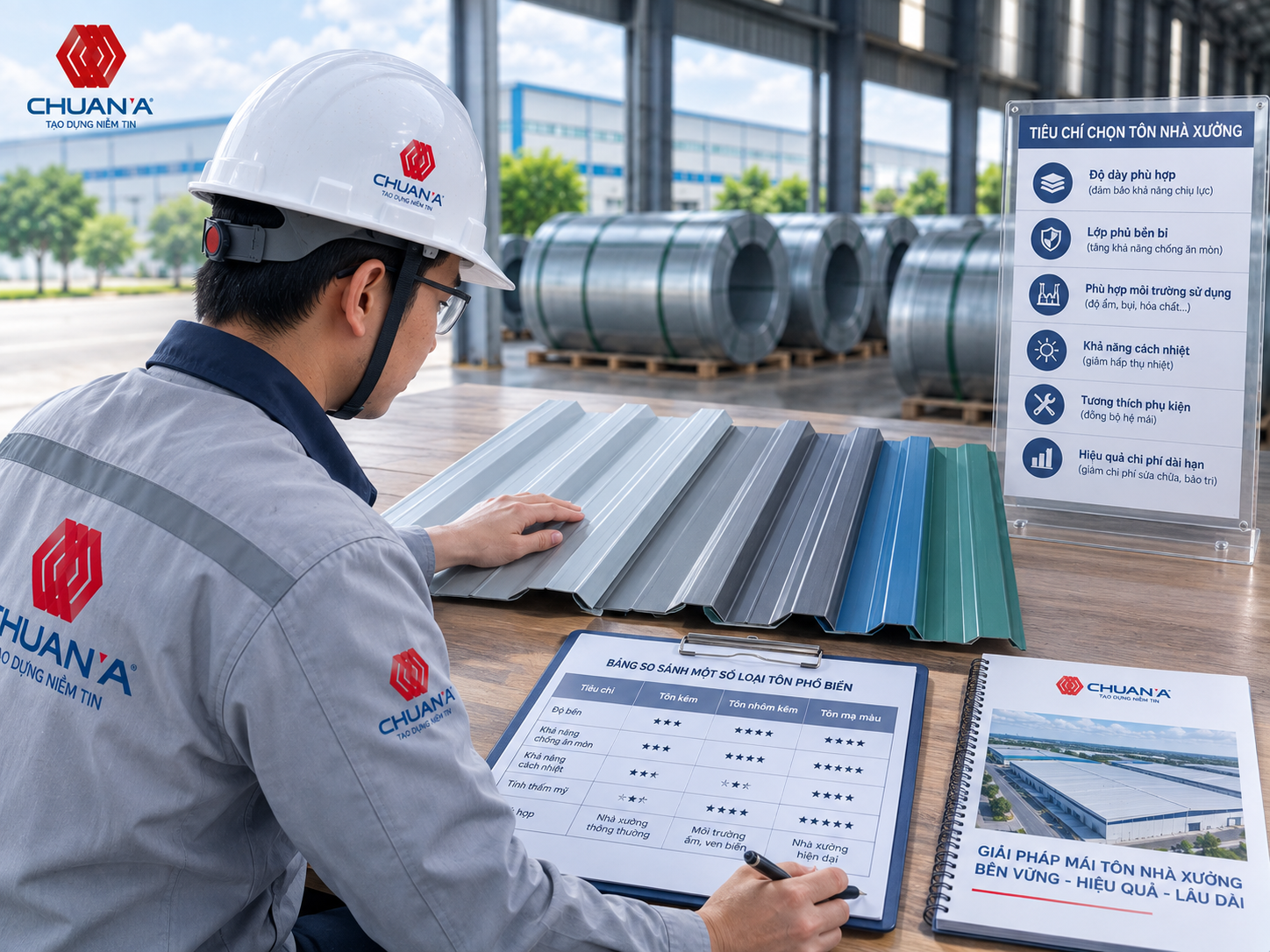
Selecting roofing materials for a new factory or roof replacement project requires more than comparing purchase prices. Metal sheets are available in different thicknesses, coatings, profiles and performance characteristics.
A suitable factory roofing sheet selection method should consider the building, operating environment and expected maintenance requirements.
The first step is to understand how the building is used.
Warehouses, manufacturing facilities and high-humidity production environments can have different roofing requirements.
Environmental conditions should therefore influence material selection.
Thickness contributes to the mechanical characteristics of roofing.
However, simply selecting the thickest available sheet is not necessarily the correct approach.
The roofing should be compatible with structural design, support spacing and installation requirements.(23).png)
Protective coatings help reduce environmental exposure of the underlying metal.
Where moisture or corrosive conditions are significant, coating selection becomes particularly important.
Damaged coatings should also be monitored during future metal roof maintenance.
Previous roof deterioration can provide valuable information.
If an existing roof repeatedly corrodes in specific locations, businesses should investigate the environmental cause before selecting replacement materials.
Replacing deteriorated sheets with similar materials without addressing the cause may lead to recurring problems.
Industrial roofs receive significant solar exposure.
Depending on factory operations, thermal performance may be an important consideration when selecting roofing systems.
Material decisions should therefore reflect indoor operating requirements.(23).png)
Roof slope, sheet profile and installation details influence how water leaves the roof.
Poor drainage can increase standing-water exposure and contribute to corrosion or leakage.
Roof sheets operate as part of a complete system.
Fasteners, washers, flashing, ridge components and gutters should be compatible with the selected roofing.
Low initial cost does not necessarily mean low lifecycle cost.
A roofing system that requires frequent repairs can ultimately become more expensive.
Businesses should consider purchase, installation, maintenance and expected service requirements together.
Even suitable roofing requires routine inspection.
A maintenance program should include cleaning, fastener inspection, corrosion monitoring and drainage checks.(21).png)
New roofing should still receive periodic inspection.
Early inspections can identify issues with fasteners, seams, drainage or installation details before they become significant problems.
Factory roofing sheet selection should consider thickness, coatings, corrosion resistance, thermal requirements and operating environment.
Combining appropriate material selection with scheduled maintenance can support more predictable roof performance over time.
Timely maintenance helps businesses monitor building conditions, reduce leakage risks and extend the service life of metal roofing.
CHUAN A CONSTRUCTION INVESTMENT CORPORATION
Address: Amata Industrial Park Service Center, Long Binh Ward, Dong Nai Province, Vietnam.
Hotline: 0907 494 549
Email: info@chuana.com.vn
Website:https://chuana.com.vn/
Contact Chuan A to discuss factory metal roof inspection, maintenance, repair or replacement requirements in Dong Nai.


