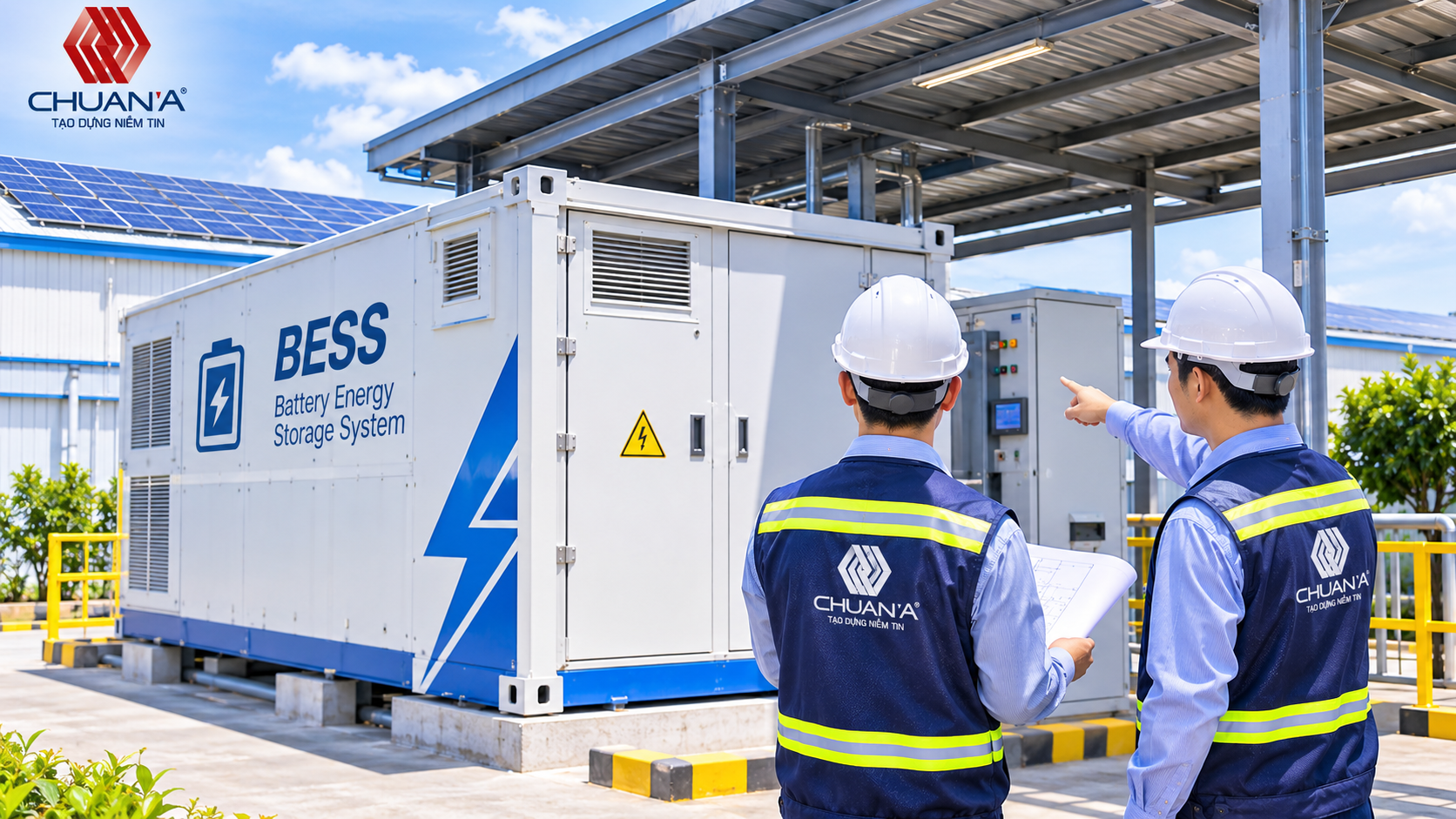
A Battery Energy Storage System (BESS) is an integrated solution that stores electrical energy in batteries and releases it when needed. In industrial facilities, BESS can work alongside the utility grid, rooftop solar systems or other power sources to support energy management and facility operations.
Unlike a conventional electrical system that mainly consumes electricity as it is supplied, BESS allows a business to store part of its energy for use at a later time. This gives factories another way to manage electricity demand, support selected backup loads and coordinate energy use according to their operating requirements.
BESS is not simply a collection of batteries. It is an integrated system that may include battery modules, a power conversion system, battery management, energy management, thermal control and safety protection equipment.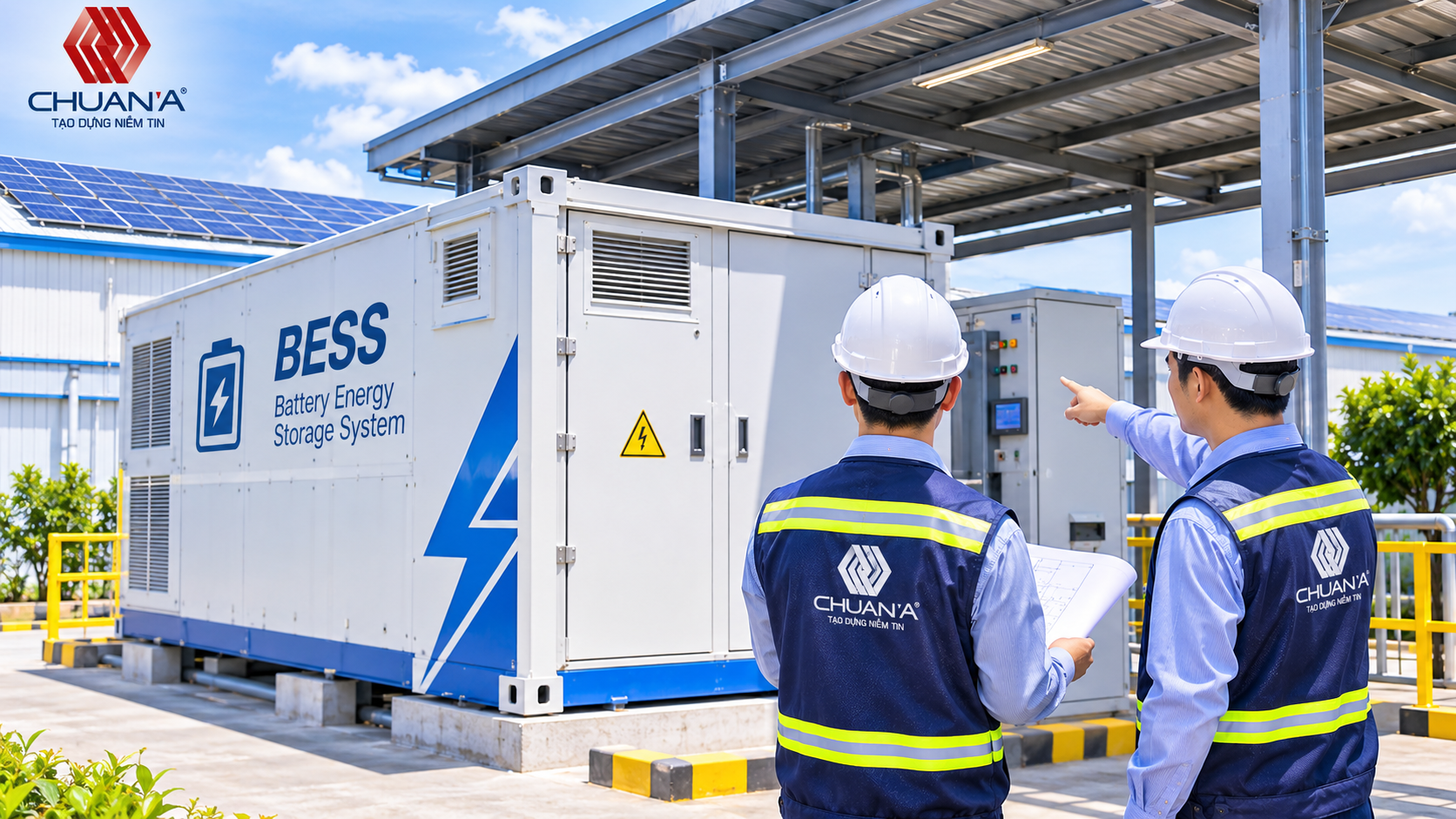
Batteries are the core components responsible for storing and releasing electrical energy. Different battery technologies can be used depending on system design and operating requirements. Lithium-ion batteries are widely used in many modern energy storage applications.
Battery capacity should be determined based on electricity demand, load power, the required storage duration and the factory's operating strategy. Choosing a larger battery does not automatically mean a better investment. The system must be sized according to actual requirements.
The Power Conversion System manages the conversion between direct current and alternating current during battery charging and discharging. It allows the BESS to connect and operate with the factory's electrical network.
PCS capacity must be selected based on charging and discharging requirements, system configuration and the loads that need to be supported. It is an important factor in determining how much power the system can deliver at a given time.
The Battery Management System monitors important battery parameters, including voltage, current, temperature and state of charge. It helps supervise battery operation, identify abnormal conditions and coordinate protective functions.
BMS helps keep charging and discharging within the designed operating limits, supporting battery protection and long-term system reliability.
The Energy Management System coordinates the overall operation of the storage system and its interaction with other power sources. It can use information such as factory demand, solar generation, battery status and operating schedules to manage when the battery should charge or discharge.
The control strategy depends on the facility's energy objectives and the capabilities of the installed equipment.
Battery systems must operate within suitable temperature conditions. Depending on battery technology and system capacity, BESS may use ventilation, cooling equipment or other thermal management solutions.
The design should also consider electrical protection, temperature monitoring, fault alarms and appropriate fire safety measures. These requirements need to be addressed from the early engineering stage.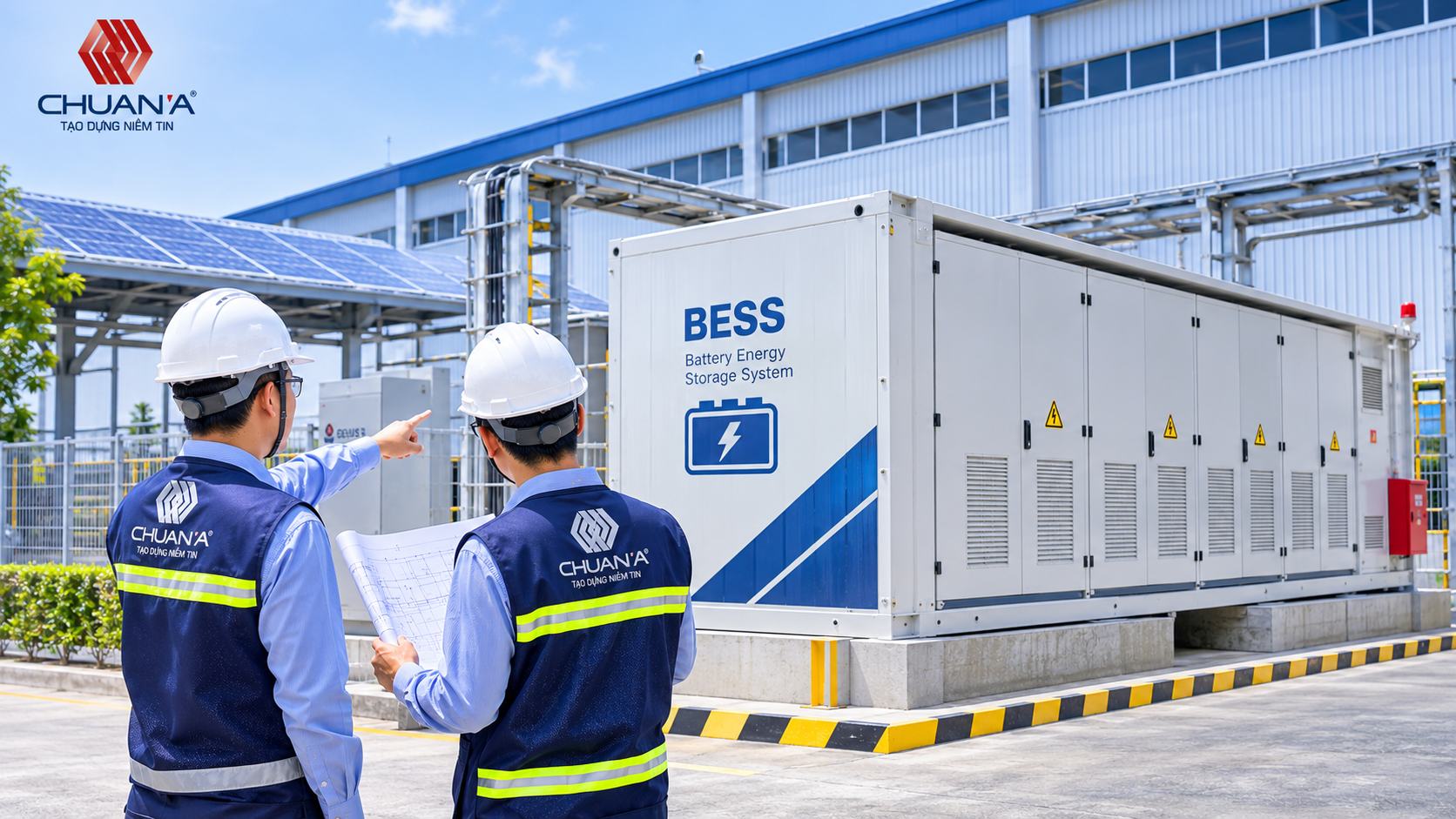
BESS allows a factory to store electricity and use it according to its operating needs. When properly designed, it can support energy scheduling across different periods, particularly when combined with renewable energy sources.
This gives businesses an additional tool for managing electricity instead of relying entirely on energy consumption at the time it is supplied.
For factories with rooftop solar installations, BESS can store part of the electricity that is not immediately consumed and make it available at another time, depending on system design and connection arrangements.
This provides more flexibility in using on-site solar generation. Actual performance depends on the facility's load profile, solar output, battery capacity and energy losses during charging and discharging.
Some BESS configurations can help reduce the amount of electricity drawn from the grid during selected periods of high demand. Under an appropriate control strategy, stored energy can support part of the facility's load during predetermined intervals.
However, this capability depends on system power, discharge duration and load characteristics. Businesses should not assume that BESS can supply the entire factory's electricity demand.
Depending on its configuration, BESS may provide electricity to selected equipment when the main power supply is interrupted. Businesses should identify which loads need to remain operational, their power requirements and the required backup duration.
Not every BESS installation automatically provides backup power. This function depends on the system design, power conversion equipment, transfer arrangements and the ability to operate independently from the utility grid.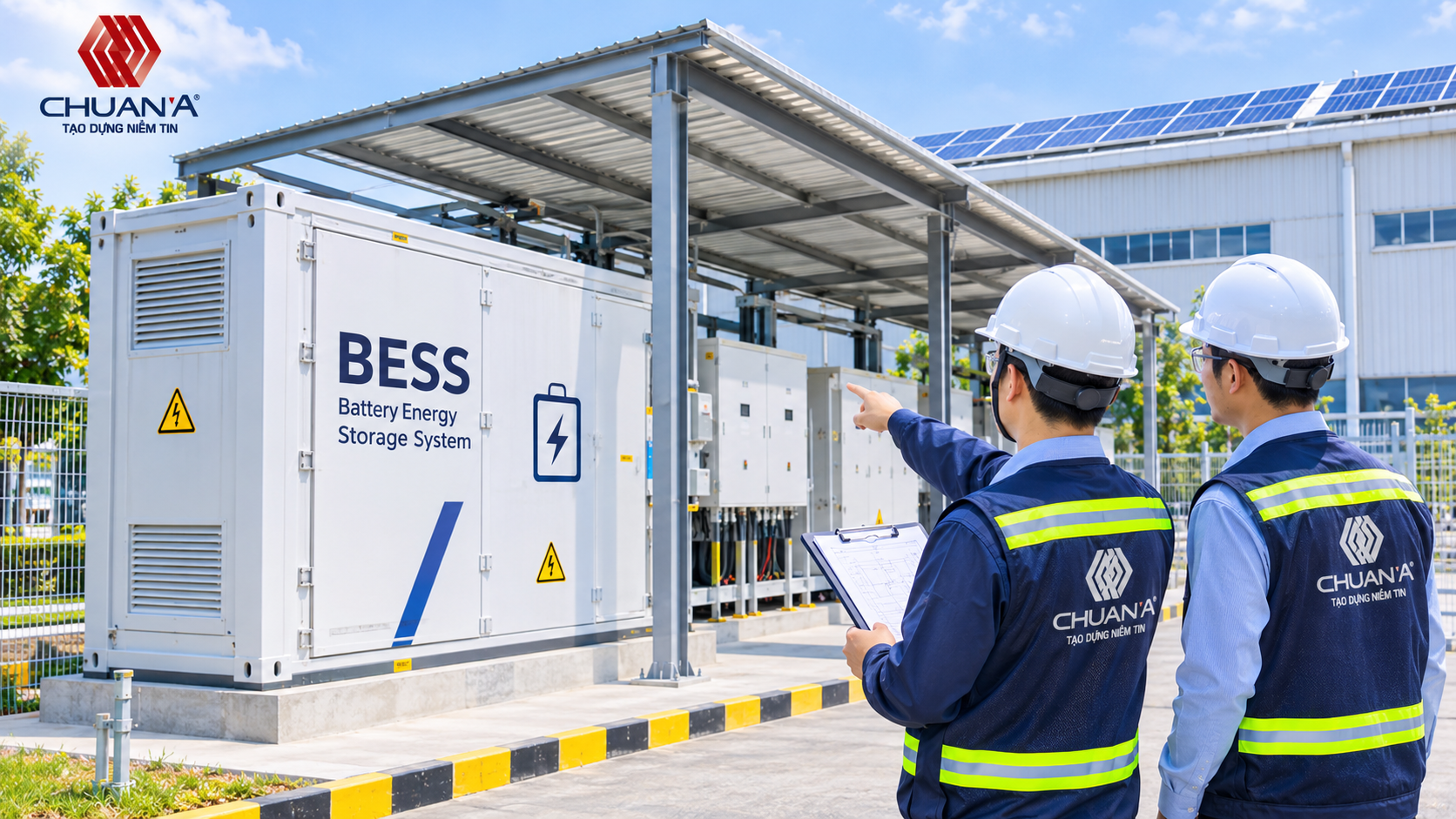
Facilities operating production lines across multiple shifts often require careful energy planning. BESS can be evaluated as a tool for coordinating electricity use and supporting selected critical loads under a predefined operating strategy.
When combined with rooftop solar, BESS creates an on-site energy storage solution. Electricity generated during sunny periods can be stored for use at other suitable times rather than being limited to the moment of solar generation.
The actual benefit depends on the relationship between solar output, factory demand, storage capacity and the operating schedule.
Logistics centers, cold storage facilities and industrial warehouses may have specific electrical loads that require careful management. BESS can be considered as part of a broader plan to optimize electricity use and support selected facility operations.
Businesses should collect electricity consumption data over time and identify peak demand, operating schedules and critical equipment. This information provides the basis for determining suitable system power and storage capacity.
Power capacity describes how much electricity a system can deliver at a particular moment, while energy capacity describes how much electricity it can store. Both parameters must be considered together to meet the intended operating objectives.
The BESS installation area should be assessed for available space, structural capacity, ventilation, temperature control, maintenance access and safety clearances. The layout must suit the actual conditions of the factory.
The total project cost may include batteries, PCS equipment, control systems, protection devices, installation, maintenance and future replacement requirements. Investment analysis should use actual electricity consumption data and realistic operating scenarios.
BESS requires appropriate thermal management, battery monitoring, fault alarms, electrical isolation and fire protection measures based on the selected technology. A regular maintenance plan should also be established to inspect equipment and monitor battery condition.
Dong Nai has many industrial parks, manufacturing plants and logistics facilities with ongoing electricity requirements. As businesses pay more attention to energy efficiency, BESS is a solution worth evaluating alongside existing electrical infrastructure and rooftop solar systems.
Each factory has different load characteristics, production scales and installation conditions. Before investing, businesses should assess their electrical systems, analyze consumption data and clearly define the intended purpose of the storage solution.
CHUAN A CONSTRUCTION INVESTMENT JOINT STOCK COMPANY operates in civil construction, industrial construction and infrastructure development. With more than 15 years of experience, Chuan A focuses on construction quality, project schedules and safety throughout project implementation.
For businesses planning new factory construction, renovation or facility improvements to support industrial and energy-related projects, Chuan A is available to receive project information, discuss requirements and consider solutions based on actual site conditions.
Contact Information
CÔNG TY CP ĐẦU TƯ XÂY DỰNG CÔNG TRÌNH CHUẨN A
Address: Amata Industrial Park Service Center, Long Binh Ward, Dong Nai Province, Vietnam.
Hotline: 0907 494 549
Email: info@chuana.com.vn
Website: https://chuana.com.vn/