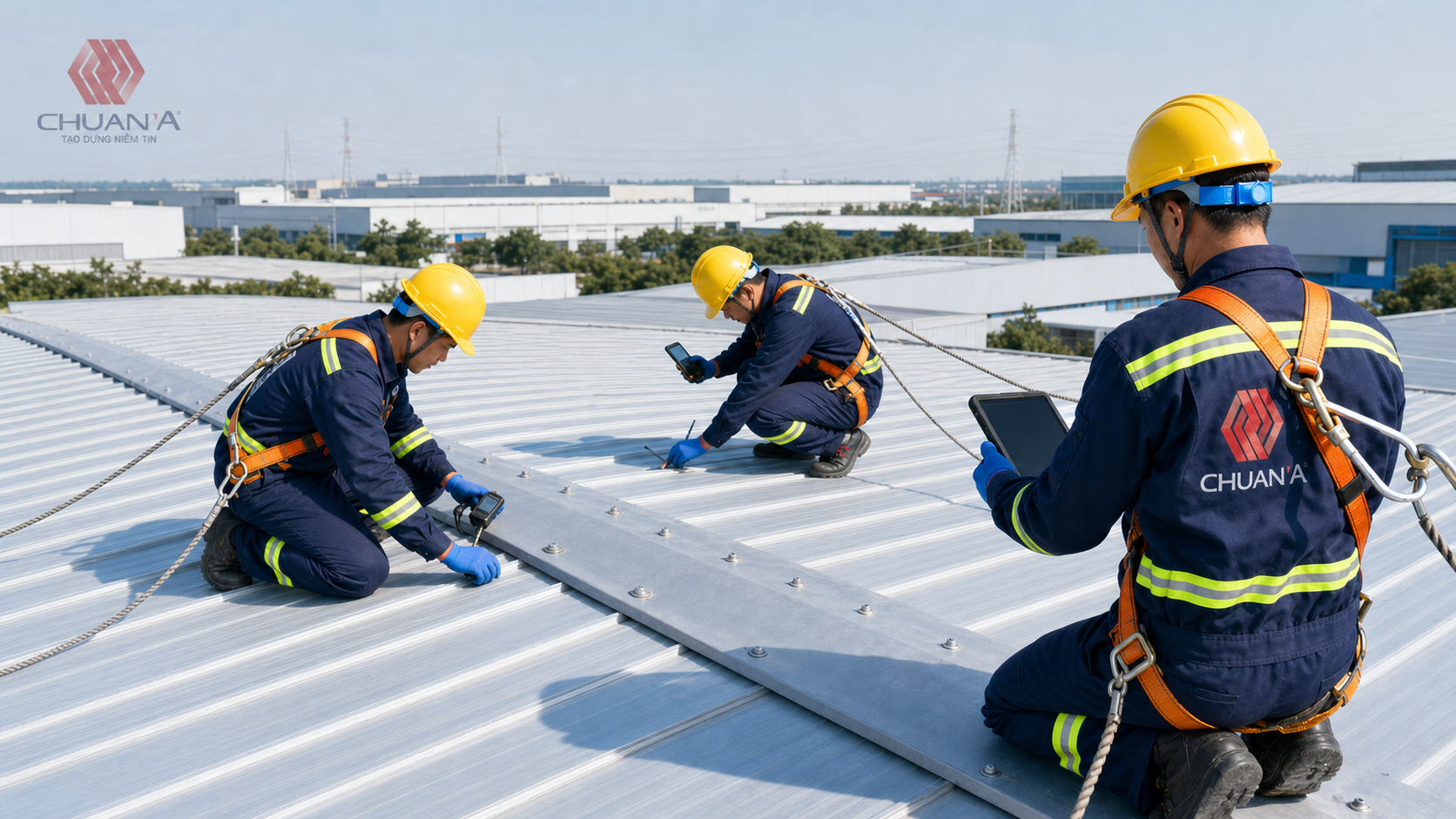
A factory metal roof is one of the most important protective components of an industrial facility. It does more than shield the building from sunlight, rainfall and wind. It also protects machinery, raw materials, products, electrical systems and production activities below. When the roof deteriorates, the business may face leaks, corrosion, equipment damage, product quality problems and operational interruptions.
For businesses, roof maintenance should not begin only after a failure occurs. A suitable factory metal roof maintenance solution for businesses in Dong Nai should include condition inspection, risk assessment, work prioritisation, maintenance planning and long-term roof monitoring.
Chuan A provides inspection, maintenance, repair and roofing sheet replacement solutions for factories, warehouses, production facilities and industrial buildings in Dong Nai. Each plan is developed according to actual roof conditions, operational requirements, safety needs and the business's available maintenance budget.
.png)
Many businesses still manage factory roofs reactively. Repairs begin only when water enters the building, roofing sheets become perforated or gutters overflow. This approach may solve an immediate problem, but it does not provide control over the deterioration of the entire roof system.
A minor leak may result from a loose fastener, deteriorated washer, open overlap, blocked gutter or failed seal around a roof penetration. Sealing only the visible drip point without inspecting surrounding areas may allow the problem to return or appear elsewhere.
A comprehensive maintenance solution helps businesses:
.png)
A leaking roof creates more than a visible pool of water. Depending on the location and facility type, roof failures may affect several parts of the business operation.
Rainwater may fall directly onto machinery, electrical panels, cables and control systems. Moisture may also affect the stability of the operating environment.
In warehouses, water may affect packaging, deform cartons, damage materials or make stored products unsuitable for use. The resulting loss may be substantially higher than the original roof repair cost.
When leaks appear above production lines, businesses may need to move equipment, install temporary protection or suspend part of the operation.
Long-term water penetration may affect purlins, structural steel, ceilings, walls and internal finishes. The eventual repair scope may extend well beyond the roofing sheets.
Repairs performed during heavy rain or under urgent conditions are often more difficult to organise than planned maintenance.
Water on the factory floor may increase slipping hazards. Severely corroded sheets and weak connections also create additional risks for inspection and maintenance teams.
An effective programme should consider the complete roofing system rather than only the visible sheet surface. Factory roofs include sheets, fasteners, washers, overlaps, ridge caps, flashing, gutters, downpipes and roof penetrations.
| Component | Common problem | Maintenance solution |
|---|---|---|
| Roofing sheets | Dust, corrosion, coating failure, dents or perforation | Cleaning, corrosion treatment, protective restoration or sheet replacement |
| Roof fasteners | Loose, corroded, displaced or weakened connections | Inspection, correct tightening or suitable fastener replacement |
| Rubber washers | Hardening, cracking, shrinkage or deformation | Replacement of failed washers and inspection of fixing holes |
| Sheet overlaps | Open gaps, displacement, insufficient overlap or failed sealant | Adjustment, reinforcement and suitable waterproofing treatment |
| Ridge caps | Loose screws, open edges, deformation or sealant failure | Connection reinforcement and sealing restoration |
| Edge flashing | Corrosion, displacement or open joints | Repair, component replacement and gap treatment |
| Gutters | Blockages, deformation, holes, corrosion or slow drainage | Cleaning, unclogging, joint repair and support reinforcement |
| Downpipes | Blockages, leakage, open connections or insufficient capacity | Cleaning, connection repair and drainage assessment |
| Roof penetrations | Cracked seals, failed sealant or equipment movement | Inspection around pipes, fans and utility penetrations |
| Translucent panels | Ageing, cracking, open joints or loss of clarity | Inspection of panels, fasteners and washers, followed by replacement when required |
Not every roof area deteriorates at the same rate. One section may remain stable while areas near gutters, ventilation equipment or pipe penetrations have already developed significant damage.
Condition classification helps businesses avoid two extremes: completing too little work and allowing defects to return, or replacing too much material before replacement is necessary.
Roofing sheets and connections show no clear defects. The suitable approach is continued monitoring, periodic cleaning and inspection before the rainy season.
Dust accumulation, surface corrosion, loose fasteners or ageing washers are present. Preventive maintenance should be completed before leakage begins.
Several roof areas have leaks, open overlaps, gutter leakage or small perforations. Local repair and sheet replacement may be required.
Multiple sheets are corroded, deformed or unable to provide reliable weather resistance. Sectional or phased roof replacement should be assessed.
The business repairs the roof only after a failure occurs. This model may be acceptable for low-risk components but should not be the primary strategy for roofs above machinery, production lines or valuable inventory.
The roof is inspected according to a planned schedule. Deteriorated components are treated before they cause failures. This model is suitable for most factories and warehouses that require stable operations.
Repair decisions are based on inspection results, photographs, repair history and the risk level of each roof zone.
Critical roof areas are inspected more frequently, while lower-risk areas use a longer inspection cycle. This approach helps balance safety and cost.
Chuan A collects information about the factory location, roof area, operating period, facility type, production environment and current roof problems.
The business may provide photographs, roof drawings, previous repair records or known leak locations to support the inspection plan.
Before proposing a solution, the team determines which areas may be temporarily restricted, which areas must remain operational and what equipment or goods require additional protection.
The technical team checks damp marks, water paths, ceilings, purlins, structural components and machinery areas. Conditions below the roof help identify areas requiring further inspection above.
The inspection includes roofing sheets, fasteners, washers, overlaps, ridge caps, edge flashing, translucent panels, gutters, downpipes and penetrations.
Each failure may involve several causes. For example, water near a gutter may result from a perforated gutter, blocked drainage or corrosion in surrounding roofing sheets.
Roof areas are divided into urgent repairs, near-term maintenance items and areas that may continue to be monitored.
The proposed solution may include cleaning, fastener replacement, washer replacement, corrosion treatment, gutter repair, leak treatment, reinforcement or roofing sheet replacement.
Work areas and timing are organised to reduce disruption to factory operations. Machinery and inventory below may be protected or temporarily controlled when necessary.
Roof work requires suitable personal protective equipment, harnesses, anchor points, access equipment and controlled work zones.
After completion, treated areas are inspected again. The business receives information about the work completed, remaining roof conditions and areas requiring future monitoring.
Factories often contain machinery, electrical systems and continuously operating production lines. Maintenance should prioritise areas that may affect equipment and should be scheduled to reduce production stoppages.
Warehouses should pay particular attention to product storage zones, aisles and racking systems. Even when there is no production equipment below, roof leakage may damage goods and packaging.
Industrial dust may accumulate on roof surfaces and inside gutters, slowing drainage. These facilities require more attention to cleaning and standing-water areas.
High humidity and chemical vapours may accelerate coating deterioration. Inspection cycles should be adjusted according to actual roof conditions.
Ventilation units, pipes, solar panels and technical equipment create additional connections and penetrations. Inspections should focus on equipment bases, penetration seals and surrounding sheets.
Roof failures in temperature-sensitive storage facilities may affect internal humidity and storage conditions. Maintenance planning may therefore require additional control.
A common business concern is that roof repair will interrupt factory operations. However, many maintenance items can be organised by work zone, shift or lower-activity period.
Work planning may include:
| Timing | Recommended work |
|---|---|
| Beginning of the cycle | General inspection, roof zoning and maintenance-history updates |
| Before the rainy season | Inspect fasteners, overlaps, ridge caps, gutters and drainage systems |
| During the rainy season | Monitor leakage, drainage and areas with overflow risks |
| After the rainy season | Assess corrosion, new damage and protective coating conditions |
| After strong winds | Inspect displaced sheets, loose fasteners, ridge caps and flashing |
| After equipment installation | Inspect equipment bases, penetrations and waterproofing details |
The actual inspection cycle should reflect roof age, deterioration and operating conditions. Facilities with high dust levels, humidity or corrosive exposure may require more frequent inspections.
A business maintenance solution should help managers distinguish costs that require immediate approval from work that may be placed into a future plan. Not every maintenance item must be completed at the same time.
The budget may be divided into three groups:
This covers active leaks, unstable roofing sheets, gutters at risk of overflow and failures directly affecting production.
This covers roof cleaning, fastener replacement, washer replacement, early corrosion treatment and drainage maintenance.
This covers large deteriorated areas requiring sectional sheet replacement or phased roof improvement.
This structure helps businesses avoid large unexpected expenses and reduces the risk of delaying critical work.
Not every leaking roof requires complete replacement. Local repair may be suitable when the roofing sheets remain sufficiently rigid and damage is concentrated around fasteners, washers, overlaps or selected sheets.
| Condition | Recommended approach |
|---|---|
| Loose fasteners or ageing washers | Inspect, replace components and assess fixing holes |
| Open overlaps or ridge caps | Adjust connections and restore sealing performance |
| Minor corrosion in selected areas | Clean, protect and continue monitoring |
| Several perforated sheets | Complete local sheet replacement and treat surrounding joints |
| Sectional corrosion | Replace roofing sheets by roof zone |
| Widespread deterioration | Assess phased or complete roof replacement |
Replacement should be considered when roofing sheets have lost rigidity, contain multiple holes, are seriously deformed or continue to require repeated repairs without long-term results.
The performance of a maintenance programme should not be evaluated only by the absence of leaks at handover. Businesses should also monitor roof stability and long-term operating costs.
For large facilities, recording maintenance history helps businesses monitor deterioration patterns and avoid disconnected repairs.
A roof record may include:
With sufficient information, businesses can compare conditions over time and prepare phased replacement budgets.
The visible water location may not match the original entry point. The water path and surrounding roof area should be inspected before repairs begin.
Sealant cannot replace failed mechanical connections or restore severely corroded roofing sheets. The treatment should reflect the actual cause.
Surface corrosion may develop into perforation under continued exposure to moisture. Early treatment generally requires a smaller work scope.
Blocked or deformed gutters may cause water to overflow back into the roof. Drainage components are essential parts of a leak-prevention programme.
Unplanned roof work may affect machinery, employees and production schedules below.
A low-cost method that does not address the cause may result in repeated expenses. Businesses should evaluate long-term performance rather than only the first quotation.
Without maintenance history, businesses may struggle to identify repeated problem areas and prepare accurate budgets.
Roof maintenance costs should be compared with the potential losses caused by unexpected leaks and failures.
A suitable maintenance solution helps businesses:
The purpose is not to delay roof replacement under every circumstance. It is to help the business understand when maintenance is appropriate, when repairs are required and when replacement provides better long-term value.
Chuan A Construction Investment Corporation provides industrial construction and facility maintenance solutions in Dong Nai and nearby areas.
Businesses may also review reliable factory metal roof maintenance in Dong Nai, factory metal roof maintenance and leak repair in Dong Nai and factory roof maintenance for longer roof lifespan for additional information about specific service groups.
Chuan A receives factory metal roof inspection and maintenance requests in Dong Nai, Bien Hoa, Long Thanh, Trang Bom, Nhon Trach and nearby areas. Businesses in Binh Duong and Ho Chi Minh City may contact the company to discuss the location, size and required scope of work.
The frequency depends on roof age, production environment, dust, humidity, corrosion exposure and repair history. Businesses may consider periodic inspections together with additional checks before the rainy season and after unusual weather.
Yes. Maintenance before leakage helps identify loose fasteners, corrosion, ageing washers and blocked gutters while the defects remain limited.
This depends on the work location and scope. Many activities may be organised by zone, shift or lower-activity period.
Cost depends on roof area, height, access conditions, deterioration level, material type, safety requirements and the amount of repair or replacement work.
For factories with large roof areas or important production zones, periodic maintenance provides better condition control and reduces unexpected failure risks.
Not always. Remaining material strength, corrosion extent and structural conditions should be inspected before selecting local repair, sectional replacement or complete replacement.
The previous work may not have identified the actual water entry point, may have treated only the surface or may not have considered surrounding deterioration.
The business may prepare information about roof area, operating period, previous leak locations, repair history, building plans and operational requirements below the roof.
Each factory has different operating conditions, environments and deterioration levels. A suitable maintenance solution should be developed through an on-site inspection rather than applying one treatment method to every facility.
CHUAN A CONSTRUCTION INVESTMENT CORPORATION
Contact Chuan A to arrange an inspection and develop a suitable factory metal roof maintenance solution for your business in Dong Nai.