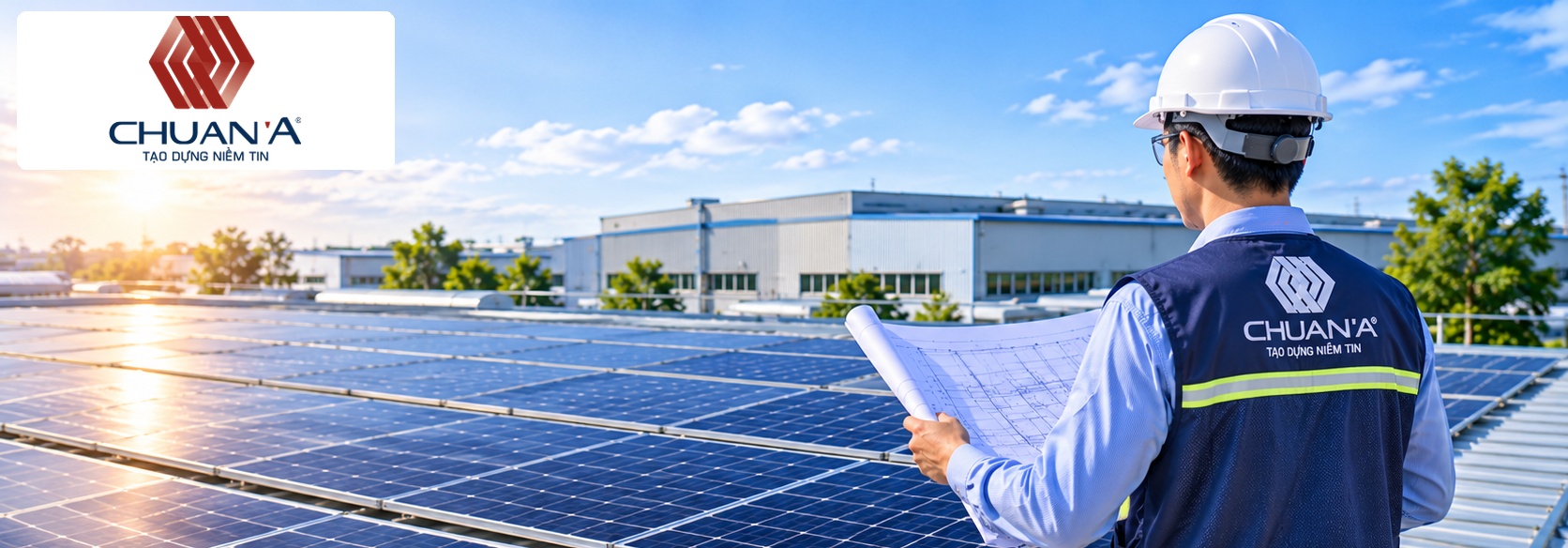
Factory rooftop solar is a solution that involves installing photovoltaic panels on the roofs of factories, warehouses and industrial buildings to convert sunlight into electricity. The generated power can support part of a facility's energy demand, including production machinery, lighting, ventilation and auxiliary equipment.
As electricity consumption becomes increasingly important to manufacturing operations, many businesses are exploring renewable energy options. Industrial buildings often have extensive roof areas, making them potential locations for solar installations, provided that the structures and site conditions meet the necessary technical requirements.
A successful rooftop solar project involves more than placing panels on a roof. The system must be planned around the building structure, electricity consumption, conversion equipment, installation conditions and long-term maintenance requirements.
Electricity is a significant operating expense for many factories, especially facilities that run production lines for extended hours. A rooftop solar system can generate electricity during daylight hours, when many manufacturing operations are active.
When system capacity is properly matched to the facility's electricity consumption profile, businesses can use part of the electricity generated on-site and reduce the amount purchased from the grid. Actual savings depend on energy production, operating schedules, load patterns and how the generated electricity is used.
For this reason, businesses should evaluate their electricity bills and consumption data before selecting a system capacity. A properly assessed project is more useful than simply installing the largest possible system.
Factory roofs often cover large areas that are primarily used for weather protection. Installing solar panels on suitable sections can provide an additional function without requiring the business to acquire more land.
However, not every part of a roof is suitable for solar panels. Shaded areas, access routes, drainage systems, rooftop equipment and sections with structural limitations must be considered during the site assessment.
A practical layout should balance the available installation area with maintenance access and the building's existing functions.
Solar energy is renewable and can help businesses diversify their electricity supply. It also provides an opportunity to pay closer attention to energy efficiency and the environmental impact of manufacturing activities.
For industrial businesses pursuing long-term sustainability goals, rooftop solar can be considered as part of a broader energy management strategy. The investment should still be based on actual site conditions and a realistic assessment of expected performance.
Solar panels are the main components that capture sunlight and convert it into direct current electricity. Their quantity, rated capacity and arrangement depend on roof dimensions, installation orientation, shading conditions and the facility's electricity demand.
The installation layout should account for panel spacing, maintenance access and the specific characteristics of the roof. These factors help determine how much usable area is available for the system.
An inverter converts the direct current generated by solar panels into alternating current suitable for the building's electrical system. Other components may include distribution panels, protection devices, electrical cables, monitoring equipment and connection systems.
Equipment selection should be based on the technical design and operating conditions of the facility. Businesses should consider compatibility, safety, reliability and maintenance requirements rather than focusing only on the initial purchase price.

Mounting structures secure the solar panels to the roof and help maintain their position under different weather conditions. The mounting solution must be compatible with the roof material and the existing building structure.
Waterproofing is another important consideration. Connection points, roof penetrations and areas near drainage systems should be properly designed and treated to reduce the risk of leaks during long-term operation.
Monitoring equipment allows businesses to track system performance and electricity generation. Operational data can help identify unusual changes and indicate when inspection or maintenance may be required.
Regular maintenance should include checking electrical equipment, inspecting mounting structures and cleaning panels when necessary. A suitable maintenance plan helps keep the system operating reliably.

The roof structure should be inspected before installation to determine whether it can support the additional load. Important considerations include the structural frame, roofing materials, existing damage and the overall condition of the building.
For older factories, special attention should be given to corrosion, deterioration and previous repairs. The assessment helps determine suitable installation areas and whether structural reinforcement may be necessary.
Businesses should review electricity bills, demand levels and factory operating schedules. This information helps the project team understand when electricity is used and estimate how much solar generation can be consumed on-site.
A larger system does not automatically provide a better investment return. System capacity should be considered alongside daytime electricity demand and the arrangements available for handling excess generation, where applicable.
Factory roofs may involve working at height, slippery surfaces and existing mechanical or electrical equipment. The installation plan should therefore identify safe access routes, material storage areas, worker protection measures and suitable working procedures.
Electrical design and grid connections should be handled by qualified professionals and comply with applicable technical requirements and current regulations.
Businesses should consider the total investment, maintenance expenses, expected operating period and potential electricity savings. Different installation options should be compared using actual project data rather than relying only on promotional savings estimates.
A realistic assessment helps decision-makers understand the financial and operational implications before committing to the project.

Dong Nai is home to numerous industrial parks, factories, warehouses and manufacturing facilities. These businesses rely on electricity for machinery, production lines, lighting and supporting operations.
For facilities with suitable roof areas and structural conditions, rooftop solar is an option worth evaluating as part of an energy optimization plan. Each project, however, has different requirements. Businesses should assess roof conditions, electricity consumption, connection arrangements and operating schedules before deciding on an installation approach.
Coordination between the building contractor, electrical specialists and the project owner during the assessment stage can help reduce construction challenges and support smoother operation after installation.
CHUAN A CONSTRUCTION INVESTMENT JOINT STOCK COMPANY operates in civil construction, industrial construction and infrastructure development. With more than 15 years of experience, Chuan A focuses on construction quality, project schedules and safety throughout project implementation.
For businesses planning new factory construction, renovation or facility improvements to support manufacturing and energy-related projects, Chuan A is available to receive project information, discuss requirements and consider solutions based on actual site conditions.
Contact Information
CÔNG TY CP ĐẦU TƯ XÂY DỰNG CÔNG TRÌNH CHUẨN A
Address: Amata Industrial Park Service Center, Long Binh Ward, Dong Nai Province, Vietnam.
Hotline: 0907 494 549
Email: info@chuana.com.vn
Website: https://chuana.com.vn/