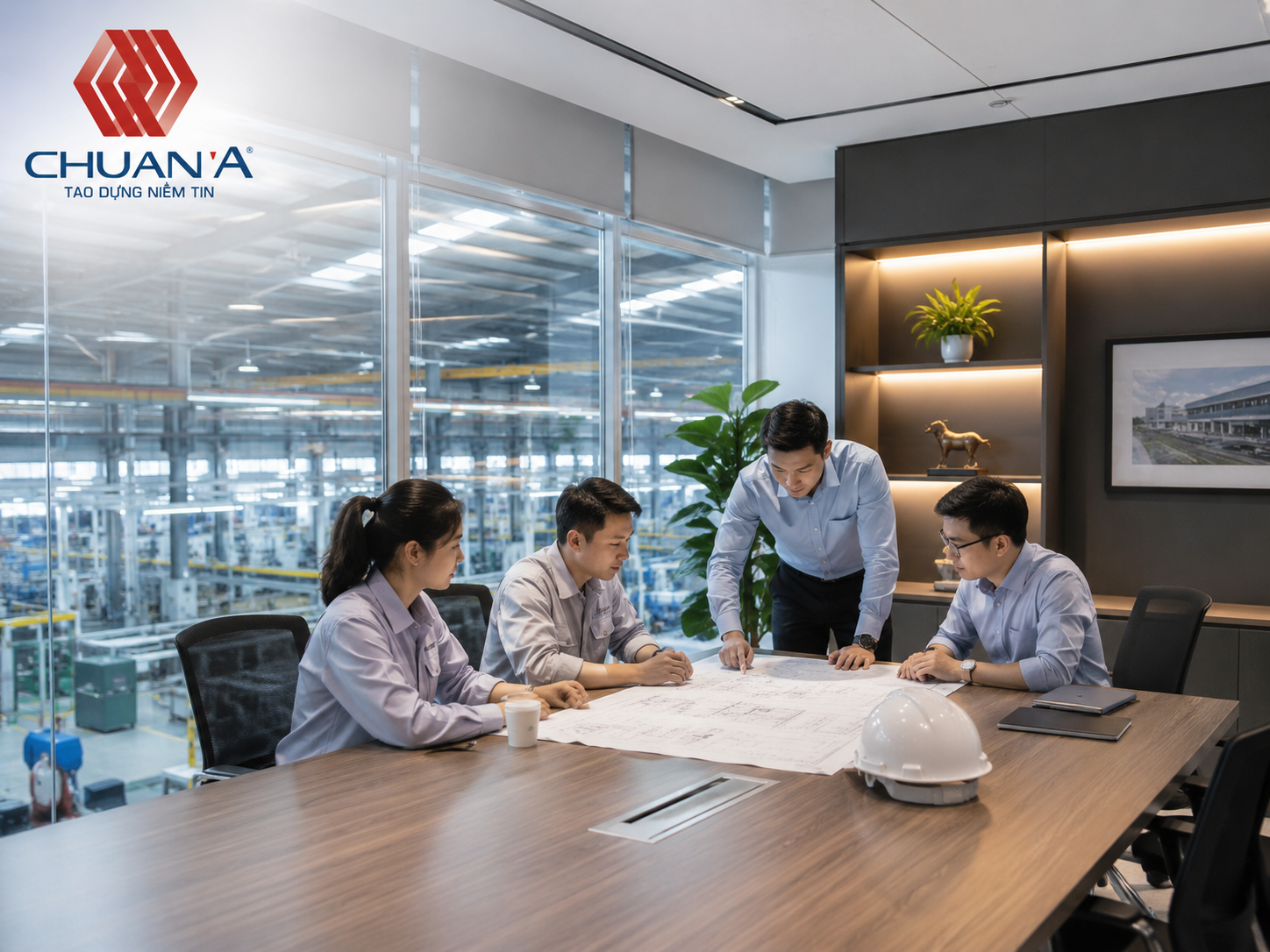
Factory office design is a combination of function, safety, brand image, and connection with the production area. Even though it is located within an industrial facility, the office should not be treated as a secondary space. A well-designed office helps teams work more efficiently, creates a professional impression for clients, and makes factory operation more organized.
As manufacturing businesses pay more attention to corporate image, a factory office needs more than desks and chairs. It needs a reasonable layout, good lighting, stable technical systems, professional reception space, and a practical connection with production areas.
(1).png)
A factory office is usually where management, engineering, planning, logistics, human resources, accounting, quality control, and customer service teams work. It may also be used to welcome partners, hold meetings, store documents, and monitor production.
If the office layout is not reasonable, movement between departments becomes time-consuming. If meeting rooms are lacking, employees must discuss work in unsuitable areas. If the technical team is too far from production, incident response becomes slower. Therefore, the office should be designed according to the real operation of the factory.
Factory office design should begin with an operational diagram. Who works where, which department needs to stay close to production, which department needs quiet space, which route visitors use, which route employees use, and where documents, equipment, meeting rooms, pantry areas, restrooms, and technical rooms are located should all be determined in advance.
Common areas in a factory office include reception, open work areas, management rooms, meeting rooms, technical rooms, document storage, rest areas, pantry, restrooms, and connecting corridors. If the office is located inside the factory block, acoustic control, dust prevention, ventilation, and emergency exit safety must be considered.
(1).png)
A factory office should not be completely separated from production. Management and technical teams need to move quickly when issues occur. However, connection does not mean allowing all noise, dust, and odor to enter the office. The design should include buffer zones, suitable doors, safe corridors, and access control.
Some factories use glass partitions to create visual connection with production. This solution creates a modern feeling and supports observation, but thermal insulation, sound insulation, and safety must still be considered. A good connection is controlled connection that does not harm the working environment.
Lighting strongly affects work performance. The office should use natural light where possible and combine it with suitable artificial lighting to avoid glare, insufficient brightness, or eye fatigue. Ventilation and air conditioning must be stable, especially when the office is located near hot or dusty production areas.
Sound is also important. An office that is too noisy makes it difficult for employees to focus and creates a poor impression for visitors. Therefore, partitions, ceilings, doors, and meeting room placement must be calculated. A good workplace supports focus while still connecting with the operating rhythm of the factory.
An office inside a factory needs electrical systems, network systems, lighting, air conditioning, plumbing, cameras, access control, and fire protection. These systems must be integrated with the overall factory. Fire protection must include escape routes, detectors, extinguishers, exit lights, emergency lights, and safety signs.
The office should not look beautiful while hiding safety equipment or making emergency exits difficult to identify. A professional office must be beautiful within safety requirements. Aesthetics and safety should be designed together from the beginning.
The office is where a business tells its brand story through space. Colors, logos, materials, product display areas, achievement boards, project images, and reception areas all create impressions. For factories that often welcome partners, a well-organized office builds trust.
However, branding does not need to be overly decorative. The important factors are cleanliness, order, consistency, and suitability for the industry. A beautiful industrial office should express technical quality, durability, and practicality.
Current trends include flexible offices, energy efficiency, more natural light, better connection with production, and durable materials. Open spaces are combined with small meeting rooms, focus areas, and quick discussion zones. Technologies such as cameras, production monitoring screens, internal networks, and access control are also increasingly integrated.
Businesses also care more about employee experience. Rest areas, pantry spaces, greenery, lighting, and good air quality make the office less rigid. A modern factory should not only be strong in production lines, but should also provide a reliable working environment.
Chuẩn A can support businesses in industrial office design, factory office construction, factory construction, M&E, and fire protection. When the office is designed together with the overall factory, functions become more reasonable, technical systems have fewer conflicts, and corporate image becomes more consistent.
Factory office design is a combination of function, safety, and corporate image. A good office helps operation run more smoothly, improves employee productivity, and shows partners the professionalism of the factory. With experience in industrial construction, office construction, M&E, and fire protection, Chuẩn A can support businesses in creating modern, durable, and production-friendly workspaces.
CÔNG TY CP ĐẦU TƯ XÂY DỰNG CÔNG TRÌNH CHUẨN A


