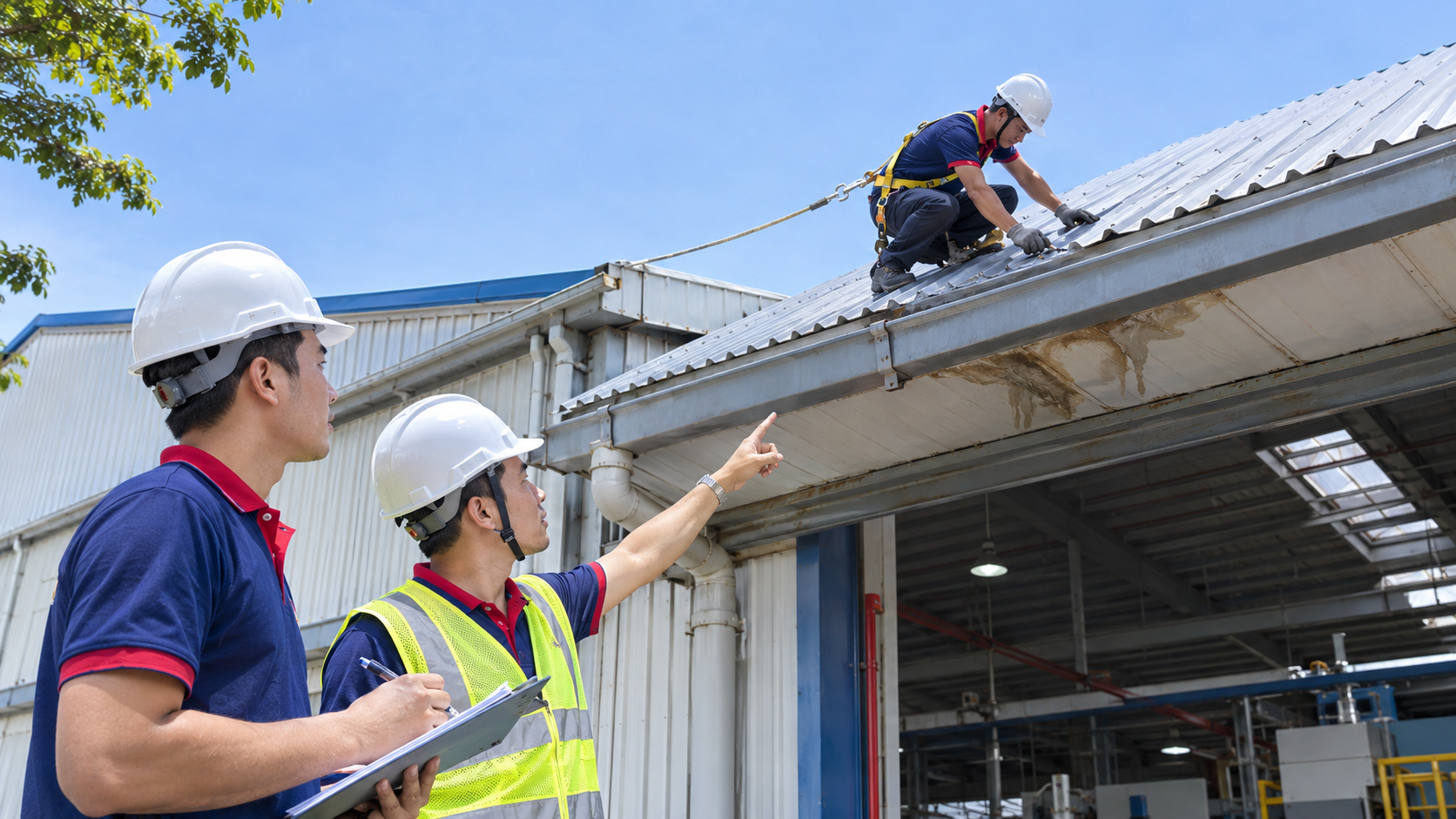
A leaking metal roof can damage stored products, create slippery floors and interrupt factory operations. However, the place where water drips inside is not necessarily where it enters the roof. Rainwater may travel along purlins or the underside of panels before becoming visible. Effective repairs start with locating the actual source and assessing the condition of the complete roofing and drainage system.

Obvious signs include dripping water during rainfall, damp patches on walls, puddles on the floor and moisture-damaged packaging. Some roofs only leak during wind-driven storms because rain is pushed into gaps at seams and roof details. Unusual rattling in strong winds, corrosion near fasteners and overflowing gutters also deserve attention, even if no water has reached the production area yet.
Mark indoor drip locations on a simple site plan, take photographs and note the weather conditions and affected equipment. Observations should be made from safe indoor positions. Do not send untrained workers onto a wet roof or attempt access during high winds without an appropriate fall-protection plan.
A screw that is loose, corroded or incorrectly installed can allow water into the penetration. The same can happen when a sealing washer cracks or loses its shape. A qualified roofing team may replace suitable fasteners and washers if the surrounding sheet remains sound. Enlarged holes or badly corroded metal may require a different detail or panel replacement.
Poor panel overlaps, lifted edges, displaced ridge caps and failed flashing around exhaust fans or pipes can create entry points for rain. These locations require checks of the mechanical connections, flashing arrangement and compatible seals. Applying another layer of sealant to the surface alone may leave the original defect unresolved.
Leaves, dust, sediment and construction debris can block gutters and downpipes. Sagging gutters, inadequate slope or insufficient drainage capacity may also cause overflow and water to back up under roof edges. If leaks appear mainly during heavy rain, drainage should be among the first systems investigated.
Older sheets can corrode near cut edges, scratches and areas where water remains after rain. Roof deflection or an unsuitable slope can keep water close to panel laps. Minor surface corrosion and widespread perforation require different responses; inspection should determine whether repairs are practical or damaged sheets need replacement.
Start with the visible indoor leak and compare its location with roof slope, purlin lines, gutters and nearby penetrations. Review previous repair records if available. Trained specialists can inspect the roof using safe access arrangements and, where appropriate, perform a controlled water test. Such testing should not expose live electrical systems or sensitive production equipment to additional water.
A damp patch next to a column may originate higher up at a gutter joint or panel seam. Repairing only the sheet immediately above the patch risks missing the real source.
Sealant is not a universal permanent fix. Poor preparation, incompatible materials or an unresolved drainage problem can cause leaks to return after the next storms.
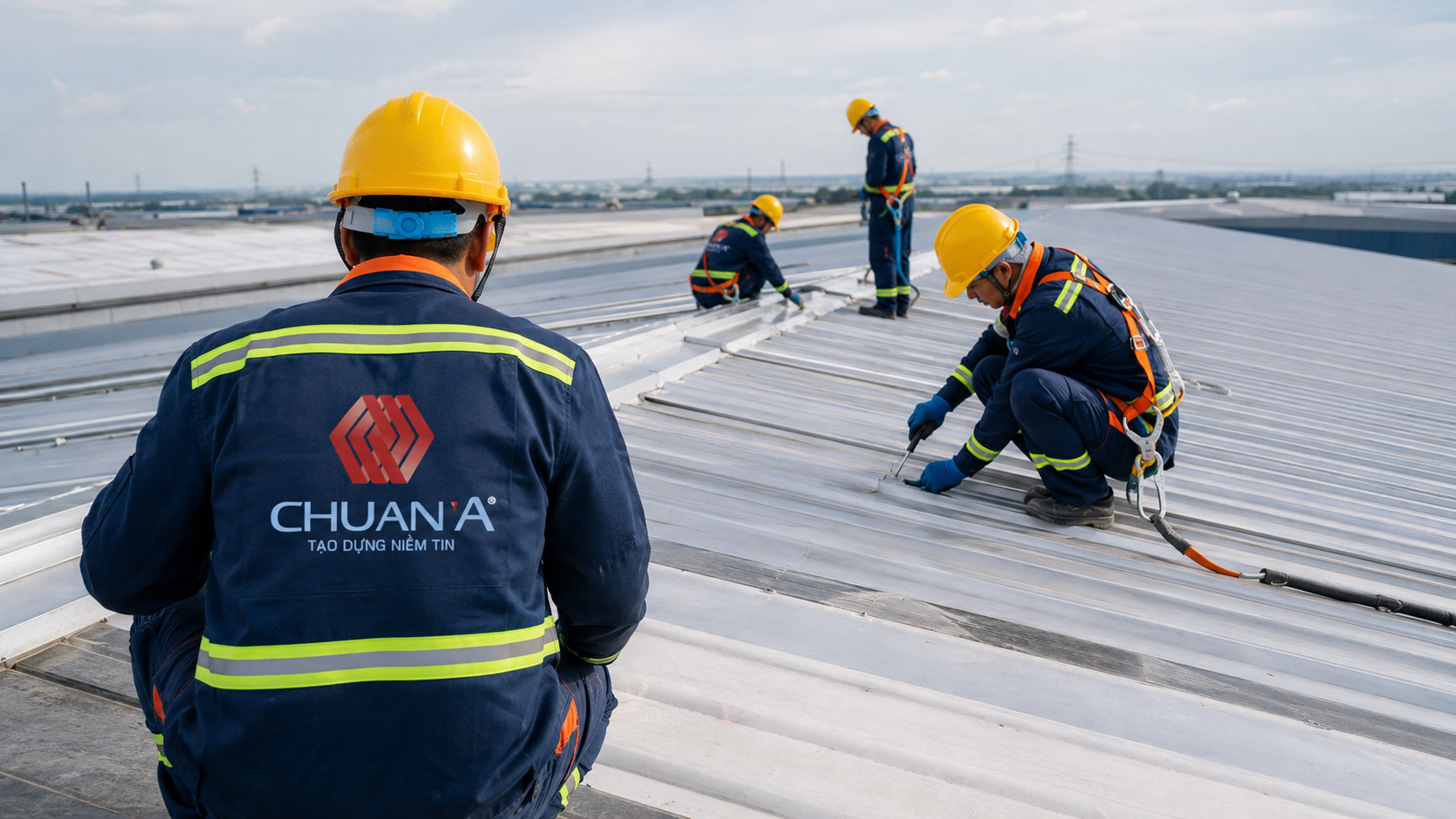
Isolate slippery areas and protect products and packaging. If water approaches switchboards, cables or production machinery, notify qualified personnel and follow the site's electrical safety procedures. Do not touch wet electrical equipment. Record the affected locations and arrange an inspection when conditions are safe. Roof repairs should not be improvised during a storm.
Local repairs may be appropriate when most panels are sound and problems are limited to a few screws, seams, gutters or flashing components. Sectional replacement or a broader roof upgrade may be more suitable where corrosion is extensive, many sheets are perforated, purlins are deteriorating or the existing slope and drainage arrangements repeatedly fail.
Costs depend on roof area, height, access, materials, extent of damage and the hours available for work around production. A useful quotation should list each affected item and the proposed scope rather than relying only on the number of visible indoor drips.
Inspect roof panels and gutters before the rainy season, after severe weather and whenever new fans, ducts or equipment penetrate the roof. Keep drainage outlets clear, monitor protective coatings and sealing washers, and retain records of previous leaks and repairs. For large factories, scheduled maintenance can identify small defects before they interrupt operations.
CHUAN A CONSTRUCTION INVESTMENT PROJECT JOINT STOCK COMPANY
Address: Amata Industrial Park Service Center, Long Binh Ward, Dong Nai Province, Vietnam.
Hotline: 0907 494 549
Email: info@chuana.com.vn
Website:https://chuana.com.vn/
Contact Chuan A to discuss factory roof inspection, repair, maintenance, or renovation services in Dong Nai.