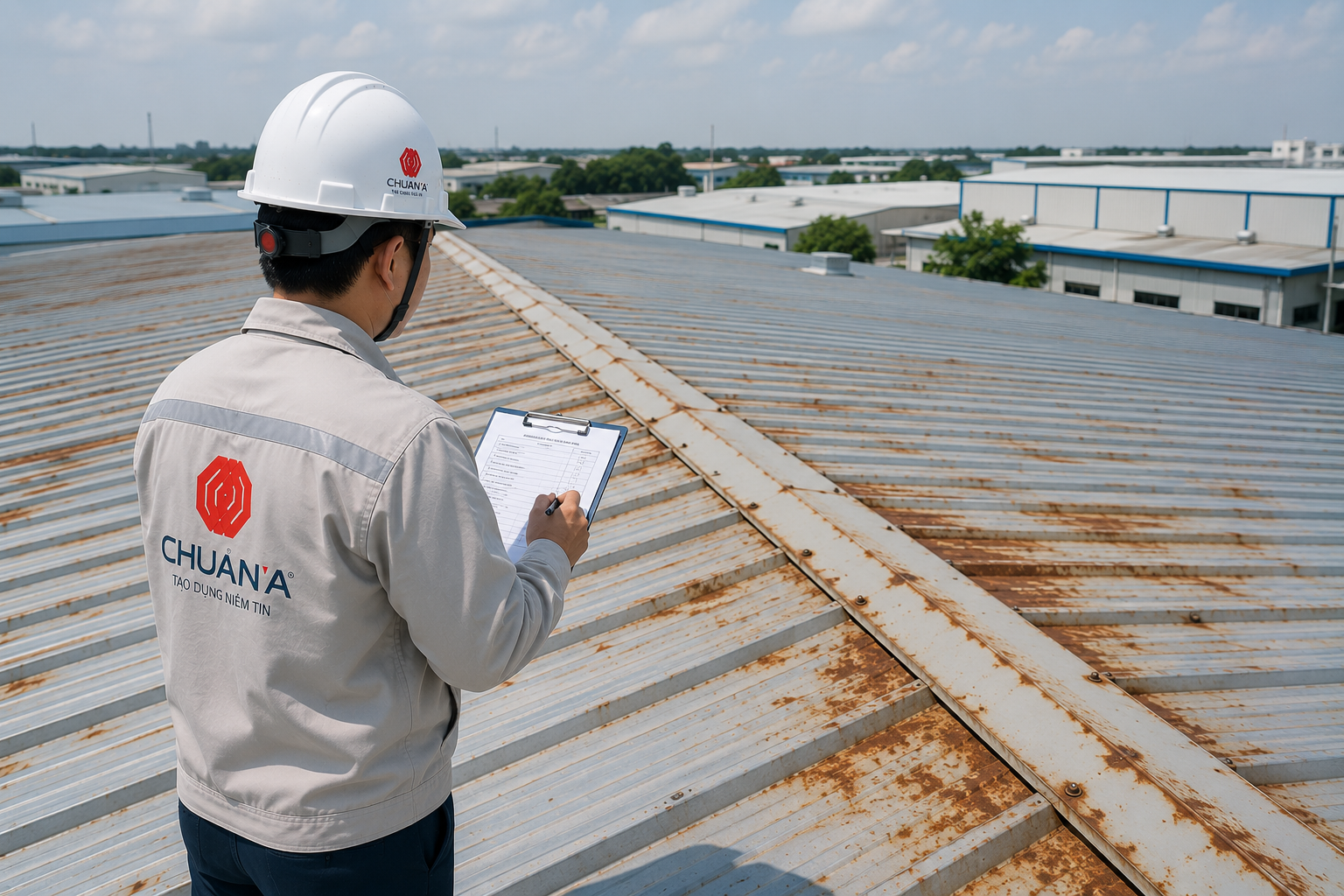
Corrosion is a common sign of aging metal roofing. It may begin as a small discolored area near a fastener, cut edge or scratch, but continued exposure to moisture can expand the affected area and reduce metal thickness.
For this reason, corrosion inspection should be a routine part of factory metal roof maintenance.
Metal roofing is protected by coatings designed to reduce environmental exposure.
Corrosion can begin when that protection is damaged or when moisture remains on the surface for extended periods.
Common causes include scratches, standing water, high humidity, accumulated debris, exposed cut edges and aging materials.
Corrosion is often concentrated in specific locations.
Typical areas include sheet edges, fastener holes, seams, gutters, drainage paths and locations where water remains.
Areas around rooftop equipment may also show damage caused by installation or maintenance activity.(17).png)
Not every rust spot has the same severity.
Surface oxidation may affect only the outer layer, while advanced corrosion can reduce sheet thickness and eventually create perforations.
A useful metal roof maintenance method should classify corrosion by severity rather than treating all affected areas in the same way.
As metal becomes thinner, small holes can develop.
At this stage, metal roof leak prevention must address both water entry and deterioration of the roofing material.
Covering a severely weakened area may not provide a durable solution.(17).png)
Roof screws and other metal components can also corrode.
Severe fastener corrosion may affect both connection strength and water resistance.
The surrounding sheet should be inspected whenever a deteriorated fastener is identified.
When corrosion remains superficial and the underlying metal is still serviceable, localized treatment may be appropriate.
The cause should also be addressed.
For example, if standing water contributed to corrosion, drainage conditions should be corrected rather than treating only the visible rust.
Factory roof sheet replacement should be evaluated when sheets show significant thinning, multiple perforations, widespread corrosion or repeated failures.
Replacement may be limited to affected zones when the rest of the roof remains serviceable.
New roofing should be selected with the previous deterioration mechanism in mind.
Where humidity or corrosive exposure is significant, protective coatings and material compatibility become especially important.
Suitable factory roofing sheet selection should reflect real operating conditions.
Effective maintenance should include regular cleaning, drainage inspection, fastener checks and monitoring of previously affected areas.
Photographic records can help teams compare corrosion progression over time.
Metal roof corrosion often begins in small areas but can eventually lead to perforation and leakage.
Routine inspection, early treatment, improved drainage and timely replacement help businesses manage deterioration before it becomes widespread.
Timely maintenance helps businesses monitor building conditions, reduce leakage risks and extend the service life of metal roofing.
CHUAN A CONSTRUCTION INVESTMENT CORPORATION
Address: Amata Industrial Park Service Center, Long Binh Ward, Dong Nai Province, Vietnam.
Hotline: 0907 494 549
Email: info@chuana.com.vn
Website:https://chuana.com.vn/
Contact Chuan A to discuss factory metal roof inspection, maintenance, repair or replacement requirements in Dong Nai.


