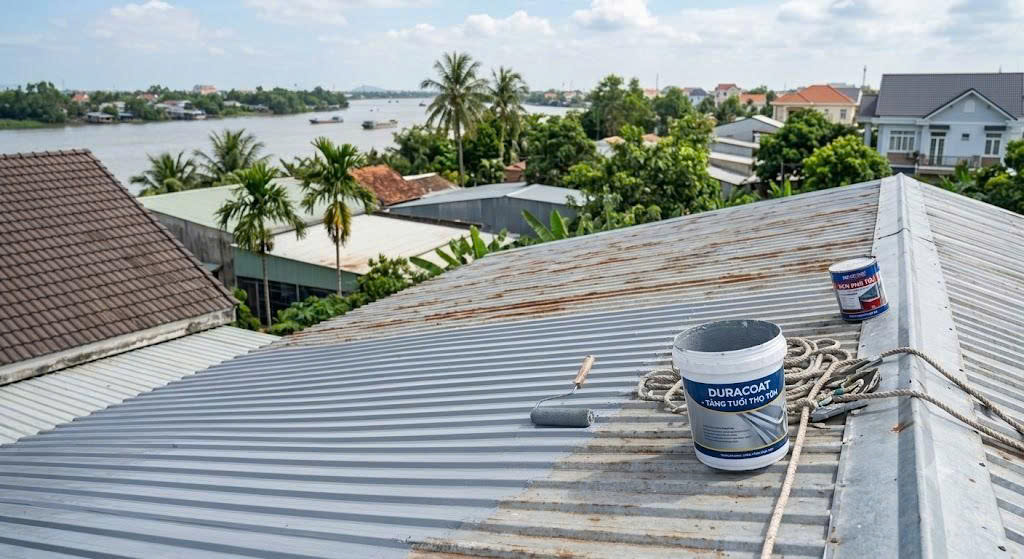
A factory metal roof does more than protect a building from rain and sunlight. It also protects machinery, raw materials, finished products, electrical systems and daily production activities. When the roof deteriorates, the consequences may extend beyond several visible leaks and lead to corrosion of structural components, equipment damage, operational disruption and unplanned repair costs.
Professional factory metal roof maintenance in Dong Nai for longer roof lifespan helps businesses move from reactive repairs to planned asset management. Instead of waiting for sheets to become perforated or severely corroded, the roof is inspected, classified and treated during the early stages of deterioration.
Chuan A provides factory roof inspection, preventive maintenance, repair and roofing sheet replacement services in Dong Nai. Each solution is developed according to the roof's actual condition, production environment, operating period, drainage performance and facility requirements.
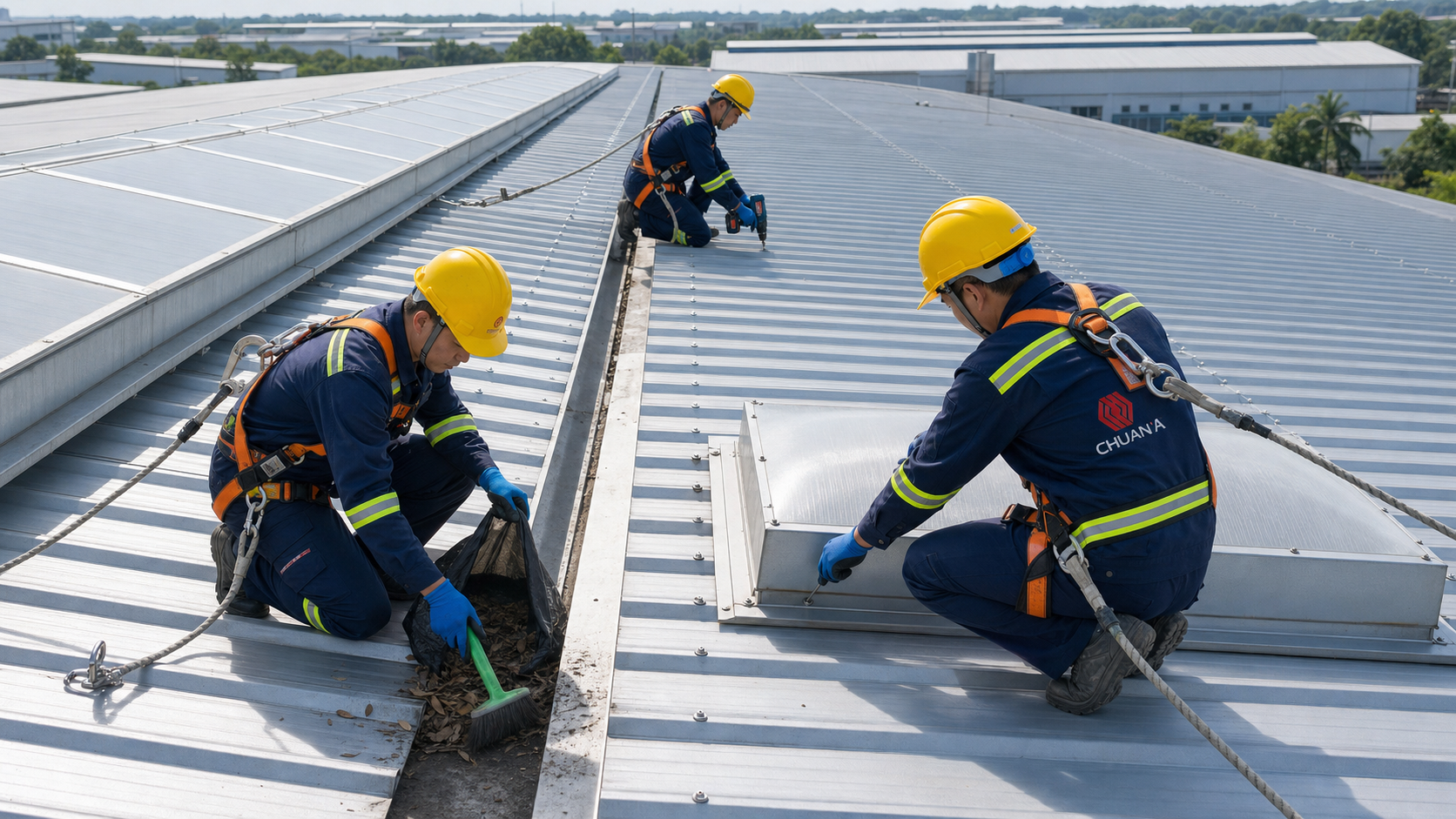
Roof durability cannot be determined only by the installation year or the name of the roofing material. Two factories using similar roofing sheets may experience very different deterioration rates when their environment, workmanship and maintenance practices are different.
Important factors affecting roof service life include:
A well-installed roof may still deteriorate faster when minor defects remain untreated. Regular maintenance helps control ageing and extends the period before sectional or complete replacement becomes necessary.
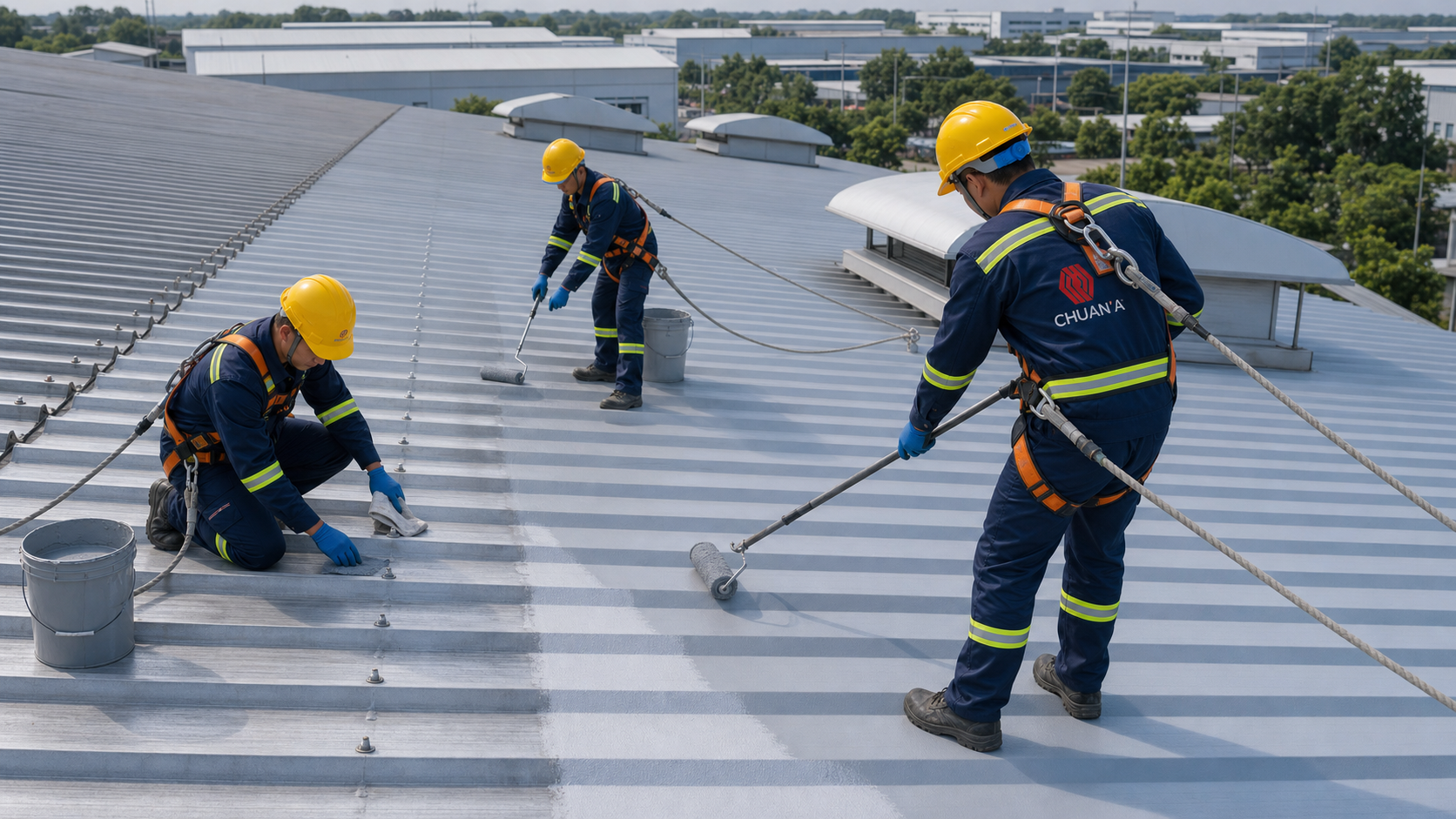
Most roofing areas are outside the daily view of factory managers. Businesses often become aware of a problem only after water enters the building, even though corrosion, loose screws, hardened washers or blocked gutters may have existed for months.
The deterioration process commonly develops through several stages:
Periodic inspections interrupt this process while the affected area is still limited and repair costs remain manageable.
Maintenance cannot make an ageing material completely new again, but it reduces the conditions that accelerate deterioration. When loose fasteners are replaced, corrosion is treated early and drainage systems remain clear, the roof is exposed to fewer damaging conditions.
A suitable maintenance programme may provide the following benefits:
A roof may be deteriorating even when it has not started leaking. Businesses should arrange an inspection when one or more of the following signs appear:
Businesses should not wait for perforation before classifying the roof as damaged. Surface corrosion, standing water and deteriorated washers are early signs that maintenance is required.
| Item | Common problem | Maintenance method | Result |
|---|---|---|---|
| Roofing sheets | Dust, peeling coatings, corrosion or holes | Cleaning, corrosion assessment, protective treatment or sheet replacement | Slower corrosion and maintained weather resistance |
| Roofing screws | Loose, corroded or weakened connections | Correct tightening or suitable fastener replacement | Stable connection between the sheets and purlins |
| Rubber washers | Cracking, hardening, shrinkage or deformation | Replacement of washers that no longer seal correctly | Reduced water penetration through screw holes |
| Sheet overlaps | Open gaps, displacement or failed sealing material | Adjustment, reinforcement and sealing restoration | Reduced wind-driven rain penetration |
| Ridge caps | Loose fasteners, open edges or deformation | Connection inspection and gap treatment | Protection of the roof ridge |
| Edge flashing | Displacement, corrosion or open joints | Reinforcement, replacement and sealing | Reduced wind and water entry at roof edges |
| Gutters | Blockages, deformation, perforation or corrosion | Cleaning, unclogging, reinforcement and repair | Reduced standing water and overflow |
| Downpipes | Blockages, leakage or poor drainage | Cleaning and connection inspection | Maintained drainage performance |
| Roof penetrations | Failed sealant, cracking or movement | Inspection and waterproofing restoration | Reduced leakage around equipment and pipes |
The business provides information about roof age, roofing type, area, previous repairs, past leaks and equipment installed on the roof.
This information helps the technical team identify high-risk areas before carrying out the site inspection.
The inspection may begin below the roof to identify damp marks, water paths, structural corrosion or visible daylight through damaged areas.
Areas containing valuable machinery, products or electrical systems should receive priority because roof failures in these locations may create significant losses.
The technical team examines roofing sheets, screw heads, overlaps, ridge caps, flashing, gutters, downpipes, translucent panels and roof penetrations.
Corroded areas, standing water, deformation and previous repair locations are recorded according to roof zone.
After inspection, roof areas may be divided into four groups:
This classification allows the business to identify urgent work and separate it from long-term maintenance items.
The plan may include roof cleaning, fastener replacement, washer replacement, corrosion treatment, gutter repair, overlap reinforcement or replacement of roofing sheets that are no longer serviceable.
Large factory roofs may be divided into work zones to control expenditure and reduce disruption to production.
Industrial dust, leaves and debris may retain water on the roof surface. These areas dry more slowly after rainfall and are more likely to develop corrosion.
Cleaning should use appropriate methods that do not scratch or damage the protective coating.
When corrosion remains on the surface and the sheet retains sufficient rigidity, the affected area may be cleaned, assessed and protected.
The cause of moisture or coating damage should also be identified. Treating only the visible corrosion without correcting standing water or accumulated debris may allow the problem to return.
Not every fastener should be tightened using the same force. Each fixing location should be inspected for hole condition, connection strength and washer deformation.
When a screw is corroded, the washer has hardened or the fixing hole is unstable, replacement may be more appropriate than further tightening.
Sheet overlaps may open because of thermal movement, vibration or weakened fasteners. Before applying sealing materials, the overlap dimension and stability of the sheets should be inspected.
A displaced overlap should be adjusted before waterproofing treatment is applied.
A gutter must be clean and maintain an appropriate fall. A deformed gutter may continue holding water even after debris has been removed.
Maintenance should include brackets, joints, drainage outlets and downpipes to ensure that the complete system performs correctly.
When a roofing sheet has deep corrosion or has lost its structural rigidity, surface patching may provide only a temporary result. Sectional replacement may prevent further deterioration and provide a more reliable long-term solution.
| Timing | Recommended action |
|---|---|
| Beginning of the year | General inspection, roof condition mapping and maintenance record updates |
| Before the rainy season | Gutter cleaning and inspection of fasteners, overlaps, ridge caps and roof penetrations |
| During the rainy season | Monitor leakage areas and drainage performance during heavy rainfall |
| After the rainy season | Inspect corrosion, standing water and areas affected during rainfall |
| After strong winds | Inspect displaced sheets, loose fasteners, ridge caps and flashing |
| After equipment installation | Inspect roof penetrations, connections and waterproofing details |
This schedule is a general reference. The actual frequency should reflect roof age, operating environment and current condition.
The period before the rainy season is suitable for factory roof inspections because defects can be treated before rainfall increases.
Pre-rainy-season maintenance helps:
Factory roofs in Dong Nai may experience a combination of heat, heavy rainfall, humidity and industrial dust. Some production activities may also generate chemical vapours or corrosive conditions that accelerate roof deterioration.
Businesses should:
Maintenance is most effective while roofing materials remain serviceable. When sheets have lost rigidity, corrosion covers a large area or multiple holes have developed, further local repairs may no longer be efficient.
Businesses should consider replacement when:
Sectional replacement may be appropriate when only one roof zone has deteriorated. This approach helps distribute expenditure and avoids unnecessary complete replacement.
Water may travel along roofing sheets or structural components before dripping into the factory. Inspecting only the visible drip point may fail to identify the actual source.
Sealant cannot replace mechanical connections or restore severely weakened roofing sheets. Multiple layers may also make future repairs more difficult.
A small corrosion area may continue spreading beneath dust or old repair material. Early treatment is usually easier than replacing a deeply corroded sheet.
Even a good roofing surface may develop problems when gutters are blocked. Roof maintenance should always include rainwater drainage components.
Incorrect movement may dent roofing sheets, open overlaps or affect fasteners. Roof work should use suitable access and safety methods.
Every new hole, equipment base or pipe penetration may become a water entry point when it is not treated correctly.
Lifecycle management means tracking the roof from installation through inspections, maintenance, major repairs and eventual replacement.
A factory roof record may include:
This record helps businesses identify deterioration patterns, avoid repeated work and create phased replacement budgets.
Roof replacement is only one part of the total cost of deterioration. Water penetration may also damage products, machinery, production schedules and factory interiors.
Periodic maintenance helps:
The purpose of maintenance is not to delay replacement under every condition. It is to operate the roofing system safely, efficiently and replace it at the most appropriate time.
Chuan A collects information about the facility location, roof area, operating period and current condition.
The technical team examines the components that affect roof performance and service life.
Corrosion, standing water, loose fasteners and open joints are analysed to determine the actual cause.
The recommendation may include preventive maintenance, local repair, sectional replacement or a phased roof replacement plan.
The work is prepared with suitable access methods, personal protective equipment and controlled work areas.
Completed areas are inspected again. The business receives information about the remaining roof condition and future monitoring requirements.
Chuan A Construction Investment Corporation provides industrial construction and facility maintenance solutions in Dong Nai and nearby areas.
Businesses may also review reliable factory metal roof maintenance in Dong Nai and factory metal roof maintenance and leak repair in Dong Nai for further information about maintenance services and roof leak treatment.
Chuan A receives factory metal roof maintenance requests in Dong Nai, Bien Hoa, Long Thanh, Trang Bom, Nhon Trach and nearby areas. Businesses in Binh Duong and Ho Chi Minh City may contact the company to discuss the inspection scope and site conditions.
Yes. Before leaks appear, many defects remain in their early stages and are easier to treat. This is the most suitable period for preventive maintenance.
The result depends on roof age, material type, deterioration level and production environment. Maintenance slows deterioration but cannot fully restore roofing sheets with severe corrosion.
Businesses may consider inspections every six to twelve months. Facilities exposed to dust, humidity or corrosion may require more frequent inspections.
No. Surface corrosion may be treated when the sheet retains sufficient strength. Replacement should be considered when corrosion is deep or multiple holes have appeared.
Many activities can be organised by work zone or during suitable operating periods. The final plan depends on the location, condition and safety requirements.
Costs depend on roof area, height, access conditions, number of maintenance items, corrosion level, gutter condition and the amount of material requiring replacement.
Complete replacement should be considered when deterioration covers a large area, several sheets have lost rigidity, leaks frequently return and local repairs no longer provide long-term value.
A suitable maintenance plan helps businesses identify early damage, control costs and extend roof service life. When corrosion, loose fasteners, standing water or unusual roof conditions appear, an inspection should be arranged to determine the appropriate treatment.
CHUAN A CONSTRUCTION INVESTMENT CORPORATION
Contact Chuan A to arrange an inspection and maintenance plan designed to extend the service life of your factory metal roof in Dong Nai.