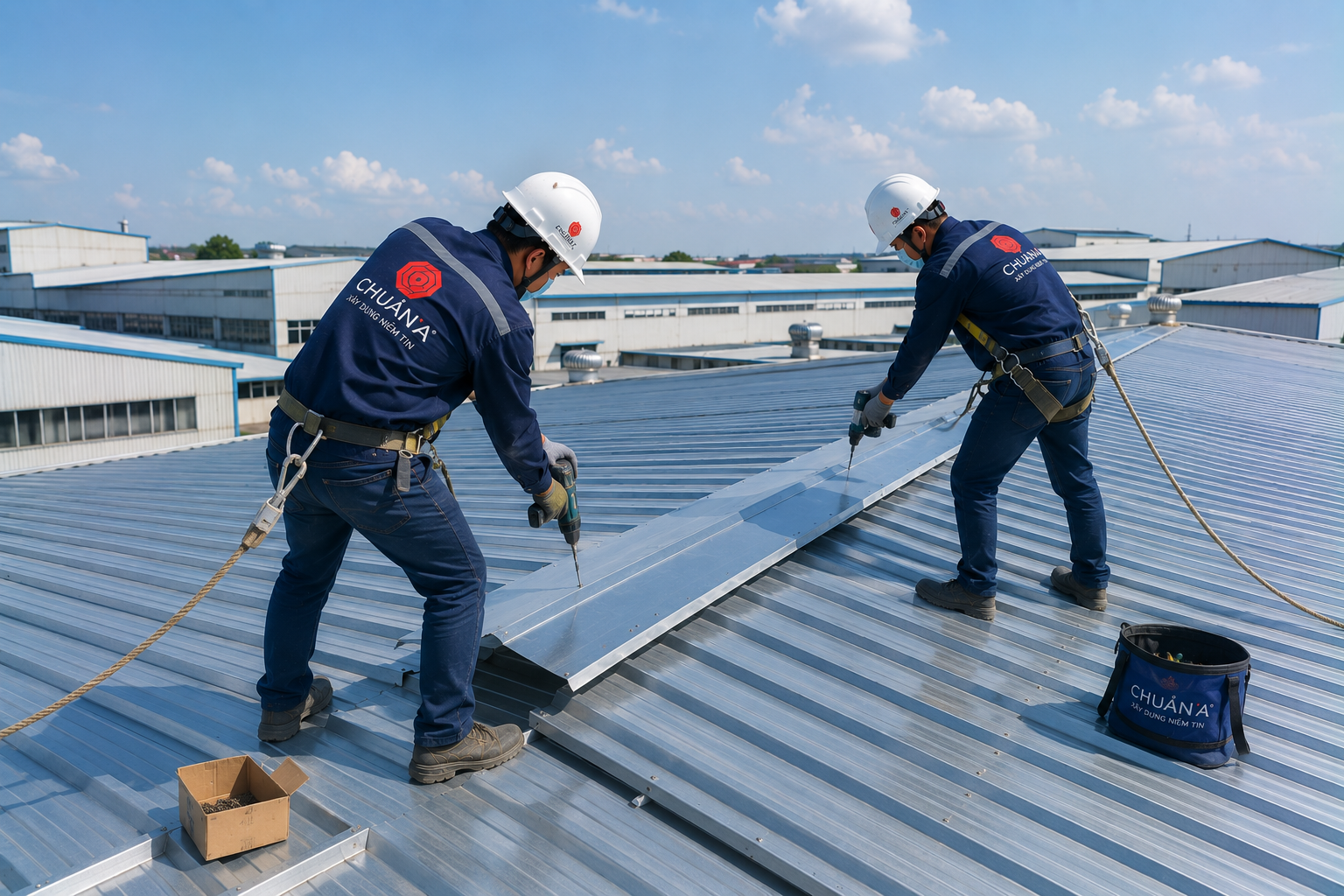
Roof leakage can affect stored goods, machinery, electrical systems and normal factory operations. However, effective metal roof leak prevention and repair requires more than simply sealing the location where water appears inside the building.
Water can enter at one point and travel along roofing or structural components before becoming visible. The first objective is therefore to identify the actual source.
Fasteners penetrate the metal sheet and depend on washers to maintain a weather-resistant seal.
Thermal movement, vibration and aging can cause fasteners to loosen or washers to deteriorate.
Inspection should evaluate the screw, washer and surrounding metal.
Overlapping sheets create joints that can become vulnerable over time.
Sealants may deteriorate, and wind-driven rain can enter gaps that are not obvious during dry conditions.
Repair should address the condition of the joint rather than simply adding material over the visible area.
Ventilation equipment, pipes and skylights introduce additional transitions into the roof.
Because different materials can move at different rates, sealing systems around penetrations require regular inspection.
Advanced corrosion can eventually create holes through the roofing sheet.
Localized deterioration may be repairable, but widespread perforation can make factory roof sheet replacement more practical.
Blocked, damaged or leaking gutters can create water problems that appear to originate from the roof surface.
A complete factory metal roof maintenance inspection should therefore include gutters, outlets and drainage connections.(8).png)
Water frequently travels before it becomes visible inside a building.
It may follow the underside of a sheet, structural member or insulation system.
This is why an exterior inspection should be compared with interior water marks.
Record when leakage occurs and whether it is associated with wind direction or rainfall intensity.
Inspect the likely roof area, including fasteners, seams, penetrations and drainage.
Once the cause has been identified, select a repair method appropriate to the condition of the materials. Reinspect the area after work is completed.(7).png)
Repeated repair of heavily deteriorated roofing may not provide a durable solution.
Where metal has become thin, perforated or extensively corroded, replacement should be evaluated.
New factory roofing sheet selection should consider the environmental conditions that contributed to deterioration of the previous roofing.(8).png)
Effective roof leak repair depends on finding the true source of water.
Fasteners, seams, penetrations, corroded sheets and drainage systems should all be considered during an investigation.
Combining leak repair with preventive roof maintenance can reduce repeated emergency work.
Timely maintenance helps businesses monitor building conditions, reduce leakage risks and extend the service life of metal roofing. When deterioration is identified, an early inspection can help determine an appropriate repair or replacement strategy.
CHUAN A CONSTRUCTION INVESTMENT CORPORATION
Address: Amata Industrial Park Service Center, Long Binh Ward, Dong Nai Province, Vietnam.
Hotline: 0907 494 549
Email: info@chuana.com.vn
Website:https://chuana.com.vn/
Contact Chuan A to discuss factory metal roof inspection, maintenance, repair or replacement requirements in Dong Nai.


