
Choosing an industrial factory construction contractor can directly affect the investment cost, construction schedule, and long-term usability of the facility. A lower quotation does not necessarily mean a lower total cost if changes, delays, or corrective work appear during construction.
On the other hand, a contractor with a higher quotation is not automatically the right choice if the scope of work is unclear or the proposed solution does not match the actual operation of the factory. Instead of asking only how much a contractor charges, the owner should look at how the contractor approaches the entire project.
.png)
The following five practical criteria can help businesses compare contractors before starting a new industrial factory project or renovating an existing facility.
The first criterion should not be the sales presentation. It should be what the contractor has actually delivered. When looking for a factory construction contractor, businesses should review projects that are similar in scale, facility type, and technical requirements.
A contractor experienced in residential construction may not have the same experience as one regularly working on industrial factories. Industrial projects can involve very different requirements for foundations, steel structures, floor loads, forklifts, MEP systems, fire protection, and site organization.
Photos can be useful, but they should not be the only source of information. Ask what part of each project the contractor actually handled, how long the project took, what structural system was used, which technical systems were included, and what challenges occurred during construction.
When possible, ask the contractor to provide company credentials and information about projects with similar characteristics. This gives the owner a more realistic picture of actual capabilities rather than relying entirely on sales materials.
A factory is more than a building with a roof and four walls. It may contain production lines, raw-material storage, finished-goods storage, utility rooms, technical areas, forklift routes, and many other operational requirements.
Before finalizing a construction solution, the contractor should understand what the facility will actually be used for. Where will the machinery be installed? How will forklifts move? Which areas require higher floor loads? Where will goods enter and leave? Will the production line need to expand in the future?
These questions may appear to belong to the production team, but they directly affect design and construction. Chuan A's published factory construction process also describes surveying and consulting before design, with attention to investment requirements, production objectives, and actual site conditions. :contentReference[oaicite:6]{index=6}
A factory may look impressive but still become difficult to operate if internal routes are poorly arranged, maintenance access is limited, or future production expansion is not considered.
When working with a contractor, the production process and expected future changes should therefore be discussed early. A suitable design should address current requirements while reducing the likelihood of major demolition or renovation later.
This is one of the most important points when comparing multiple contractors. Two quotations can differ significantly without one contractor necessarily being more expensive. The two proposals may simply cover different scopes.
A useful quotation should identify the major work packages, what is included, what is excluded, how materials are specified, and which conditions could change the contract value.
A clear quotation gives both sides the same understanding of the work scope. It also reduces the risk of discovering during construction that one side assumed a particular item was included while the other side had never priced it.
An industrial factory project is often connected directly to equipment installation, workforce planning, production-line testing, and the start of operations. Construction delays can therefore create additional costs that are not visible in the original construction quotation.
When selecting a contractor, businesses should ask how the project schedule will be developed and controlled. Who is responsible for the project? What are the major milestones? How will progress be reported? What happens if one work package falls behind?
A detailed schedule on paper has limited value if it is not supported by the required manpower, equipment, materials, and coordination. The contractor needs sufficient resources to achieve the agreed milestones.
This becomes especially important for factories located in industrial parks or facilities that remain partially operational during construction. Delivery routes, working hours, material storage, and construction boundaries can all affect progress. Chuan A also describes its construction process around surveying, design, construction, and monitoring of schedule and quality across project stages. :contentReference[oaicite:7]{index=7}
A factory project does not really end on the handover date. The building will operate for years, require maintenance, and eventually need repairs or upgrades. Businesses should therefore understand how the contractor controls quality during construction and what support is available afterward.
Quality should not be checked for the first time on the day of final acceptance. Foundations, steel structures, concrete, roofing, electrical systems, water and drainage, and fire protection all contain work stages that need to be checked during implementation.
For technical systems, especially fire protection, testing, documentation, and acceptance should be considered from the beginning. Chuan A currently describes its fire protection scope as covering survey, design, installation, testing, commissioning, and maintenance. :contentReference[oaicite:8]{index=8}
A capable contractor needs to know how to organize a construction site, not just how to build. Work zones, access routes, lifting equipment, materials, working-at-height activities, and areas that interact with factory operations all need appropriate control.
This becomes particularly important when construction takes place inside an operating industrial park or when part of a factory must remain in production while construction activities continue.
Problems such as roof leaks, floor deterioration, fire protection faults, or technical equipment issues can appear during operation. Businesses should therefore ask about warranty terms, maintenance support, response times, and the scope of post-handover assistance.
Chuan A currently publishes maintenance and upgrade services for existing facilities as well as fire protection maintenance support, allowing businesses to continue working with a service provider after the initial construction stage. :contentReference[oaicite:9]{index=9}
When several contractors are being evaluated, a simple comparison table can be more useful than looking only at the total quotation. The comparison can include experience, scope of work, technical solution, schedule, key personnel, safety, quality control, payment terms, warranty, and maintenance support.
Each contractor should be evaluated against the same scope. If one quotation includes fire protection, MEP, and finishing while another only covers the main structure, comparing the two total prices directly will not provide a meaningful result.
This is why the project scope and tender requirements should be clarified before requesting quotations. The clearer the project brief, the easier it becomes to compare contractors on the same basis.
Price is important, but it should not be the only criterion. A lower quotation can result from a smaller scope, different materials, a different construction method, or items that have not been included in the price.
Instead of asking which contractor is the cheapest, a better question is: for the same scope of work, which contractor provides the clearest proposal and the strongest basis for execution?
Once scope, materials, schedule, responsibilities, and assumptions are clear, the price becomes much more meaningful as a comparison factor.
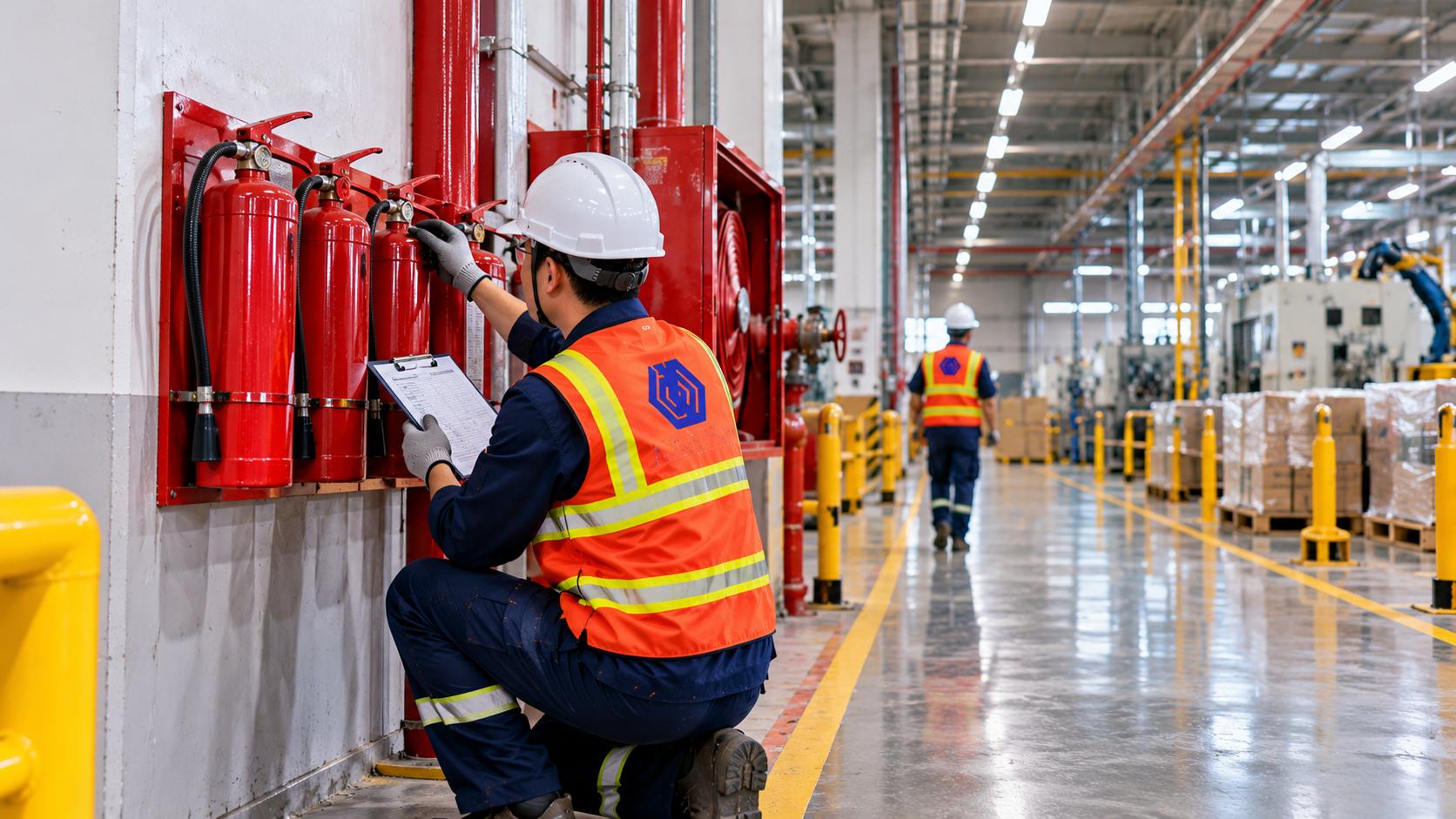
Chuan A currently presents a factory design and construction service covering survey, consulting, architectural and structural design, technical systems, and construction. Its published project categories also include industrial factories, warehouses, supporting infrastructure, and renovation or expansion projects. :contentReference[oaicite:10]{index=10}
For projects that require several technical packages to be coordinated, having one main party coordinating construction, MEP, and fire protection can simplify project management compared with coordinating multiple independent contractors. The actual scope, however, still needs to be determined through site assessment and discussion with the project owner.
For businesses preparing to build, expand, or renovate industrial factories in Dong Nai, Bien Hoa, Binh Duong, and nearby areas, Chuan A can discuss site surveys and project solutions based on the actual requirements of each facility.
CHUAN A CONSTRUCTION INVESTMENT PROJECT JOINT STOCK COMPANY
Address: Amata Industrial Park Service Center, Long Binh Ward, Dong Nai Province, Vietnam.
Hotline: 0907 494 549
Email: info@chuana.com.vn
Website:https://chuana.com.vn/
Contact Chuan A to discuss surveying, design, construction, renovation, or expansion of industrial factory facilities in Dong Nai and nearby areas.


